
Girnar
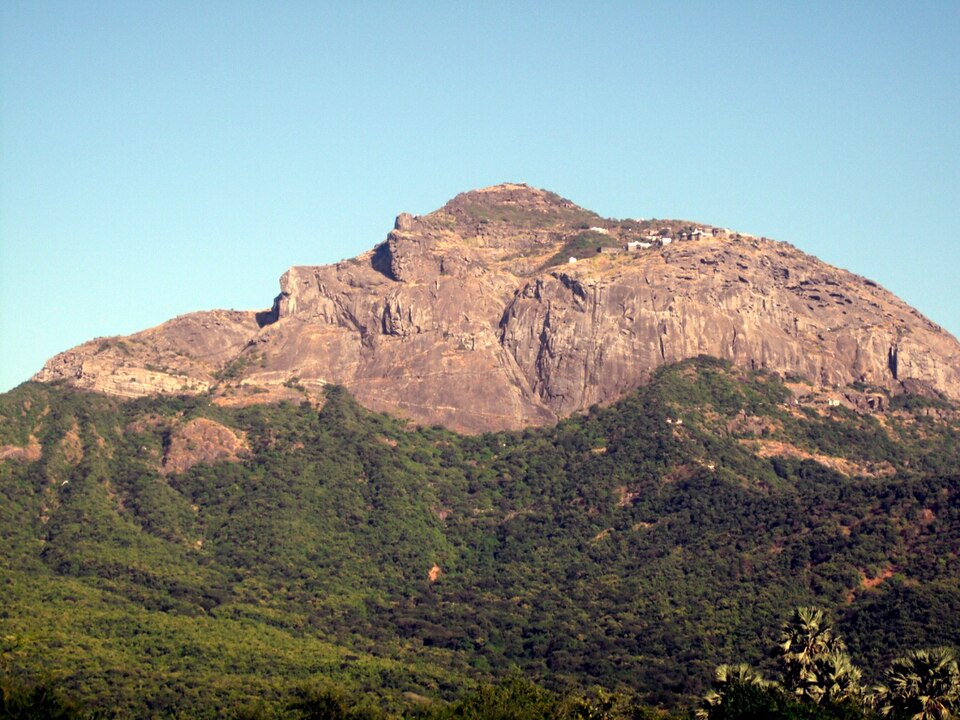
Girnar is an ancient and sacred hill in Junagadh, Gujarat, India, renowned as a Mahatirth for Jains. It is the site where the 22nd Tirthaṅkar, Lord Neminath, attained omniscience and nirvana, along with many enlightened sages. The hill also bears historical significance with Ashoka's Major Rock Edicts inscribed on a boulder near its base.
Key Facts
- ›Girnar is considered one of the holiest pilgrimages for Jains.
- ›Lord Neminath, the 22nd Tirthaṅkar, attained omniscience and nirvana on Girnar's highest peak.
- ›Fourteen of Ashoka's Major Rock Edicts, dating to circa 250 BCE, are inscribed on a boulder near Junagadh town.
- ›Jain temples on the southern side of the mountain were built in the 13th century.
- ›The mountain is a major igneous plutonic complex, geologically significant for its rock formations.
- ›The Girnar ropeway, Asia's longest, provides access to the Ambika Jain temple.
Neminath, Ambika, Dattatreya
- Major Pilgrimage Site For Jains
- Historical Importance Due To Ashoka's Edicts
- Geologically Significant Igneous Plutonic Complex
Western Satraps, Gupta Empire
Granite, Black Granite
Vastupala, Tejpala, Rudradaman I, Skandagupta, Sajjana, Ratnasar
Sculpture of the 24 Tirthankaras, Foot-Idols of Muni śāMba Kumar, Foot-Idols of Pradyumna Kumar, Foot-Idol of Bhagwan Neminath
Sudarshan Lake
About Girnar
Girnar: A Sacred Hill of Jain Pilgrimage and Ancient History
Girnar is an ancient and revered hill located in Junagadh, Gujarat, India, holding profound significance as a Mahatirth for Jains. It is famously known as the sacred site where Lord Neminath, the 22nd Tirthaṅkar, achieved omniscience and attained nirvana at its highest peak, the Neminath Shikhar, alongside 533 enlightened sages. This spiritual prominence is well-documented in ancient Jain texts such as the Kalpa Sūtra by Acharya Bhadrabāhu and the Shri Uttaradhyayana Sutra by Arya Sudharmaswami.
Historical and Archaeological Significance
Beyond its Jain heritage, Girnar is also a site of significant historical importance. On the southern side of the mountain, Jain temples dating back to the 13th century stand as testaments to its enduring religious appeal. Crucially, on a boulder located on the Girnar Taleti road, fourteen of Ashoka's Major Rock Edicts are inscribed, dating to approximately 250 BCE. These inscriptions, etched in Brahmi script, are considered the beginning of Junagadh's written history. The same rock also bears inscriptions in Sanskrit added around 150 CE by Mahakshatrap Rudradaman I of the Western Satraps dynasty, and another from about 450 CE referencing Emperor Skandagupta of the Gupta Empire.
Jain Temples and Spiritual Sites
Girnar is home to numerous Jain temples, with the black granite temple dedicated to Lord Neminath on the first peak being a notable example, constructed in 1128 AD and featuring intricate carvings. The hill is sacred to both Śvetāmbara and Digambara sects of Jainism. Other significant sites include the demi-goddess Ambika temple, caves, and various shrines housing foot-idols of revered figures. The Girnar ropeway, inaugurated in 2020, provides modern access to the Ambika Jain temple, making the pilgrimage more accessible.
Geological Features
Geologically, Mount Girnar is recognized as a major igneous plutonic complex. It intruded into the basalts towards the end of the Deccan Trap period, exhibiting rock types such as gabbros, diorites, lamprophyres, alkali-syenites, and rhyolites. This geological composition makes the hill a subject of scientific interest alongside its religious and historical importance.
Source: Wikipedia ↗
Frequently Asked Questions
What is the religious significance of Girnar for Jains?
Girnar is a Mahatirth, considered one of the holiest pilgrimages for Jains. It is believed that the 22nd Tirthaṅkar, Lord Neminath, attained omniscience and nirvana on its highest peak, along with many enlightened sages. Jain texts like the Kalpa Sūtra and Uttaradhyayana Sutra describe its importance.
Are there any ancient inscriptions at Girnar?
Yes, fourteen of Ashoka's Major Rock Edicts, dating to approximately 250 BCE, are inscribed on a large boulder near Junagadh. These inscriptions are in Brahmi script and mark the beginning of Junagadh's written history. Additional inscriptions from later rulers like Mahakshatrap Rudradaman I and Emperor Skandagupta are also present.
When were the Jain temples at Girnar built?
Jain temples on the southern side of Girnar mountain were built starting in the 13th century. The black granite temple dedicated to Lord Neminath on the first peak was constructed in 1128 AD. Other temples have been built and renovated over centuries, with the Ambika temple dating back to at least the mid-8th century and present structures from around the 15th century.
What is the Girnar ropeway?
The Girnar ropeway is Asia's longest ropeway, spanning 2,320 meters. It transports passengers 850 meters above the hill to the Ambika Jain temple in approximately 10 minutes. Construction began in 2018 and it was inaugurated in October 2020.
What is the geological composition of Mount Girnar?
Mount Girnar is a significant igneous plutonic complex intruded into basalts. Its rock types include gabbros, diorites, lamprophyres, alkali-syenites, and rhyolites, offering insights into the late Deccan Trap period.
Related Temples (Hindu)

Kapila Theertham
Kapila Theertham is a Shaivite temple located at the foot of the Tirumala hills in Andhra Pradesh, India. The temple is dedicated to Lord Shiva, referred to as Kapileswara, and is believed to have been installed by Sage Kapila. It is situated at the entrance of a mountain cave, with a temple tank fed by a mountain stream, and holds significant religious importance for pilgrims.

Mahamaya Temple
The Mahamaya Temple, located in Ratanpur, Chhattisgarh, India, is a significant Hindu temple dedicated to Goddess Durga and Mahalaksmi. It is recognized as one of the 52 Shakti Peethas and holds historical importance, with parts of the complex dating back to the 12th-13th centuries and a later structure built in 1492 CE.

Aundha Nagnath Temple
The Aundha Nagnath Temple, located in Hingoli district, Maharashtra, India, is revered as the eighth of the twelve Jyotirlinga shrines dedicated to Lord Shiva. Its architecture uniquely blends Hemadpanti and Maratha styles, featuring a distinctive basement sanctum and a rear-facing Nandi pavilion, a testament to the legend of Sant Namdev. The temple is a significant heritage site, holding religious importance for Hindus and also a place of reverence in Sikhism due to its connection with Sant Namdev and a believed visit by Guru Nanak.