
Kalpeshwar
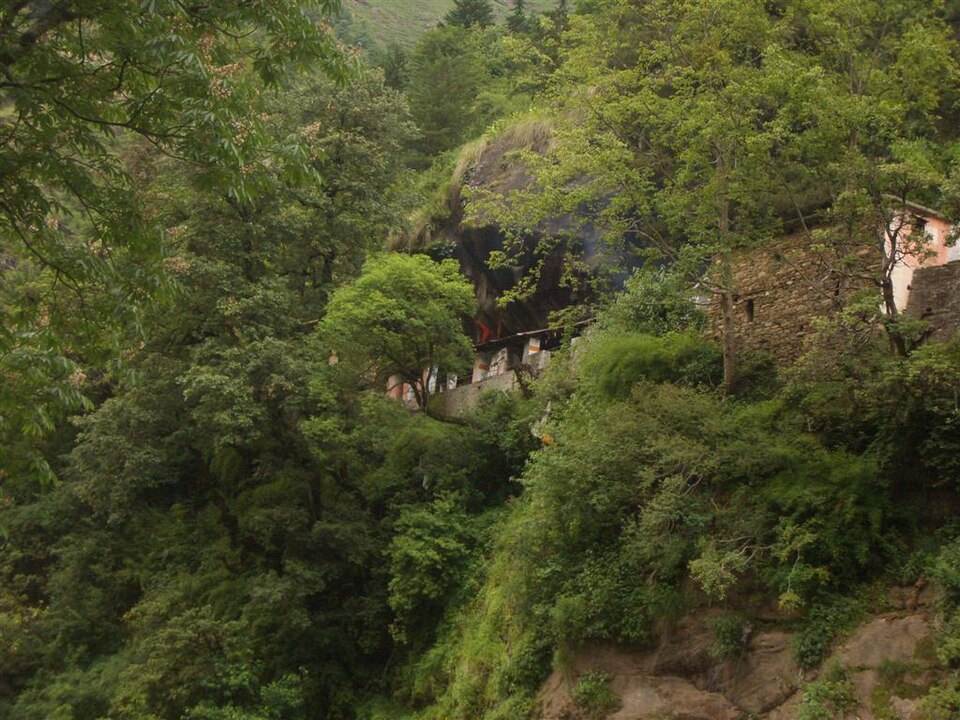
Kalpeshwar is a Hindu temple dedicated to Shiva, situated in the Urgam valley of Uttarakhand, India. It is the fifth and final temple in the Panch Kedar circuit, revered for housing the matted tresses (jata) of Shiva. Unlike the other Panch Kedar temples, Kalpeshwar remains accessible throughout the year.
Key Facts
- ›Dedicated to Lord Shiva, specifically worshipping his matted tresses (jata).
- ›Forms the fifth and final destination in the Panch Kedar pilgrimage circuit.
- ›Located at an altitude of 2,200 meters in the Urgam valley of Uttarakhand, India.
- ›Accessible year-round, making it the only Panch Kedar temple with continuous access.
- ›Approached through a cave passage, adding to its unique spiritual ambiance.
- ›Associated with the legend of the Pandavas seeking atonement for their sins.
Shiva
Fifth Temple of the Panch Kedar Circuit, Worship of Shiva's Matted Tresses, Year-Round Accessibility
Stone
Pandavas
Kalpganga River, Alaknanda River
About Kalpeshwar
Kalpeshwar Temple
Kalpeshwar is a significant Hindu temple dedicated to Lord Shiva, nestled in the picturesque Urgam valley within the Garhwal region of Uttarakhand, India. Situated at an elevation of 2,200 meters (7,217.8 ft), it holds a revered position as the fifth and final temple in the sacred Panch Kedar pilgrimage circuit. This circuit commemorates the divine anatomical forms of Shiva, with Kalpeshwar being particularly venerated for the worship of Shiva's matted tresses, known as 'jata'.
Legend and Significance
The temple's origins are deeply intertwined with the legend of the Pandavas, the heroes of the epic Mahabharata. Seeking atonement for sins committed during the Kurukshetra war, they embarked on a quest to appease Lord Shiva. According to the lore, Shiva, in the form of a bull, hid in the Garhwal Himalayas. When the Pandavas finally located him, Shiva manifested in five different parts at five distinct locations, forming the Panch Kedar temples. Kalpeshwar marks the site where Shiva's hair emerged. A notable aspect of Kalpeshwar is its year-round accessibility, making it the only Panch Kedar temple that can be visited throughout all seasons, unlike the other four which are often closed during winter due to heavy snowfall.
Access and Location
The temple is approached through a cave passage, adding to its mystique. While historically requiring a considerable trek, access has improved with a road leading to Devgram village, reducing the trek to just 300 meters. The Urgam valley itself is a fertile region characterized by dense forests, apple orchards, and terraced fields where potatoes are extensively cultivated. The confluence of the Alaknanda and Kalpganga rivers is also a notable feature along the path to the temple. The nearest major towns and transportation hubs include Rishikesh, which is approximately 253 km away via the Rishikesh-Badrinath road, and Dehradun, with its nearest airport at Jolly Grant, located about 272 km from the temple.
Source: Wikipedia ↗
Frequently Asked Questions
What is the significance of Kalpeshwar in the Panch Kedar circuit?
Kalpeshwar is the fifth and final temple in the Panch Kedar pilgrimage, which comprises five Shiva temples. It is believed that the matted tresses (jata) of Shiva manifested here. The temple's accessibility throughout the year makes it a crucial part of completing the circuit.
What is the legend behind the Panch Kedar temples, including Kalpeshwar?
According to legend, the Pandavas, after the Mahabharata war, sought to atone for their sins by worshipping Lord Shiva. Shiva, initially evading them, reappeared in five different forms across the Garhwal Himalayas, leading to the establishment of the Panch Kedar temples. Kalpeshwar is where Shiva's hair appeared.
How is Kalpeshwar temple accessed?
The temple is located in the Urgam valley. While previously requiring a 12 km trek from Helang, a road now extends to Devgram village, from where the trek to Kalpeshwar is approximately 300 meters. The road is generally accessible except during the monsoon season.
What part of Shiva is worshipped at Kalpeshwar?
At Kalpeshwar, the matted tresses (jata) of Lord Shiva are worshipped. The temple itself is a small stone structure, and devotees approach it through a cave passage.
Why is Kalpeshwar unique among the Panch Kedar temples?
Kalpeshwar is unique because it is the only temple in the Panch Kedar circuit that is accessible throughout the entire year. The other four temples (Kedarnath, Rudranath, Tungnath, and Madhyamaheshwar) are typically closed during the winter months due to heavy snowfall.
Related Temples (Hindu)

Thiruchendur Murugan Temple
The Thiruchendur Murugan Temple, situated in the Thoothukudi district of Tamil Nadu, is a prominent Hindu temple dedicated to Lord Murugan. It is recognized as one of the Six Abodes of Murugan and holds significant mythological importance, recounting Murugan's victory over the asura Surapadman.

Kapila Theertham
Kapila Theertham is a Shaivite temple located at the foot of the Tirumala hills in Andhra Pradesh, India. The temple is dedicated to Lord Shiva, referred to as Kapileswara, and is believed to have been installed by Sage Kapila. It is situated at the entrance of a mountain cave, with a temple tank fed by a mountain stream, and holds significant religious importance for pilgrims.

Yaganti temple
The Sri Yaganti Uma Maheswara Temple, located in Andhra Pradesh, India, is a significant Hindu temple dedicated to Shiva. Constructed in the 15th century by the Vijayanagara Empire's Sangama Dynasty, it is known for its unique architectural features and popular beliefs surrounding a growing Nandi statue and the absence of crows.