
Rampara Kalibari
Bengal architecture·India
The Rampara Kalibari is a Hindu temple dedicated to Siddheshwari Kali, located in Rampara near Kolkata. Established by the Nandy family, the temple is renowned for its Kali Pooja during Diwali and houses a wooden Kali idol reportedly over 500 years old. It is known for its traditional Bengal architecture and serves as an active center of worship and community gatherings.
Key Facts
- ›The presiding deity is Siddheshwari Kali, an aspect of Goddess Kali.
- ›The temple was founded by the Nandy family of Rampara, who were devotees of Goddess Kali.
- ›It is famous for its Kali Pooja, celebrated annually in October/November during Diwali.
- ›The wooden Kali idol is said to be over 500 years old.
- ›The temple complex includes a Jagannath Temple, a hall, a garden, and a pond.
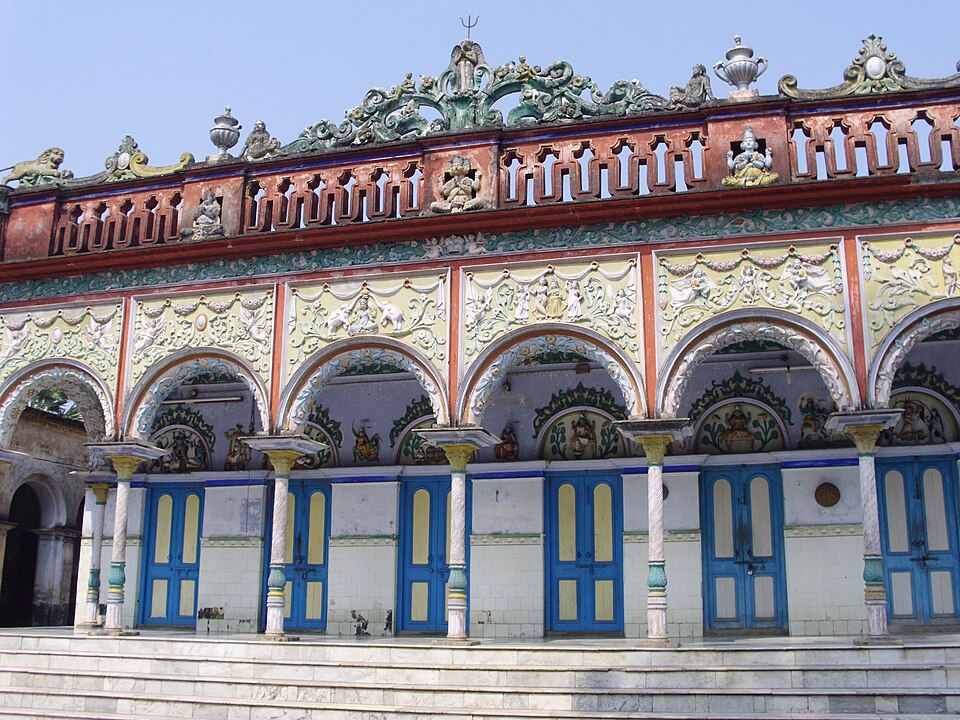
- ›The architecture follows the traditional style of Bengal, with a room shared by Goddess Kali and Deity Panchanan.
Siddheshwari Kali, Kali, Panchanan, Jagannath, Subhadra, Balaram
- Religious Pilgrimage Destination For Devotees of Kali
- Historical Significance Due To the Age of the Kali Idol
- Traditional Bengal Architecture
- Center For Local Community Festivals and Rituals
Kali Pooja, Diwali, Durga Pooja, Lakshmi Pooja, Saraswati Pooja, Rath Yatra, Jagannath Pooja
Nandy Family
Wooden Kali Idol
Pond
About Rampara Kalibari
The Rampara Kalibari is a significant Hindu temple located in Rampara, a village situated approximately 35 kilometers from Kolkata, India. The temple is primarily dedicated to Siddheshwari Kali, an aspect of the powerful Hindu goddess Kali. The Nandy family of Rampara, known for their deep devotion to Goddess Kali, are credited with founding and patronizing the temple.
History and Establishment
The origins of the Rampara Kalibari trace back to the Nandy family's faith in Goddess Kali. The temple was established with the aim of bringing prosperity and happiness to the people of Rampara and its surrounding villages. While historical records suggest the initial temple was built over 300 years ago, it has undergone rebuilding and development over centuries. The Nandy family's descendants continue to oversee the daily puja rituals and maintenance of the temple.
Architectural Features
The temple adheres to the traditional architectural style prevalent in Bengal. Its complex is designed with multiple rooms, including a unique arrangement where the main deity, Goddess Kali, shares a room with the deity Panchanan. Within the premises, there is also a dedicated space for the Jagannath Temple, housing deities Jagannath, Subhadra, and Balaram. The temple complex features a spacious courtyard, a small garden, and a pond, contributing to its serene atmosphere.
Religious Significance and Worship
The Rampara Kalibari is particularly famous for its annual Kali Pooja, which takes place in October or November, coinciding with the festival of Diwali. Devotees from distant villages and other regions flock to the temple during this time to seek blessings from the deity. The wooden idol of Goddess Kali is a major attraction, reportedly over 500 years old, drawing a large number of pilgrims. In addition to Kali Pooja, the temple also observes Durga Pooja, Lakshmi Pooja, and Saraswati Pooja, along with participating in the Rath Yatra festival for Jagannath Pooja. The temple serves as an active center for worship, with newlywed couples often seeking the deity's blessings before commencing auspicious rituals.
Source: Wikipedia ↗
Frequently Asked Questions
Where is the Rampara Kalibari located?
The Rampara Kalibari is situated in Rampara, a village near Kolkata, approximately 35 km away from the city. It is a prominent landmark in the region.
Who is the main deity worshipped at Rampara Kalibari?
The presiding deity of the Rampara Kalibari is Siddheshwari Kali, an aspect of Goddess Kali. Siddheshwari is the feminine form of Siddheshwar, a name for Lord Shiva.
What is the history behind the Nandy family's involvement with the temple?
The temple was founded by the Nandy family of Rampara, who were deeply devoted to Goddess Kali. Descendants of the family have been responsible for its rebuilding, development, and ongoing rituals and maintenance.
What makes the Kali idol at Rampara Kalibari significant?
The wooden Kali idol at Rampara Kalibari is considered highly significant as it is believed to be more than 500 years old. Many devotees visit the temple seeking the sight of this ancient deity.
What other deities are present in the temple complex?
Besides Siddheshwari Kali, the temple complex also houses the deity Panchanan, who shares a room with Goddess Kali. Additionally, there is a separate room dedicated to Jagannath, Subhadra, and Balaram, indicating the presence of a Jagannath Temple within the premises.
What architectural style is characteristic of the Rampara Kalibari?
The Rampara Kalibari is built in the traditional style of Bengal architecture. It features multiple rooms and a courtyard, and the initial structure was built over 300 years ago, with subsequent rebuilding in the early 20th century.
Besides Kali Pooja, what other festivals are celebrated at the temple?
In addition to the renowned Kali Pooja, the temple also celebrates Durga Pooja, Lakshmi Pooja, and Saraswati Pooja, which are common festivals observed throughout West Bengal. The temple premises also host various other occasions and auspicious functions.
Related Temples (Hindu)

Taraknath Temple
The Taraknath Temple, located in Tarakeswar, West Bengal, India, is a significant Hindu pilgrimage site dedicated to Lord Shiva, worshiped here as Tarakanatha. Constructed in 1729, it features a distinct Bengal architectural style with an 'atchala' structure and an adjacent 'natmandir'. The temple is renowned for its belief that a dip in the nearby Dudhpukur tank fulfills prayers and is considered one of the 64 Jyotirlingas.

Tanot Mata Temple
The Tanot Mata Temple is a significant Hindu shrine located in the Jaisalmer district of Rajasthan, India, near the Pakistan border. Revered as a form of Goddess Hinglaj Mata, the temple is famously associated with the Indian victories in the Indo-Pakistani Wars of 1965 and 1971, with local folklore attributing the successful outcomes to divine intervention. The Border Security Force of India now manages the temple complex, which also includes a victory tower and a war museum.
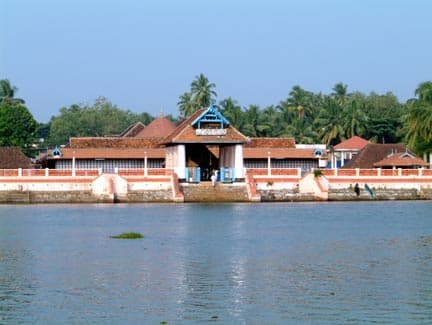
Thriprayar Temple
The Thriprayar Temple, also known as the Shree Ramaswami Temple, is a significant Hindu temple located in Triprayar, Thrissur district, Kerala, India. It is dedicated to Lord Rama, the seventh incarnation of Vishnu, who is depicted with four arms holding a conch, discus, bow, and garland. The temple's origin story involves the idol being worshipped by Krishna in Dwarka, later immersed in the sea, and eventually found by fishermen.