
Jagannath Temple
The Jagannath Temple in Ranchi, Jharkhand, is a 17th-century Hindu temple dedicated to Lord Jagannath. Built in the Kalinga architectural style, it resembles the famous Jagannath Temple of Puri and hosts an annual Rath Yatra festival.
Key Facts
- ›Constructed in the 17th century, with completion on December 25, 1691.
- ›Dedicated to Lord Jagannath.
- ›Built in the Kalinga architectural style, similar to the Puri temple.
- ›Located atop a hillock approximately 10 kilometers from Ranchi.
- ›Hosts an annual Rath Yatra festival and fair.
- ›Vandalized by Mughal Emperor Aurangzeb in 1691.

Jagannath
Religious Pilgrimage, Architectural Style, Annual Rath Yatra Festival
Barkagarh
Rath Yatra
Ani Nath Shahdeo
About Jagannath Temple
Jagannath Temple, Ranchi
The Jagannath Temple in Ranchi, Jharkhand, is a significant Hindu place of worship dedicated to Lord Jagannath. Constructed in the 17th century, its foundation was laid with the completion of its building on December 25, 1691. The temple's architectural style is Kalinga, drawing clear inspiration from the renowned Jagannath Temple in Puri, though it is a more modest in scale.
History and Construction
The temple was commissioned and built by the king of Barkagarh, Thakur Ani Nath Shahdeo. Tragically, the temple faced desecration in the same year of its completion, 1691, by the Mughal Emperor Aurangzeb. The structure endured further hardship when it collapsed on August 6, 1990. A subsequent reconstruction effort was completed on February 8, 1992, restoring the temple to its present form.
Location and Accessibility
Situated atop a hillock approximately 10 kilometers from the main town of Ranchi, the temple offers scenic views. Access to the site is provided by both a series of steps and a motorable path, making it accessible to a variety of visitors.
Religious Significance and Festivals
The Jagannath Temple is an active site of worship and a pilgrimage destination. It is particularly known for its annual Rath Yatra festival, celebrated in the month of Aashaadha. This event mirrors the famous car festival held in Puri and attracts thousands of tribal and non-tribal devotees from Ranchi and surrounding regions, fostering a sense of community and devotion.
Source: Wikipedia ↗
Frequently Asked Questions
When was the Jagannath Temple in Ranchi built?
The construction of the Jagannath Temple in Ranchi was completed on December 25, 1691. It is considered a 17th-century temple.
Who built the Jagannath Temple in Ranchi?
The temple was built by the king of Barkagarh, Jagannathpur Thakur Ani Nath Shahdeo. The structure was later desecrated by Mughal Emperor Aurangzeb in the same year of its completion.
What is the architectural style of the Jagannath Temple in Ranchi?
The temple is built in the Kalinga architectural style. It bears a resemblance to the Jagannath Temple in Puri, though it is on a smaller scale.
Does the Jagannath Temple in Ranchi host any festivals?
Yes, similar to the car festival in Puri, the Jagannath Temple in Ranchi holds an annual Rath Yatra and fair in the month of Aashaadha. This event attracts thousands of devotees.
Has the Jagannath Temple in Ranchi undergone any reconstruction?
The temple collapsed on August 6, 1990, and was subsequently reconstructed. The reconstruction was completed on February 8, 1992.
Related Temples (Hindu)

Kichakeshwari Temple
The Kichakeshwari Temple in Khiching, Odisha, is a Hindu temple dedicated to Goddess Chamunda, also known as Kali. It served as the family and state deity for the Bhanja rulers of Mayurbhanj, with its original structure dating back to the 7th or 8th century. The temple is renowned for its Kalinga architectural style and intricate carvings, having been significantly reconstructed in 1934.

Lingaraj Temple
The Lingaraj Temple in Bhubaneswar, Odisha, India, is a prominent Hindu temple dedicated to Lord Shiva and is one of the city's oldest and most significant landmarks. Representing the pinnacle of Kalinga architecture, the temple complex features a central tower reaching 180 feet and over a hundred smaller shrines within its walls. It remains an active site of worship, drawing large crowds for daily rituals and major festivals like Shivaratri.
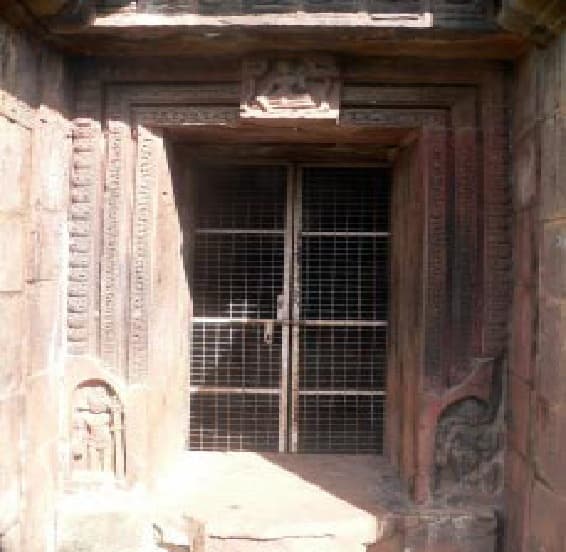
Nagesvara Temple, Bhubaneswar
The Nagesvara Temple is a functioning Hindu temple situated in Bhubaneswar, Odisha, India, notable for its ochrous sandstone exterior carved in the Kalinga style. Dedicated to Lord Shiva, it features sculptural embellishments of his family members on its outer walls.