
Lingaraj Temple
The Lingaraj Temple in Bhubaneswar, Odisha, India, is a prominent Hindu temple dedicated to Lord Shiva and is one of the city's oldest and most significant landmarks. Representing the pinnacle of Kalinga architecture, the temple complex features a central tower reaching 180 feet and over a hundred smaller shrines within its walls. It remains an active site of worship, drawing large crowds for daily rituals and major festivals like Shivaratri.
Key Facts
- ›Dedicated to Lord Shiva, with Parvati also worshipped as Annapurna or Girija.
- ›The largest temple in Bhubaneswar, with a central tower of 180 feet (55 m).
- ›Embodies the Kalinga architectural style, featuring a vimana, jagamohana, natamandira, and bhoga-mandapa.
- ›Believed to have been built by the Somavamsi dynasty with later additions by the Ganga rulers.
- ›The temple complex includes 108 other shrines and is enclosed by a large compound wall.
- ›Active in worship practices, unlike many other ancient temples in Bhubaneswar.

Shiva, Parvati
- Prominent landmark of Bhubaneswar
- Major tourist attraction of Odisha
- Quintessence of Kalinga architecture
- Culmination of medieval architectural tradition in Bhubaneswar
- Active place of worship
Somavamsi Dynasty, Ganga Rulers
Shivaratri, Ratha-Yatra, Sunian Day, Chandan Yatra
Khondalite, Laterite
Somavamsi Kings, Ganga Rulers, King Yayati I, Wife of Salini
- Sculptures of men and beast on the exterior walls of the Hall of Offering
- Sculptures displaying women and couples on the side walls of the Festival Hall
- Female figures in different poses on the tower walls
Bindusagar Tank
About Lingaraj Temple
The Lingaraj Temple, located in Bhubaneswar, the capital of the Indian state of Odisha, is a significant Hindu temple dedicated to Lord Shiva. It stands as one of the oldest and most prominent landmarks in the city, drawing numerous tourists and pilgrims. The temple is particularly noted for its architectural grandeur and its status as an active place of worship, unlike many other ancient temples in the region.
History and Construction
The temple's construction is attributed to the kings of the Somavamsi dynasty, with later additions and patronage from the Ganga rulers. While its present form dates to the late eleventh century, historical texts suggest that parts of the temple may have been built as early as the sixth century CE. The main components, including the sanctum, assembly hall, and tower, were completed during the eleventh century, with the hall of offerings added in the twelfth century. The natamandira was built between 1099 and 1104 CE.
Architecture
The Lingaraj Temple is a prime example of Kalinga architecture, specifically employing the Deula style. The complex is enclosed by a thick laterite compound wall and features a central tower that stands 180 feet (55 meters) tall, intricately sculpted. The temple is organized into four axial components of increasing height: the vimana (housing the sanctum), jagamohana (assembly hall), natamandira (festival hall), and bhoga-mandapa (hall of offerings). The temple is constructed from Khondalite and laterite stone.
Religious Significance and Worship
Bhubaneswar is historically known as Ekamra Kshetra, a name linked to legends of the Lingaraja deity originally being found under a mango tree. The temple remains a vibrant center for daily worship, with elaborate rituals observed throughout the day. It is also revered for the belief that an underground river originating from the temple feeds the nearby Bindusagar Tank, whose waters are considered sacred and capable of healing.
Festivals and Visitor Information
Shivaratri is the most significant annual festival, attracting hundreds of thousands of devotees. Other important celebrations include the Ratha-Yatra (chariot festival) on Ashokashtami, Sunian day, and the Chandan Yatra. While non-Hindus are not permitted inside the temple complex, they can view the exteriors from a designated viewing platform. The temple is maintained by a Temple Trust Board and the Archaeological Survey of India.
Source: Wikipedia ↗
Frequently Asked Questions
Who is the primary deity worshipped at Lingaraj Temple?
The primary deity worshipped at Lingaraj Temple is Lord Shiva, in his lingam form. Shiva's consort, Parvati, is also venerated within the temple, often referred to as Annapurna or Girija.
What is the architectural style of Lingaraj Temple?
Lingaraj Temple is a prime example of Kalinga architecture, built in the Deula style. This style is characterized by four components: the vimana (sanctum structure), jagamohana (assembly hall), natamandira (festival hall), and bhoga-mandapa (hall of offerings), each progressively increasing in height.
When was Lingaraj Temple constructed?
The temple in its present form dates to the last decade of the eleventh century, with evidence suggesting parts were built as early as the sixth century CE. The Assembly hall, sanctum, and tower were constructed in the eleventh century, while the Hall of offering was added in the twelfth century.
What is the religious significance of Bhubaneswar being called Ekamra Kshetra?
Bhubaneswar is known as Ekamra Kshetra because, according to legend and texts like the 13th-century Ekamra Purana, the deity of Lingaraja was originally situated under a mango tree. The name 'Ekamra' translates to 'single mango tree'.
Are non-Hindus allowed to enter Lingaraj Temple?
No, the temple compound is not open to non-Hindus. However, there is a viewing platform located beside the compound wall that offers a good view of the main exteriors.
What are the major festivals celebrated at Lingaraj Temple?
The main festival celebrated annually is Shivaratri, which draws hundreds of thousands of visitors. Other significant events include the chariot festival (Ratha-Yatra) on Ashokashtami, Sunian day, and the 22-day Chandan Yatra (Sandalwood ceremony).
Related Temples (Hindu)

Kichakeshwari Temple
The Kichakeshwari Temple in Khiching, Odisha, is a Hindu temple dedicated to Goddess Chamunda, also known as Kali. It served as the family and state deity for the Bhanja rulers of Mayurbhanj, with its original structure dating back to the 7th or 8th century. The temple is renowned for its Kalinga architectural style and intricate carvings, having been significantly reconstructed in 1934.

Jagannath Temple
The Jagannath Temple in Ranchi, Jharkhand, is a 17th-century Hindu temple dedicated to Lord Jagannath. Built in the Kalinga architectural style, it resembles the famous Jagannath Temple of Puri and hosts an annual Rath Yatra festival.
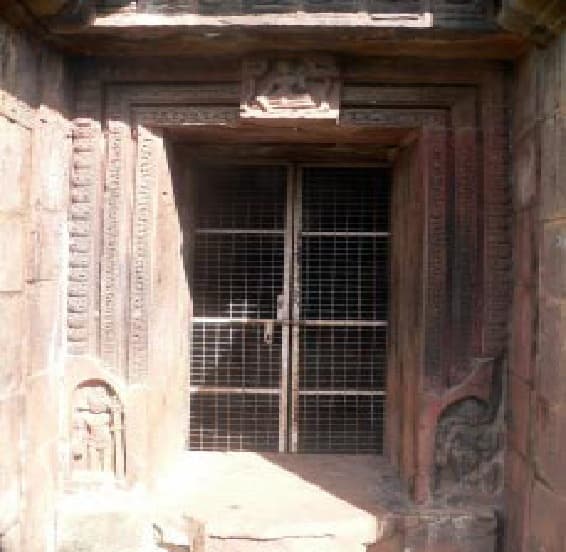
Nagesvara Temple, Bhubaneswar
The Nagesvara Temple is a functioning Hindu temple situated in Bhubaneswar, Odisha, India, notable for its ochrous sandstone exterior carved in the Kalinga style. Dedicated to Lord Shiva, it features sculptural embellishments of his family members on its outer walls.