
Nagesvara Temple, Bhubaneswar
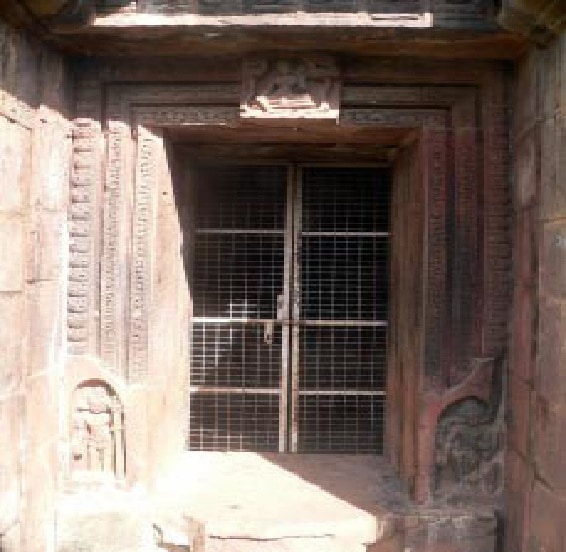
The Nagesvara Temple is a functioning Hindu temple situated in Bhubaneswar, Odisha, India, notable for its ochrous sandstone exterior carved in the Kalinga style. Dedicated to Lord Shiva, it features sculptural embellishments of his family members on its outer walls.
Key Facts
- ›The temple is located on the western right bank of the Lingaraja West Canal in Bhubaneswar, Odisha.
- ›Its exterior is constructed from ornately carved ochrous sandstone, characteristic of the Kalinga style.
- ›The garbha griha houses a Shivling approximately 2.5 feet in height and 1.5 feet in diameter.
- ›Sculptural embellishments on the outer walls depict Parvati, Kartikeya, and Ganesha.
- ›Local belief attributes the temple's construction to the Kesharis.
Shiva
Religious Pilgrimage, Architectural Style
Kesharis
Ochrous Sandstone
Kesharis
Parvati, Kartikeya, Ganesha
Lingaraja West Canal
About Nagesvara Temple, Bhubaneswar
The Nagesvara Temple is a functioning Hindu temple located in the city of Bhubaneswar, the capital of Odisha, India. It is situated on the western right bank of the Lingaraja West Canal, distinguishing it within the local landscape.
Description and Architecture
The temple stands on a platform measuring 5.6 metres wide, 5.0 metres deep, and 0.4 metres high, with the temple structure itself reaching a height of 8.15 metres. Its exterior is constructed from ornately carved ochrous sandstone, reflecting the distinctive style of the Kalinga Kingdom. The temple incorporates numerous niches for statuary.
Religious Significance
The primary deity worshipped at the Nagesvara Temple is Lord Shiva. The garbha griha houses a Shivling that is approximately 2.5 feet in height and 1.5 feet in diameter. The outer walls are embellished with sculptures depicting the family members of Lord Shiva: Parvati to the north, Kartikeya to the east, and Ganesha to the south.
Historical Context
Local tradition attributes the construction of the Nagesvara Temple to the Kesharis, a historical dynasty. While the exact construction date is not specified, its preservation status indicates it is in generally good condition, with only some surfaces showing signs of deterioration.
Location and Preservation
Nagesvara Temple is found amidst a residential area in Bhubaneswar. Despite some surface deterioration, the temple is considered to be in good condition today, continuing to serve as an active place of worship.
Source: Wikipedia ↗
Frequently Asked Questions
Where is the Nagesvara Temple located?
The Nagesvara Temple is located in the city of Bhubaneswar, the capital of Odisha, India. It stands on the western right bank of the Lingaraja West Canal.
What deity is worshipped at the Nagesvara Temple?
The primary deity worshipped at the Nagesvara Temple is Lord Shiva, as indicated by the Shivling housed in the garbha griha.
What is the architectural style of the Nagesvara Temple?
The temple is carved in the style of the Kalinga Kingdom, with an exterior made from ornately carved ochrous sandstone.
What sculptures adorn the outer walls of the Nagesvara Temple?
The outer walls of the Nagesvara Temple feature sculptural embellishments of Lord Shiva's family members. These include Parvati to the north, Kartikeya to the east, and Ganesha to the south.
Who is believed to have built the Nagesvara Temple?
Local residents believe that the Nagesvara Temple was built by the Kesharis, a historical dynasty.
Related Temples (Hindu)

Kichakeshwari Temple
The Kichakeshwari Temple in Khiching, Odisha, is a Hindu temple dedicated to Goddess Chamunda, also known as Kali. It served as the family and state deity for the Bhanja rulers of Mayurbhanj, with its original structure dating back to the 7th or 8th century. The temple is renowned for its Kalinga architectural style and intricate carvings, having been significantly reconstructed in 1934.

Jagannath Temple
The Jagannath Temple in Ranchi, Jharkhand, is a 17th-century Hindu temple dedicated to Lord Jagannath. Built in the Kalinga architectural style, it resembles the famous Jagannath Temple of Puri and hosts an annual Rath Yatra festival.

Lingaraj Temple
The Lingaraj Temple in Bhubaneswar, Odisha, India, is a prominent Hindu temple dedicated to Lord Shiva and is one of the city's oldest and most significant landmarks. Representing the pinnacle of Kalinga architecture, the temple complex features a central tower reaching 180 feet and over a hundred smaller shrines within its walls. It remains an active site of worship, drawing large crowds for daily rituals and major festivals like Shivaratri.