
Radha Madan Mohan Temple, Vrindavan
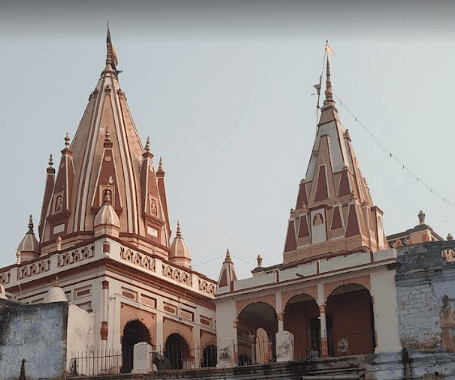
The Radha Madan Mohan Temple in Vrindavan is a significant 16th-century Hindu temple, considered one of the oldest in the city. It is dedicated to Madan Mohan, a form of Lord Krishna, accompanied by Goddess Radha and Lalita gopi. The temple showcases a blend of Mughal and Kalinga Nagara architectural influences.
Key Facts
- ›The temple was rebuilt in 1580 AD under the guidance of Sri Sanatana Goswami.
- ›It is built in the Nagara style of architecture using red sandstone.
- ›The original idol of Madan Mohan was moved to Karauli, Rajasthan, during the Mughal invasion.
- ›A replica of the original deity was established in the Vrindavan temple in 1748 AD.
- ›The temple is situated near the Yamuna River at a height of 50 feet.
- ›It is considered one of the most popular Goswami shrines in Uttar Pradesh.

Madan Mohan, Radha, Lalita Gopi
One of the Oldest Temples In Vrindavan, Important Goswami Shrine
Mughal Empire, Kachwaha Dynasty
Red Sandstone
Sri Sanatana Goswami, Kapur Ram Das, Nanda Kumar Basu
Yamuna River
About Radha Madan Mohan Temple, Vrindavan
The Radha Madan Mohan Temple, also known as the Madan Mohan Temple, is a historically significant Hindu temple located in Vrindavan, Uttar Pradesh, India. Dating back to the 16th century, it is recognized as one of the oldest and most revered temples in the holy city of Vrindavan.
History and Construction
Popular folklore attributes the temple's origin to approximately 5,000 years ago, with its initial construction credited to Vajranabh, the great-grandson of Lord Krishna. However, historical records indicate that the temple was rebuilt in 1580 AD under the spiritual guidance of Sri Sanatana Goswami, with the support of a trader from Multan named Kapur Ram Das. The temple's original idol of Madan Mohan was cherished by saint Mira Bai during her stay in Vrindavan.
During the invasion by the Mughal emperor Aurangzeb in 1670 AD, the original idol of Madan Mohan was secretly transported to Jaipur by King Jai Singh of Jaipur overnight to protect it from the impending attack on Vrindavan and Mathura temples. Subsequently, the deities were moved to Karauli by King Gopal Singh. The original deities of the Radha Madan Mohan Temple are presently enshrined in the Madan Mohan temple in Karauli, Rajasthan.
In 1748 AD, a replica of the original Madan Mohan deity was established in the Vrindavan temple. Later, in 1819 AD, the temple was rebuilt at its current location atop a hill near the Yamuna River by Nanda Kumar Basu, a zamindar from Baharu. The Radha Madan Mohan Temple in Vrindavan today houses this replica of the original deities.
Architecture and Location
The temple is constructed in the Nagara style of architecture, characterized by its ascending tower. It is built in an oval shape using red sandstone and stands at a height of approximately 20 meters (50 feet). Its prominent location on the bank of the Yamuna River, near Kaliya Ghat, adds to its scenic and spiritual importance. The temple is also noted as one of the most popular shrines associated with the Goswamis in Uttar Pradesh.
Worship and Timings
The presiding deity of the temple is Madan Mohan, a form of Lord Krishna, who is positioned on the central altar. He is flanked by his consort, Goddess Radha, and Lalita gopi on either side. The temple observes specific timings for darshan, which vary between winter and summer months. Winter timings are typically from 7:00 am to 12:00 pm in the morning and 4:00 pm to 8:00 pm in the evening. Summer timings usually extend from 6:00 am to 11:00 am in the morning and 5:00 pm to 9:30 pm in the evening, adhering to the Indian Standard Time (UTC+05:30).
Source: Wikipedia ↗
Frequently Asked Questions
When was the Radha Madan Mohan Temple built?
While popular folklore suggests the temple is 5,000 years old and was first constructed by Krishna's great-grandson, historical sources indicate it was rebuilt in 1580 AD under Sri Sanatana Goswami's guidance.
What is the architectural style of the Radha Madan Mohan Temple?
The temple is built in the Nagara style of architecture. It features an oval shape and is constructed with red sandstone, standing at a height of 20 meters.
What happened to the original idol of Madan Mohan?
During the Mughal emperor Aurangzeb's invasion in 1670 AD, the original idol was secretly moved to Jaipur and later to Karauli, Rajasthan, for safekeeping. The original deities are currently installed in the Madan Mohan temple in Karauli.
Is the current deity in the Vrindavan temple the original?
No, the current deities installed in the Radha Madan Mohan Temple in Vrindavan are a replica of the original deities. This replica was established in 1748 AD.
Where is the Radha Madan Mohan Temple located?
The Radha Madan Mohan Temple is located in Vrindavan, Uttar Pradesh, India. It stands on the bank of the Yamuna River, near Kaliya Ghat.
Related Temples (Hindu)

Ram Mandir
The Ram Mandir is a significant Hindu temple complex located in Ayodhya, Uttar Pradesh, India, believed by many to be situated at the birthplace of the deity Rama. Its construction followed decades of religious and legal disputes involving the site of the former Babri Masjid, culminating in a Supreme Court decision in 2019 that awarded the land for the temple's construction. The temple was consecrated on January 22, 2024, and has since drawn immense numbers of visitors.
Budhanath Temple, Bhagalpur
The Budhanath Temple, also known as Vriddheshwarnath or Baba Bal Vridheshwarnath Temple, is a significant Hindu temple dedicated to Lord Shiva, located on the banks of the Uttarvahini Ganga in Bhagalpur, India. It is believed to be one of the 108 Nath temples mentioned in the Shiva Purana and is celebrated for its spiritual ambiance and as a focal point for regional cultural identity.

Mundeshwari Temple
The Mundeshwari Devi Temple, located on the Mundeshwari Hills in Bihar, India, is an ancient Hindu temple dedicated to Goddess Durga and Lord Shiva. It is recognized by the Archaeological Survey of India as a protected monument and is claimed by some scholars to be the oldest functional Hindu temple in the world, with evidence suggesting continuous worship since at least the 6th-7th century CE.