
Mundeshwari Temple
The Mundeshwari Devi Temple, located on the Mundeshwari Hills in Bihar, India, is an ancient Hindu temple dedicated to Goddess Durga and Lord Shiva. It is recognized by the Archaeological Survey of India as a protected monument and is claimed by some scholars to be the oldest functional Hindu temple in the world, with evidence suggesting continuous worship since at least the 6th-7th century CE.
Key Facts
- ›Considered by some to be the oldest functional Hindu temple in the world.
- ›Dedicated to Goddess Durga (as Mundeshwari) and Lord Shiva (as Mandaleshwar).
- ›An ASI protected monument since 1915.
- ›The current octagonal shrine's architectural elements are dated by some historians to the 6th-7th century CE, though the structure itself may be from the 16th-17th century.
- ›Features a rare octagonal plan, indicative of early Nagara style architecture.
- ›A Brahmi inscribed seal of Sri Lankan King Dutthagamani was discovered, suggesting ancient pilgrimage ties.

Durga, Shiva
- Claimed Oldest Functional Hindu Temple In the World
- Continuous Worship For Centuries
- Ancient Pilgrimage Site
- Tantric Cult Worship Site
- Early Example of Nagara Architecture
Ramnavami, Shivratri, Navaratra
Stone
Dvarapalas, Ganga, Yamuna, Murtis of Mundeshwari, Chaturmukh Shiva Linga, Murtis of Ganesha, Surya, and Vishnu, Vase and Foliage Designs On Mouldings
Son River
About Mundeshwari Temple
Mundeshwari Devi Temple
The Mundeshwari Devi Temple is an ancient Hindu temple located on the Mundeshwari Hills in Bihar, India. It is dedicated to Goddess Durga, in her form as Mundeshwari, and Lord Shiva, as Mandaleshwar. The temple is an Archaeological Survey of India (ASI) protected monument and is widely considered to be one of the oldest continuously functioning Hindu temples in the world.
History and Age Debates
While claims suggest the temple dates back to 108 CE, based on an inscription mentioning a local ruler Udayasena, historical and architectural analyses present a more nuanced view. Inscriptions found at the site, along with stylistic analysis of sculptures and architectural fragments, indicate that Mundeshwari was an important temple site from at least the 6th century CE, continuing through the 7th-8th centuries. Some historians argue that the present octagonal shrine structure may have been built or rebuilt as late as the 16th-17th century, incorporating elements from earlier temples that once stood on the hilltop. The discovery of a Brahmi inscribed seal belonging to Sri Lankan King Dutthagamani (1st century BCE) points to its ancient status as a pilgrimage destination attracting visitors from distant regions.
Religious and Architectural Significance
The temple's worship practices, particularly of Devi Mundeshwari, are indicative of the tantric cult prevalent in Eastern India. It is renowned for its continuous rituals and worship, contributing to its claim of being the oldest functional temple. Architecturally, the temple is notable for its rare octagonal plan, an early example of the Nagara style in Bihar. Although its original tower (shikhara) has been destroyed, the structure features niches on its walls, intricately carved door jambs, and mouldings. The sanctum sanctorum houses the idol of Devi Mundeshwari and a four-faced Shiva linga, alongside other deities like Ganesha, Surya, and Vishnu.
Pilgrimage and Festivals
Mundeshwari Temple attracts a large number of pilgrims annually, especially during the major Hindu festivals of Ramnavami and Shivratri. A significant annual fair (mela) is held nearby during the Navaratra period, drawing thousands of devotees and visitors. The temple is accessible by road from major cities like Patna, Gaya, and Varanasi, with the nearest railway station at Mohania - Bhabua Road and the nearest airport at Lal Bahadur Shastri International Airport, Varanasi.
Source: Wikipedia ↗
Frequently Asked Questions
When was the Mundeshwari Temple built?
There are differing views on the temple's age. The ASI and Bihar State Religious Trust Board claim it dates to 108 CE. However, historians of Hindu temple architecture suggest that the existing architectural elements date from the 6th-7th century CE, with the present octagonal shrine possibly built or rebuilt in the 16th-17th century, incorporating earlier elements.
What deities are worshipped at Mundeshwari Temple?
The temple is primarily dedicated to Goddess Durga, worshipped in the form of Devi Mundeshwari, and Lord Shiva, represented by a Chaturmukh (four-faced) Shiva linga. The worship of Devi Mundeshwari is also linked to the tantric cult prevalent in Eastern India.
What is the architectural style of Mundeshwari Temple?
The temple is built of stone and features a rare octagonal plan. It is considered an early specimen of the Nagara style of temple architecture in Bihar. It has entrances on four sides with niches in the other four walls, and while its original shikhara (tower) is destroyed, it has a reconstructed roof.
Is Mundeshwari Temple an active place of worship?
Yes, rituals and worship are performed at Mundeshwari Temple without a break, leading to its claim as one of the most ancient functional Hindu temples.
What is the significance of Mundeshwari Temple?
Its significance lies in its claim as potentially the oldest functional Hindu temple in the world, its continuous worship, and its ancient pilgrimage status. The discovery of a seal from Sri Lankan King Dutthagamani indicates it attracted pilgrims from afar, and it is an important site for the tantric cult.
What major festivals are celebrated at Mundeshwari Temple?
The temple is visited by a large number of pilgrims, particularly during the Ramnavami and Shivratri festivals. A large annual fair (mela) is also held nearby during Navaratra, attracting thousands of visitors.
Related Temples (Hindu)
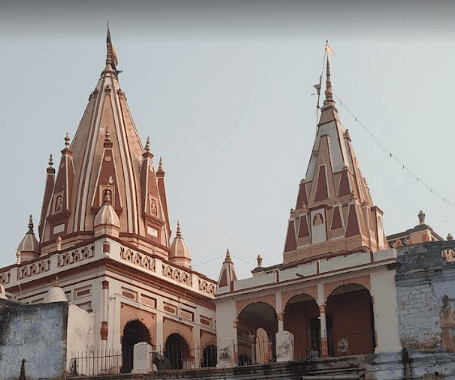
Budhanath Temple, Bhagalpur
The Budhanath Temple, also known as Vriddheshwarnath or Baba Bal Vridheshwarnath Temple, is a significant Hindu temple dedicated to Lord Shiva, located on the banks of the Uttarvahini Ganga in Bhagalpur, India. It is believed to be one of the 108 Nath temples mentioned in the Shiva Purana and is celebrated for its spiritual ambiance and as a focal point for regional cultural identity.

Mahamaya Temple
The Mahamaya Temple, located in Ratanpur, Chhattisgarh, India, is a significant Hindu temple dedicated to Goddess Durga and Mahalaksmi. It is recognized as one of the 52 Shakti Peethas and holds historical importance, with parts of the complex dating back to the 12th-13th centuries and a later structure built in 1492 CE.
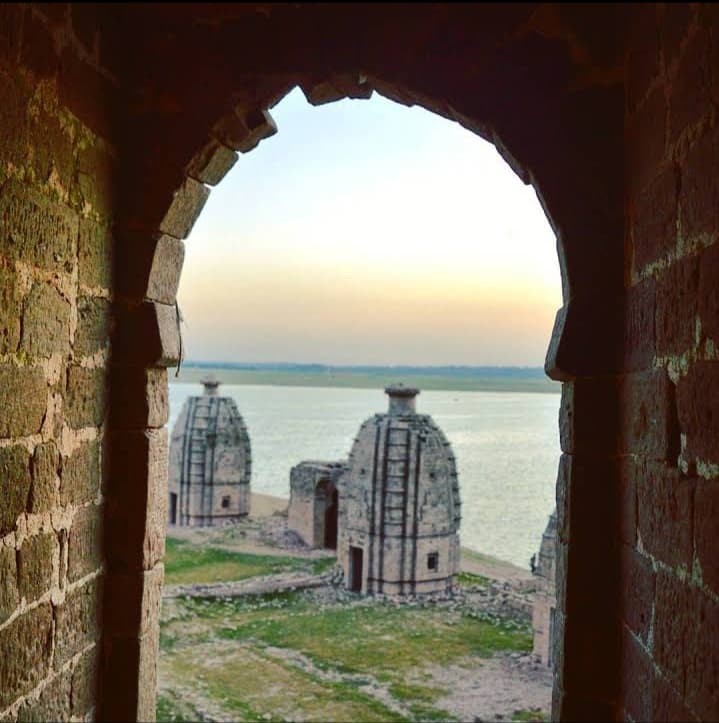
Bathu Temples
The Bathu Temples, also known as Bathu ki Ladi, are a cluster of ancient Hindu temples located in the Kangra district of Himachal Pradesh, India. Originally submerged by the Pong Dam reservoir in the 1970s, these temples are now only accessible for a few months each year when water levels recede. The main temple is primarily dedicated to Goddess Parvati and Lord Shiva, with some traditions also associating it with Lord Vishnu.