
Radha Damodar Temple, Junagadh
Gupta period (implied by 462 CE renovation)·India
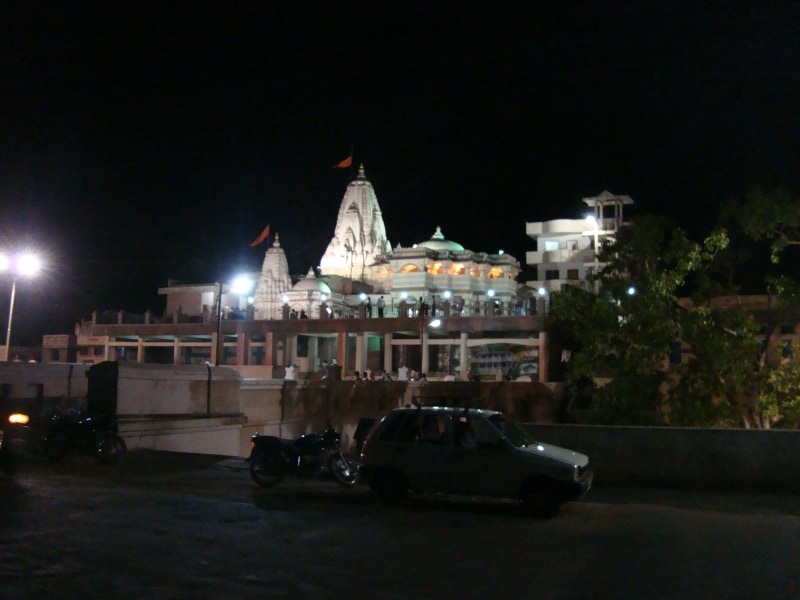
The Shri Radha Damodar Temple is an ancient Hindu temple located in the Junagadh district of Gujarat, India. Dedicated to Damodar Hari, a form of Lord Krishna, it also houses shrines for Goddess Radha, Lord Balarama, and Revati. The temple is renowned for its sacred Damodar Kund and Revati Kund, believed to offer spiritual purification and salvation.
Key Facts
- ›Dedicated to Damodar Hari (Lord Krishna) and Goddess Radha.
- ›Features two sacred kunds: Damodar Kund and Revati Kund.
- ›Renovated in 462 CE during the reign of King Skand Gupta.
- ›Constructed primarily from pink sandstone.
- ›Central shrine depicts Krishna in his four-armed Vishnu form.
- ›A significant site for devotees seeking salvation through bathing in Damodar Kund.
Krishna, Radha, Vishnu, Balarama, Revati, Ganesha
- Ancient Temple of Gujarat
- Believed To Be Built By Vajranabh, Grandson of Krishna
- Site For Pitru Tarpan
- Damodar Kund Believed To Grant Salvation
- Associated With Devotional Poet Narsinh Mehta
Gupta Empire
Janmashtami, Pitru Tarpan
Pink Sandstone
Vajranabh, Skand Gupta
Damodar Kund, Revati Kund, Swarna Rasha River
About Radha Damodar Temple, Junagadh
The Shri Radha Damodar Temple is an ancient Hindu place of worship situated in the Junagadh district of Gujarat, India. It is primarily dedicated to Damodar Hari, a name for Lord Krishna, who is venerated in the central shrine in his four-armed Vishnu form. Alongside Damodar Hari, Goddess Radha is also seated next to him, and the temple complex features separate shrines for Lord Balarama and his wife Revati, as well as for Lord Ganesha.
Historical Context and Significance
This temple is recognized as one of the ancient temples in Gujarat. Tradition holds that it was originally built by Vajranabh, the grandson of Lord Krishna. The temple underwent a significant renovation in 462 CE during the reign of King Skand Gupta, who belonged to the Gupta Empire. The temple is a significant pilgrimage destination, particularly for the "Shri Damodar Pilgrimage," which includes the temple and its adjacent sacred lakes, Damodar Kund and Revati Kund. These kunds are located along the road leading to the Girnar mountains.
Religious Practices and Beliefs
Devotees visit the Shri Radha Damodar Temple for various religious observances. It is especially crowded on the 15th day of the Krishna paksh of the Bhadra month for Pitru Tarpan, a ritual for paying tribute to deceased ancestors. A core belief associated with the temple is the spiritual significance of bathing in Damodar Kund. It is believed that taking a holy bath in this sacred water body can lead to salvation. The Skand Upanishad mentions that Damodar Kund lies in the path of the Swarna Rasha river, and bathing in it is said to absolve individuals of their sins. The famous devotional poet Narsinh Mehta is also historically associated with Damodar Kund, as he reportedly bathed there daily before performing his worship of Damodar (Krishna).
Architectural Features
The main temple structure is constructed from pink sandstone. It is divided into two principal sections: the Nij temple, with a peak height of 65 feet, and the Saloha Mandap, whose peak reaches 30.5 feet. The apex of the Nij temple is adorned with a flag. The architecture is further characterized by 32 arches and 84 intricately crafted pillars. The central shrine prominently displays Krishna with his attributes: a conch, discus, mace, and lotus in each of his four hands.
Source: Wikipedia ↗
Frequently Asked Questions
Who is the primary deity worshipped at the Radha Damodar Temple in Junagadh?
The primary deity worshipped at the Shri Radha Damodar Temple is Damodar Hari, another name for Lord Krishna. He is venerated in his four-armed Vishnu form, accompanied by his consort, Goddess Radha, in the central shrine.
What is the historical significance of the Radha Damodar Temple?
The temple is considered one of the ancient temples of Gujarat, with tradition attributing its construction to Vajranabh, the grandson of Krishna. It underwent renovation in 462 CE during the reign of King Skand Gupta of the Gupta Empire.
What are the key features of the temple's structure?
The main temple is constructed from pink sandstone and comprises a Nij temple with a 65-foot peak and a Saloha Mandap with a 30.5-foot peak. It also features 32 arcs and 84 well-crafted pillars.
What is the spiritual importance of Damodar Kund and Revati Kund?
Damodar Kund and Revati Kund are sacred water bodies within the temple premises. Devotees believe that bathing in Damodar Kund, situated on the path of the Swarna Rasha river, can lead to salvation and cleanse them of sins. The renowned poet Narsinh Mehta also bathed here daily before worship.
How is Janmashtami celebrated at the Radha Damodar Temple?
Janmashtami celebrations involve a Vishnu Yagya and the recitation of Vishnu Sahasra, followed by Krishna Janmotsav. The festival culminates with the midnight opening of the temple gates, followed by an Abhishek of Krishna, and a Matki (earthen pot) breaking ceremony where youth form human pyramids.
Related Temples (Hindu)

Taraknath Temple
The Taraknath Temple, located in Tarakeswar, West Bengal, India, is a significant Hindu pilgrimage site dedicated to Lord Shiva, worshiped here as Tarakanatha. Constructed in 1729, it features a distinct Bengal architectural style with an 'atchala' structure and an adjacent 'natmandir'. The temple is renowned for its belief that a dip in the nearby Dudhpukur tank fulfills prayers and is considered one of the 64 Jyotirlingas.

Tanot Mata Temple
The Tanot Mata Temple is a significant Hindu shrine located in the Jaisalmer district of Rajasthan, India, near the Pakistan border. Revered as a form of Goddess Hinglaj Mata, the temple is famously associated with the Indian victories in the Indo-Pakistani Wars of 1965 and 1971, with local folklore attributing the successful outcomes to divine intervention. The Border Security Force of India now manages the temple complex, which also includes a victory tower and a war museum.
Thriprayar Temple
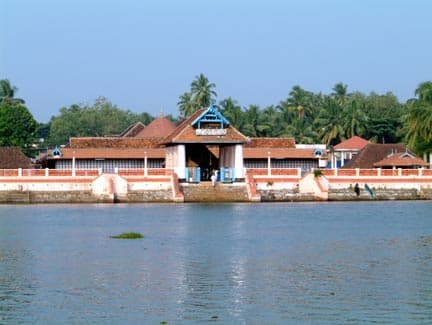
The Thriprayar Temple, also known as the Shree Ramaswami Temple, is a significant Hindu temple located in Triprayar, Thrissur district, Kerala, India. It is dedicated to Lord Rama, the seventh incarnation of Vishnu, who is depicted with four arms holding a conch, discus, bow, and garland. The temple's origin story involves the idol being worshipped by Krishna in Dwarka, later immersed in the sea, and eventually found by fishermen.