
Pattadakal
Fusion of Nagara and Dravida styles·8th century·India
Pattadakal is a UNESCO World Heritage Site in northern Karnataka, India, featuring a remarkable collection of 7th and 8th-century Hindu and Jain temples. It is renowned for its harmonious blend of architectural styles from northern and southern India, illustrating an "eclectic art" at its peak. The site served as a significant religious and cultural center during the Chalukya dynasty and is located on the west bank of the Malaprabha River.
Key Facts
- ›Pattadakal is a UNESCO World Heritage Site located in northern Karnataka, India.
- ›It comprises a group of 7th and 8th-century Hindu and Jain temples.
- ›The site showcases a blend of North Indian (Nagara) and South Indian (Dravida) architectural styles.
- ›Temples are primarily dedicated to Shiva, but also feature elements of Vaishnavism and Shaktism.
- ›The Virupaksha temple is an active site of Hindu worship.
- ›Pattadakal was a significant center for coronation ceremonies during the Chalukya dynasty.

Shiva, Vishnu, Devi
- Architectural Fusion of Northern and Southern Indian Styles
- Illustrates Eclectic Art At Its Height
- Historical Site For Chalukya Coronation Ceremonies
- Unesco World Heritage Site
- Important Religious and Cultural Center
Chalukya Dynasty, Rashtrakuta Kingdom, Late Chalukyas, Vijayanagara Empire, Adil Shahi Dynasty, Mughal Empire, Maratha Empire
Sandstone, Polished Black Granite
Vijayaditya Satyashraya, Queen Trailokyamahadevi
- Friezes Depicting Vedic and Puranic Concepts
- Stories From the Ramayana, Mahabharata, and Bhagavata Purana
- Elements of the Panchatantra and KirāTāRjunīYa
- Images of Ardhanarishvara
- Images of Harihara
- Images of Lakulisha
- Shiva and Parvati Flanked By Brahma and Vishnu
- River Goddesses Ganga and Yamuna
- Dancing Shiva Nataraja With Parvati
- Eight-Armed Shiva Killing the Demon Andhaka
- Avatars of Vishnu Such As Varaha
- Demon Ravana Lifting Mount Kailasha
- Playful Pranks of Krishna
- Marriage of Shiva and Parvati
- Shiva Coming Out of the Cylindrical Linga
- Ashta-Dikpalas
Malaprabha River
About Pattadakal
Pattadakal, also known by names such as Pattadakallu and Raktapura, is a significant historical and architectural site located in northern Karnataka, India. Situated on the west bank of the Malaprabha River, it is a UNESCO World Heritage Site comprising a collection of Hindu and Jain temples dating primarily from the 7th and 8th centuries CE. The site is managed by the Archaeological Survey of India and is a protected monument.
Historical Context and Significance
The Malaprabha River valley, where Pattadakal is located, has been a cradle of civilization and religious activity for centuries. The site gained prominence under the Chalukya dynasty, who utilized it for important coronation ceremonies, as its name "Pattadakal" implies. The area, along with nearby Aihole and Badami, became a nexus for architectural innovation and the fusion of ideas from both northern and southern India. This period saw the construction of numerous temples that exemplify an "eclectic art" at its zenith.
Architectural Fusion and Religious Dedication
Pattadakal is celebrated for its harmonious blend of architectural styles, incorporating elements from the northern Nagara-Prasada and southern Dravida-Vimana traditions. This unique synthesis is evident in the nine Hindu temples and one Jain temple present at the site. While the Hindu temples are predominantly dedicated to Shiva, they also incorporate theological concepts and narrative friezes from Vaishnavism and Shaktism, drawing stories from epics like the Ramayana and Mahabharata, as well as from Puranic and other Hindu texts. The Jain temple is dedicated to a single Jina.
Notable Temples and Artistic Depictions
Among the ten major temples, the Virupaksha Temple is notable for its scale and for being an active place of Hindu worship. The Sangameshwara Temple, though unfinished, showcases Dravida style and offers insights into religious practices and patronage. The temples feature intricate sculptures and murals depicting various deities, mythological scenes, and fables, such as those from the Panchatantra. Sculptures include depictions of Shiva in various forms, Vishnu's avatars, and scenes from Hindu epics, reflecting the rich artistic and religious expression of the era.
Source: Wikipedia ↗
Frequently Asked Questions
What is Pattadakal famous for?
Pattadakal is famous for its complex of Hindu and Jain temples built in the 7th and 8th centuries CE. It is particularly noted for its harmonious fusion of North and South Indian architectural styles, showcasing eclectic art at its height. The site is recognized as a UNESCO World Heritage Site.
Which deities are worshipped at Pattadakal?
The Hindu temples at Pattadakal are generally dedicated to Shiva. However, the temple carvings and friezes also feature theological concepts and legends from Vaishnavism and Shaktism, depicting stories from various Hindu texts.
What is the architectural style of the temples at Pattadakal?
The temples at Pattadakal exhibit a fusion of two major Indian architectural styles: the northern Nagara style (Rekha-Nagara-Prasada) and the southern Dravida style (Dravida-Vimana). Four temples were built in the Chalukya Dravida style, four in the Nagara style, and the Papanatha temple is a fusion of both.
When was Pattadakal constructed?
The majority of the temples at Pattadakal were constructed during the 7th and 8th centuries CE. The oldest major temple, Sangameshwara, dates to between 697 and 733 CE, while the Jain temple was likely built in the 9th century.
What is the significance of the Malaprabha River at Pattadakal?
The Malaprabha River flows on the west bank of Pattadakal. According to Hindu tradition, the river's northward flow before reaching Pattadakal is considered auspicious, resembling the Uttaravahini Ganga. The river valley itself is of great historical importance in South India.
Is Pattadakal a pilgrimage site?
Yes, Pattadakal is considered a significant religious site and was historically important for coronation ceremonies. The Virupaksha temple within the complex remains an active house of Hindu worship, attracting devotees.
Related Temples (Hindu)

Shore Temple
The Shore Temple, located in Mahabalipuram, Tamil Nadu, India, is an 8th-century AD structural stone temple complex overlooking the Bay of Bengal. Built from granite blocks during the reign of the Pallava king Narasimhavarman II, it is one of the oldest such temples in South India and a significant UNESCO World Heritage Site.

Chennakeshava Temple, Belur
The Chennakeshava Temple, located in Belur, Karnataka, is a 12th-century Hindu temple dedicated to Vishnu. Commissioned by King Vishnuvardhana, the temple is renowned for its intricate architecture, detailed sculptures, and narrative friezes depicting scenes from Hindu epics and daily life. It stands as a significant pilgrimage site and a testament to the artistic and theological achievements of the Hoysala Empire.
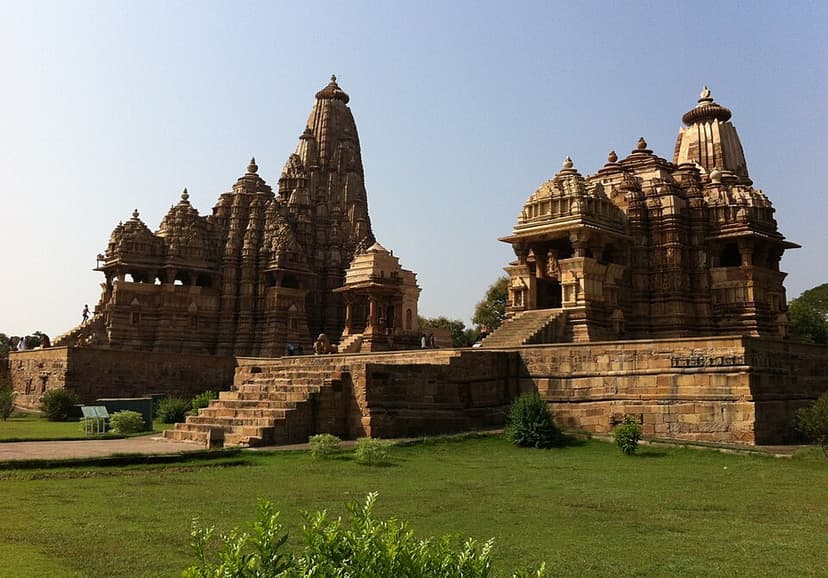
Khajuraho Group of Monuments
The Khajuraho Group of Monuments is a collection of Hindu and Jain temples located in Madhya Pradesh, India, renowned for their Nagara-style architecture and intricate sculptures, including notable erotic carvings. Primarily constructed by the Chandela dynasty between the 9th and 11th centuries, these temples showcase a blend of religious acceptance and artistic expression, reflecting aspects of medieval Indian life and Hindu philosophy.