
Chennakeshava Temple, Belur
Karnata Dravida·12th century·India
The Chennakeshava Temple, located in Belur, Karnataka, is a 12th-century Hindu temple dedicated to Vishnu. Commissioned by King Vishnuvardhana, the temple is renowned for its intricate architecture, detailed sculptures, and narrative friezes depicting scenes from Hindu epics and daily life. It stands as a significant pilgrimage site and a testament to the artistic and theological achievements of the Hoysala Empire.
Key Facts
- ›Commissioned by King Vishnuvardhana in 1117 CE.
- ›Dedicated to Lord Vishnu in his Chennakeshava form.
- ›Built over three generations, taking 103 years to complete.
- ›Features extensive sculptures, reliefs, and friezes depicting Hindu epics, dancers, and musicians.
- ›Declared a UNESCO World Heritage Site in 2023 as part of the Sacred Ensembles of the Hoysalas.
- ›Located on the banks of the Yagachi River in Belur, Karnataka.

Vishnu
- Architectural Marvel of the Hoysala Empire
- Important Pilgrimage Site In Vaishnavism
- Depicts Scenes From Hindu Epics and 12th-Century Life
- Testament To the Artistic, Cultural, and Theological Perspectives of 12th-Century South India
Hoysala Empire
Chloritic Schist
King Vishnuvardhana, Queen Santala Devi, Narasimha I, Ballala Ii, Harihara Ii, Wadiyar Dynasty
- Friezes Depicting Scenes From Ramayana, Mahabharata, and Puranas
- Sculptures of Dancers and Musicians
- Madanakai Figures
- Reliefs of Deities and Mythological Scenes
- Depictions of Secular Life, Including Artists and Musicians
- Images of A Jina From Jainism and the Buddha From Buddhism
Yagachi River
About Chennakeshava Temple, Belur
The Chennakeshava Temple, also known as the Keshava, Kesava, or Vijayanarayana Temple, is a significant 12th-century Hindu temple located in Belur, in the Hassan district of Karnataka, India. Commissioned by King Vishnuvardhana in 1117 CE on the banks of the Yagachi River, the temple stands as a prime example of Hoysala architecture and artistic achievement.
History and Construction
The construction of the Chennakeshava Temple was a multi-generational endeavor, spanning 103 years and completed over three generations of Hoysala rulers. The temple has endured periods of damage and plunder throughout its history, necessitating repeated rebuilding and repairs. It was commissioned by King Vishnuvardhana as one of the "five foundations" of his legacy and is reverentially described in medieval Hindu texts. The temple complex also includes the Kappe Chennigaraya temple, built concurrently by Queen Santala Devi.
Architectural and Artistic Significance
The temple is renowned for its exquisite architecture, detailed sculptures, reliefs, and friezes. The artwork offers a visual narrative of Hindu epics such as the Ramayana, Mahabharata, and Puranas, alongside depictions of 12th-century life, including dancers, musicians, and various professionals. The main temple, built with chloritic schist (soapstone), showcases a blend of North Indian Nagara and South Indian Karnata architectural styles. The exterior walls are adorned with horizontal bands of carvings, featuring elephants, scrollwork, horsemen, figurines, secular figures, and scenes from daily life, courtship, and mythology. The complex also features numerous smaller shrines dedicated to various deities and scholars.
Religious and Cultural Importance
The Chennakeshava Temple is dedicated to Lord Vishnu in his Chennakeshava form and has been an active place of worship since its consecration. It remains an important pilgrimage site within Vaishnavism. The temple's artwork also incorporates themes from Shaivism and Shaktism, as well as images of a Jina from Jainism and the Buddha from Buddhism, reflecting the diverse theological perspectives of the era. The temple complex, along with the Hoysaleswara Temple at Halebidu and the Keshava Temple at Somanathapura, was declared a UNESCO World Heritage Site in 2023 as part of the Sacred Ensembles of the Hoysalas, underscoring its global historical and cultural significance.
Source: Wikipedia ↗
Frequently Asked Questions
When was the Chennakeshava Temple built?
The temple was commissioned by King Vishnuvardhana in 1117 CE and was built over three generations, taking 103 years to complete. Construction and expansions continued for over a century after its initial consecration.
Who is the primary deity worshipped at the Chennakeshava Temple?
The temple is primarily dedicated to Lord Vishnu, whose form is known as Chennakeshava, meaning "handsome Kesava." It is an important pilgrimage site within Vaishnavism.
What is significant about the architecture and artwork of the temple?
The temple is remarkable for its intricate architecture, sculptures, reliefs, and friezes. The artwork visually narrates scenes from the Ramayana, Mahabharata, and Puranas, as well as depicting 12th-century life, dancers, and musicians.
What historical events have affected the Chennakeshava Temple?
The temple has been repeatedly damaged and plundered during wars, notably by Malik Kafur in the early 14th century and by a Delhi Sultanate army in 1326 CE. It has also undergone numerous reconstructions and repairs throughout its history by various dynasties.
Is the Chennakeshava Temple still an active place of worship?
Yes, the Chennakeshava Temple has been an active Hindu temple since its inception and remains an important pilgrimage site in Vaishnavism.
What materials were used in the construction of the Chennakeshava Temple?
The primary building material used in the Chennakeshava Temple is chloritic schist, also known as soapstone. This material is soft when quarried, allowing for intricate carvings, and hardens over time.
Related Temples (Hindu)

Airavatesvara Temple
The Airavatesvara Temple, located in Darasuram, Tamil Nadu, is a 12th-century Hindu temple renowned for its exquisite Chola architecture. Built by Emperor Rajaraja II, the temple is dedicated to Shiva and is part of the UNESCO World Heritage site "Great Living Chola Temples."

Hoysaleswara Temple
The Hoysaleswara Temple, also known as the Halebidu Temple, is a 12th-century Hindu temple in Karnataka, India, dedicated to Shiva. It is renowned for its intricate sculptures, detailed friezes depicting Hindu epics, and its historical significance as a former capital of the Hoysala Empire. The temple is a twin-temple and features extensive artwork that offers a glimpse into 12th-century South Indian life and culture.
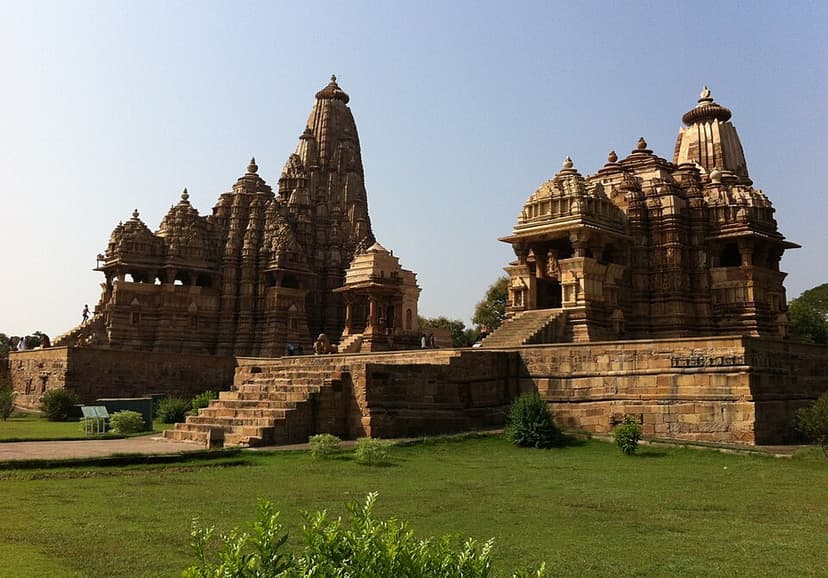
Khajuraho Group of Monuments
The Khajuraho Group of Monuments is a collection of Hindu and Jain temples located in Madhya Pradesh, India, renowned for their Nagara-style architecture and intricate sculptures, including notable erotic carvings. Primarily constructed by the Chandela dynasty between the 9th and 11th centuries, these temples showcase a blend of religious acceptance and artistic expression, reflecting aspects of medieval Indian life and Hindu philosophy.