
Airavatesvara Temple
The Airavatesvara Temple, located in Darasuram, Tamil Nadu, is a 12th-century Hindu temple renowned for its exquisite Chola architecture. Built by Emperor Rajaraja II, the temple is dedicated to Shiva and is part of the UNESCO World Heritage site "Great Living Chola Temples."
Key Facts
- ›Built by Chola Emperor Rajaraja II in the 12th century CE.
- ›Dedicated to the Hindu deity Shiva.
- ›Features a unique chariot-shaped mandapa with stone carvings of wheels and horses.
- ›Known for its intricately carved 'singing steps' that produce musical notes.
- ›Incorporates sculptures depicting stories of the 63 Nayanmars (Bhakti saints).
- ›Part of the UNESCO World Heritage site "Great Living Chola Temples."

Shiva
- Part of the Unesco World Heritage Site 'Great Living Chola Temples'
- Exquisite Example of Chola Architecture and Sculpture
- Religious Pilgrimage Site, Especially During Magha Festival
Chola
Magha
Stone
Rajaraja Ii
- Reliefs of the 63 Nayanars
- Sculptures of Hindu Deities
- Chariot Structure With Stone Wheels and Horses
- Singing Steps
Cauvery River, Kollidam River
About Airavatesvara Temple
The Airavatesvara Temple is a significant Hindu temple located in Darasuram, a locality within Kumbakonam in the Thanjavur District of Tamil Nadu, South India. Constructed in the 12th century CE by the Chola emperor Rajaraja II, it is celebrated for its intricate Chola architecture and is recognized globally as part of the UNESCO World Heritage site "Great Living Chola Temples," alongside the Brihadeeswara Temple at Thanjavur and the Gangaikondacholisvaram Temple.
Religious Dedication and Traditions
The temple is primarily dedicated to Shiva. It also integrates and reveres the traditions of Vaishnavism and Shaktism, reflecting the inclusive religious landscape of the era. Narratives associated with the Nayanmars, the poet-saints of Shaivism, are prominently displayed, underscoring the temple's deep roots in devotional movements.
Architectural Marvels
Classified as a 'Karak Koil' (chariot temple), the Airavatesvara Temple is designed to resemble a celestial chariot. A striking feature is the agra mandapa, or front hall, which is shaped like a chariot, complete with stone carvings of wheels and horses. The temple is also famed for its 'singing steps,' ornately carved steps that produce musical notes. The architecture features a main sanctum, surrounded by a courtyard, and includes various mandapas adorned with extensive reliefs and sculptures.
Artistic and Historical Significance
Despite being smaller than some other major Chola temples, the Airavatesvara Temple is considered more exquisite in its detailed artistry. The outer walls of the sanctum are adorned with sculpture niches depicting various Hindu deities, with Shiva in different aspects featured prominently. Reliefs along the base of the main temple narrate the life stories of the sixty-three Shaiva Bhakti saints, known as the Nayanars, as chronicled in the Periya Puranam. Inscriptions within the temple provide valuable historical information, including details of renovations and the depiction of saints and river goddesses.
Current Status and Pilgrimage
The temple continues to be an active place of worship and attracts a large number of Hindu pilgrims annually, particularly during the Magha festival. While parts of the complex, such as the gopuram, are in ruins, the main temple and its associated shrines remain intact and are maintained by the Hindu Religious and Charitable Endowments Department of the Government of Tamil Nadu. The temple's unique artistry and historical importance have also drawn international attention, notably featuring in Carl Sagan's documentary series Cosmos.
Source: Wikipedia ↗
Frequently Asked Questions
What is the significance of the Airavatesvara Temple's name?
The temple is named after Airavata, the white elephant of the god Indra. Local mythology recounts that Airavata was restored to his pure white skin after bathing in the temple's water tank, a legend depicted in stone within the shrine.
Who built the Airavatesvara Temple and when?
The temple was constructed by the Chola emperor Rajaraja II, who ruled between 1146 and 1172 CE. The temple was completed in 1166 CE.
What architectural style is evident in the Airavatesvara Temple?
The temple is a prime example of Chola architecture. It is classified as a 'Karak Koil' because its design is inspired by temple chariots used in processions, featuring a chariot-shaped mandapa.
Is the Airavatesvara Temple a UNESCO World Heritage Site?
Yes, the Airavatesvara Temple was added to UNESCO's World Heritage Site list in 2004 as part of the "Great Living Chola Temples" designation, alongside the Brihadeeswara Temple at Thanjavur and the Gangaikondacholisvaram Temple.
What are the 'singing steps' at the Airavatesvara Temple?
The singing steps are ornately carved balustraded steps on the chariot-shaped mandapa that produce musical notes when walked upon. They are an unusual architectural feature designed to create a melodic effect.
What is the religious significance of the Airavatesvara Temple?
The temple is primarily dedicated to Shiva, but it also reverentially displays traditions of Vaishnavism and Shaktism. It features sculptures and narratives related to the Nayanmars, the Bhakti movement saints of Shaivism.
Related Temples (Hindu)

Brihadeeswarar Temple
The Brihadeeswarar Temple, also known as Rajarajesvaram and Peruvudaiyar Kovil, is a magnificent Shaivite Hindu temple located in Thanjavur, Tamil Nadu, India. Built by the Chola emperor Rajaraja I between 1003 and 1010 CE, it is a prime example of Tamil architecture and a UNESCO World Heritage Site.

Arulmigu Manneaswarar Temple, Annur
The Arulmigu Manneaswarar Temple in Annur, Tamil Nadu, is a historic Hindu temple dedicated to Lord Shiva. Its architecture reflects the Chola style, and it is notable for its numerous inscriptions dating back to various South Indian dynasties.
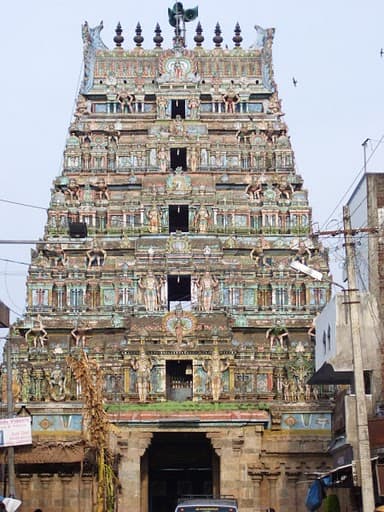
Oppliyappan Temple
The Oppliyappan Temple, also known as Thiruvinnagar, is a Hindu temple dedicated to Lord Vishnu, located in Tamil Nadu, India. It is renowned for its legend of Vishnu marrying Lakshmi, who was raised as the daughter of sage Markandeya, a story that influences the temple's culinary offerings.