
Oppliyappan Temple
The Oppliyappan Temple, also known as Thiruvinnagar, is a Hindu temple dedicated to Lord Vishnu, located in Tamil Nadu, India. It is renowned for its legend of Vishnu marrying Lakshmi, who was raised as the daughter of sage Markandeya, a story that influences the temple's culinary offerings.
Key Facts
- ›Dedicated to Lord Vishnu, worshiped as Oppiliappan.
- ›Consort of Vishnu is Lakshmi, worshiped as Bhudevi.
- ›Temple is considered the 60th of the 108 Divya Desams revered in Vaishnava canon.
- ›Legend states food offerings are prepared without salt due to a divine marriage pact.
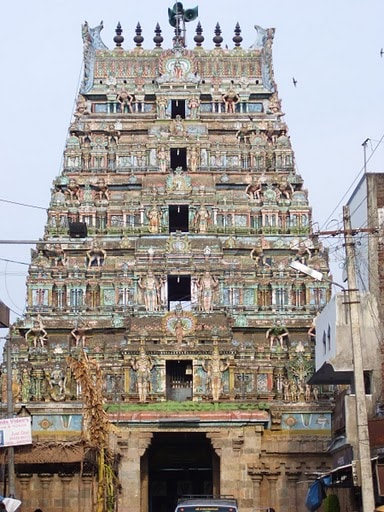
- ›Features a five-tiered rajagopuram and is enclosed by a granite wall.
- ›Maintained by the Hindu Religious and Charitable Endowments Department of the Government of Tamil Nadu.
Vishnu, Lakshmi
- One of the 108 Divya Desams Dedicated To Vishnu
- Revered In the Naalayira Divya Prabandham
- Considered the Southern Counterpart of Tirupathi Temple
- Significant Antiquity With Chola and Nayak Contributions
Medieval Cholas, Thanjavur Nayaks
Chariot Festival, Vasanta Utsavam, Pavitrotsavam, Brahmotsavam, Kalyana Utsavam, Adhyayana Utsavam, Float Festival, Ramanavami, Sravan Deepam
Granite
Sage Markandeya, Parakesarivarman, Alias Rajendra Chola I, Rajaraja Rajakkesarivarman I, Govinda Dikshitar, Achuthappa Nayak, Raghunatha Nayak
River Kaveri, River Nattaru
About Oppliyappan Temple
Oppliyappan Temple: A Vishnu Shrine of Legend and Antiquity
The Oppliyappan Temple, also known by its ancient name Thiruvinnagar, is a significant Hindu temple situated near Thirunageswaram, on the outskirts of Kumbakonam in Tamil Nadu, India. This temple is dedicated to Lord Vishnu, who is worshiped here as Oppiliappan, and his consort Lakshmi, revered as Bhudevi. The temple holds a place of prominence as the 60th of the 108 Divya Desams, a collection of Vishnu temples celebrated in the early medieval Tamil canon of the Alvar saints.
Legend and Divine Marriage
The temple's lore is deeply intertwined with the legend of Vishnu's marriage to Lakshmi. According to tradition, Lakshmi was born as Bhargavi, the daughter of sage Bhrigu, and later adopted by sage Markandeya. Markandeya, after a thousand years of penance, wished for Lakshmi to be his daughter and Vishnu to be his son-in-law. When Vishnu, appearing as an old man, proposed marriage to the young Lakshmi, Markandeya expressed concerns about her youth and cooking skills, particularly noting her inability to cook with salt. Vishnu's response, that he would still cherish her food, forms the basis for the unique tradition of preparing temple offerings without salt, hence the name 'Oppiliappan' (meaning 'one who is not salty'). The temple tank, known as 'Ahoraathra Pushkarani', is also associated with healing powers and a legend of a king regaining his form.
Architectural Heritage and History
Constructed in the Dravidian style of architecture, the Oppliyappan Temple features a striking five-tiered rajagopuram and is encircled by a granite wall, with the complex encompassing all its associated shrines and water bodies. Historical inscriptions point to its significant antiquity, with origins possibly dating back to the Medieval Cholas of the late 8th century CE. Further contributions and renovations were made by the Thanjavur Nayaks, including significant additions by Govinda Dikshitar, minister to Nayak rulers Achuthappa Nayak and Raghunatha Nayak. The temple is maintained by the Hindu Religious and Charitable Endowments Department of the Government of Tamil Nadu.
Festivals and Devotional Practices
The temple observes six daily rituals and celebrates a multitude of annual festivals. The most prominent is the nine-day chariot festival held during the Tamil month of Panguni (March–April). Other significant celebrations include the Vasanta Utsavam (spring festival), Pavitrotsavam (purifying festival), Brahmotsavam, Kalyana Utsavam (holy marriage), Adhyayana Utsavam, and a five-day float festival. The temple is also a popular site for devotees to perform marriages and fulfill vows, often seen as a southern counterpart to the Tirupathi temple.
Source: Wikipedia ↗
Frequently Asked Questions
What is the significance of the name Oppliyappan?
The name Oppliyappan originates from a legend where Vishnu agreed to marry sage Markandeya's adopted daughter, Lakshmi, even though she was young and couldn't cook with salt. Vishnu declared he would still consider it his best food, leading to the deity being called 'Oppiliappan' which implies 'one who is not salty' or 'one who is not inferior'.
What is the legend behind the temple's food offerings?
According to legend, when Vishnu proposed to marry Lakshmi, who was raised by sage Markandeya, Markandeya expressed concern that his daughter was too young and didn't know how to cook properly, even lacking salt. Vishnu assured him he would still find the food delicious and insisted on the marriage. Consequently, the temple's food offerings, known as Neyvethiyam, are traditionally prepared without salt.
What is the architectural style of the Oppliyappan Temple?
The Oppliyappan Temple is constructed in the Dravidian style of architecture, characteristic of many South Indian temples. It features a five-tiered rajagopuram (gateway tower) and is enclosed by a granite wall.
When was the Oppliyappan Temple believed to be constructed?
While the exact date of initiation is unclear, inscriptions suggest the temple has significant antiquity, with contributions from the Medieval Cholas of the late 8th century CE and later additions by the Thanjavur Nayaks. It contains inscriptions dating back to the Chola period.
What are the major festivals celebrated at Oppliyappan Temple?
The most prominent festival is the chariot festival, celebrated for nine days during the Tamil month of Panguni (March–April). Other festivals include Vasanta Utsavam, Pavitrotsavam, Brahmotsavam, Kalyana Utsavam, Adhyayana Utsavam, and a float festival.
What is the significance of the temple tank?
The temple tank, known as 'Ahoraathra Pushkarani', is believed to have healing powers that can be experienced both day and night. Legend has it that a king cursed to be a bird regained his human form after falling into the tank during a storm.
Related Temples (Hindu)
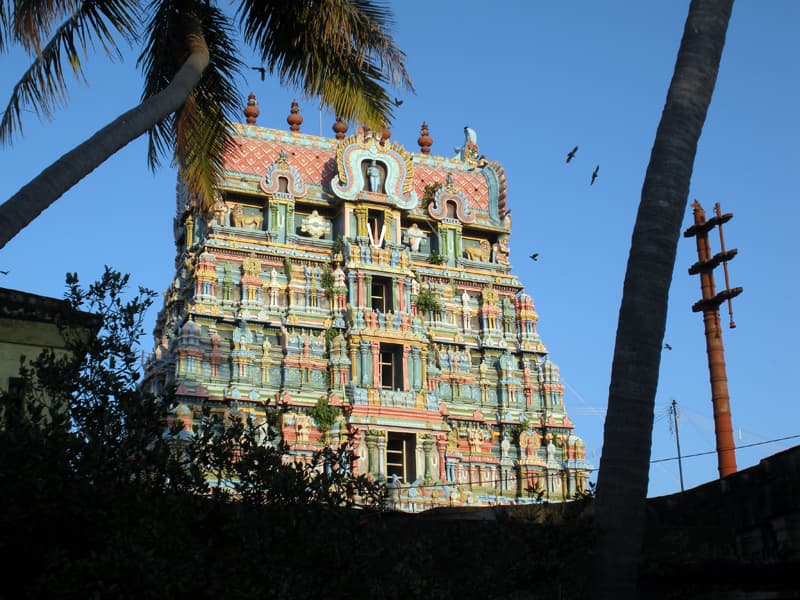
Adi Jagannatha Perumal Temple
The Adi Jagannatha Perumal Temple, located in Thiruppullani, Tamil Nadu, is a significant Hindu temple dedicated to Lord Vishnu. Believed to have been constructed in the late 8th century CE, it is celebrated for its architectural style and its veneration in early medieval Tamil religious literature.

Adikesava Perumal temple, Sriperumpudur
The Adikesava Perumal temple, also known as Ramanujar Temple, is a Hindu temple located in Sriperumbudur, Tamil Nadu, dedicated to Vishnu. It is constructed in the Dravidian architectural style and is considered a significant site as the believed birthplace of the philosopher Ramanuja. The temple also venerates Vishnu's consort, Lakshmi, as Ethiraja Nadhavalli.

Thalai Sanga Nanmathiyam Perumal Temple
The Thalai Sanga Nanmathiyam Perumal Temple, also known as Naanmadiya Perumal Temple, is a Hindu temple located in Thalaichangadu, Tamil Nadu, dedicated to Vishnu. It is revered in early medieval Tamil literature and is considered one of the 108 Divya Desams, significant pilgrimage sites for Vishnu devotees.