
Adi Jagannatha Perumal Temple
The Adi Jagannatha Perumal Temple, located in Thiruppullani, Tamil Nadu, is a significant Hindu temple dedicated to Lord Vishnu. Believed to have been constructed in the late 8th century CE, it is celebrated for its architectural style and its veneration in early medieval Tamil religious literature.
Key Facts
- ›The temple is dedicated to Lord Vishnu, worshipped here as Adi Jagannatha.
- ›It is considered one of the 108 Divya Desams, a collection of important Vishnu temples.
- ›The village of Thiruppullani is named after Lord Rama, who is believed to have used grass ('pul') as a pillow here.
- ›The temple's architectural style is attributed to the Cholan period, with later contributions from Pandya, Nayak, and Sethupathi rulers.
- ›It is revered in the Naalayira Divya Prabandham, an early medieval Tamil canon of the Alvar saints.
- ›A unique metal image of Krishna from the 13th-century Pandya period depicts him dancing on a snake.
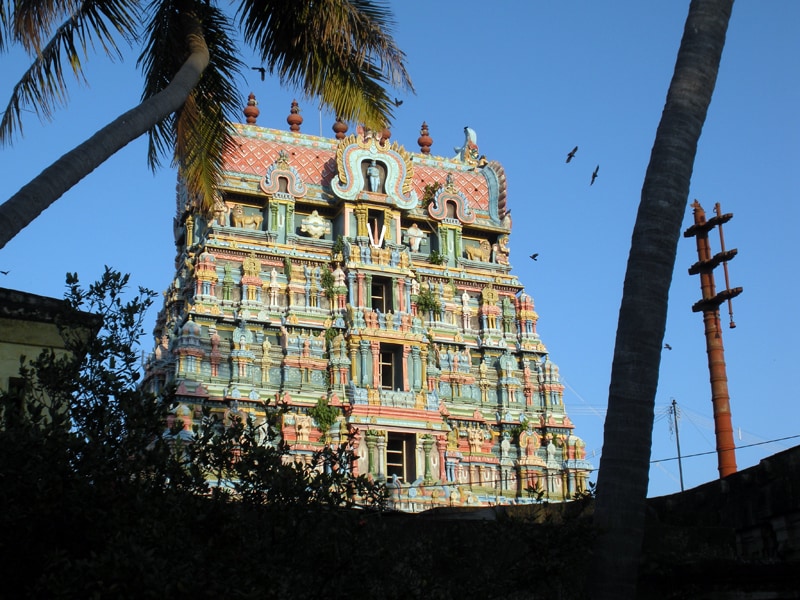
Vishnu, Adi Jagannatha, Lakshmi, Padmasini, Rama
- One of the 108 Divya Desams Dedicated To Vishnu
- Revered In the Naalayira Divya Prabandham
- Associated With Legends of Lord Rama
- Architectural Significance From the Cholan Period
Medieval Chola, Pandya, Madurai Nayak, Sethupathi Palayam
Panguni Brahmotsavam, Rama Navami Utsavam, Vaikuntha Ekadashi, Krishna Jayanthi, Pongal, Deepavali
Parantaka I, Aditya I, Maravarman Sundara Pandyan, Arya Chakravarthi, Mahabali Vanadaraya Naykkar, Sundarattoludaiyar Mahabali Vanadarayar
- 13th-Century Metal Image of Krishna Dancing On A Snake
About Adi Jagannatha Perumal Temple
The Adi Jagannatha Perumal Temple is a significant Hindu temple located in the village of Thiruppullani, near Ramanathapuram in the South Indian state of Tamil Nadu. Dedicated to Lord Vishnu, it is a revered site, particularly within the Vaishnava tradition, and is counted among the 108 Divya Desams, a collection of sacred Vishnu temples.
Legend and Origins
The temple's origins are intertwined with the epic Ramayana. According to local legend, Lord Rama rested in this village, using grass ('pul' in Tamil) as a pillow, which gave the village its name, Thiruppullani. This practice is also known as Dharbasayanam, signifying a penance performed while lying on Kusa grass. The temple is believed to have been constructed in the late 8th century CE, with subsequent architectural and patronage contributions from various South Indian dynasties, including the Medieval Cholas, later Pandyas, Madurai Nayak kings, and the Sethupathi rulers of Ramnad.
Religious and Architectural Significance
The Adi Jagannatha Perumal Temple is celebrated in the Naalayira Divya Prabandham, an early medieval Tamil devotional canon compiled by the Alvar saints. The temple's architecture reflects the Cholan style, featuring a prominent five-tiered rajagopuram. Inside, Vishnu is worshipped as Adi Jagannatha, accompanied by his consort Lakshmi as Padmasini. A unique shrine houses Dharbasayana Ramar in a reclining posture, commemorating Rama's legendary rest. The temple also contains a rare 13th-century metal image of Krishna in a dancing posture atop a snake.
Worship and Festivals
The temple remains an active center of worship, with priests performing rituals six times daily according to Vaikhanasa Agama Shastrams and Thengalai Vaishnava traditions. Major festivals observed include the Panguni Brahmotsavam for Adi Jagannathar and the Rama Navami Utsavam. Other prominent South Indian festivals such as Vaikuntha Ekadashi, Krishna Jayanthi, Pongal, and Deepavali are also celebrated with devotion.
Source: Wikipedia ↗
Frequently Asked Questions
What is the significance of the name Thiruppullani?
The village of Thiruppullani derives its name from a legend that Lord Rama used grass, called 'pul' in Tamil, as a pillow ('thalai annai') while resting. This practice is also referred to as Dharbasayanam, meaning lying in Kusa grass.
What deities are worshipped at the Adi Jagannatha Perumal Temple?
The primary deity worshipped at the temple is Lord Vishnu, known as Adi Jagannatha. His consort, Goddess Lakshmi, is worshipped as Padmasini. A shrine dedicated to Dharbasayana Ramar, depicting Rama in a reclining posture, is also present.
When was the Adi Jagannatha Perumal Temple built?
The temple is believed to have been initiated during the late 8th century CE. It later received contributions from various dynasties, including the Medieval Cholas, later Pandyas, Madurai Nayak kings, and the Sethupathi Palayam of Ramnad.
What architectural style is characteristic of the Adi Jagannatha Perumal Temple?
The temple is constructed in the Cholan style of architecture. It features a five-tiered rajagopuram (gateway tower) facing east.
What are the major festivals celebrated at the temple?
The two major festivals celebrated are the Panguni Brahmotsavam for Adi Jagannathar and the Rama Navami Utsavam during the Tamil month of Chittirai. Other South Indian Vishnu temple festivals like Vaikuntha Ekadashi, Krishna Jayanthi, Pongal, and Deepavali are also observed.
Are there any unique sculptures or artifacts in the temple?
Yes, a notable artifact is a metal image of Krishna from the 13th-century Pandya period, which uniquely depicts Krishna dancing on a snake. This is considered a rare historical depiction of Krishna in metal form.
Related Temples (Hindu)
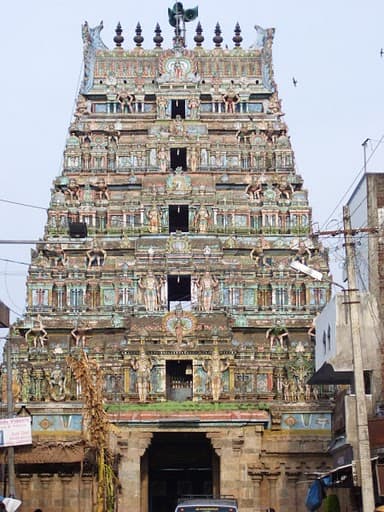
Oppliyappan Temple
The Oppliyappan Temple, also known as Thiruvinnagar, is a Hindu temple dedicated to Lord Vishnu, located in Tamil Nadu, India. It is renowned for its legend of Vishnu marrying Lakshmi, who was raised as the daughter of sage Markandeya, a story that influences the temple's culinary offerings.
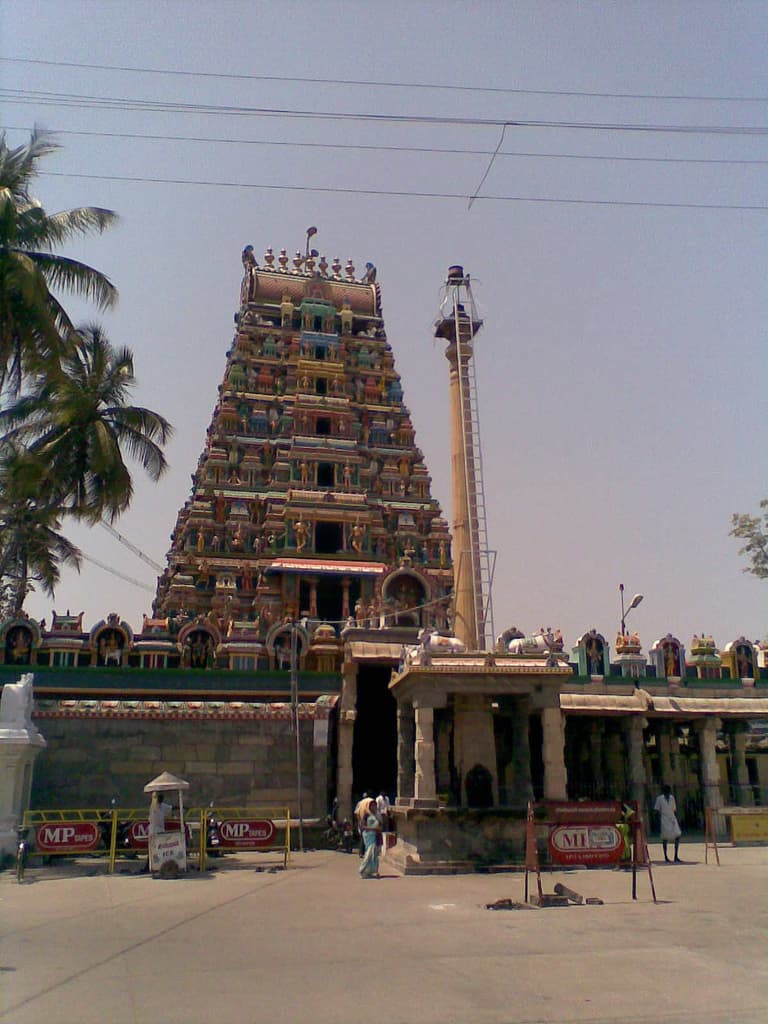
Tiruppukkozhiyur
Tiruppukkozhiyur, also known as the Karunaiyaaththaal Temple, is a significant Hindu temple dedicated to Lord Shiva, located in Avinasi, Tamil Nadu. Revered in ancient Tamil Saiva literature, the temple is celebrated for its architectural grandeur and legendary tales, particularly the story of a boy rescued from a crocodile.

Adikesava Perumal temple, Sriperumpudur
The Adikesava Perumal temple, also known as Ramanujar Temple, is a Hindu temple located in Sriperumbudur, Tamil Nadu, dedicated to Vishnu. It is constructed in the Dravidian architectural style and is considered a significant site as the believed birthplace of the philosopher Ramanuja. The temple also venerates Vishnu's consort, Lakshmi, as Ethiraja Nadhavalli.