
Brihadeeswarar Temple
The Brihadeeswarar Temple, also known as Rajarajesvaram and Peruvudaiyar Kovil, is a magnificent Shaivite Hindu temple located in Thanjavur, Tamil Nadu, India. Built by the Chola emperor Rajaraja I between 1003 and 1010 CE, it is a prime example of Tamil architecture and a UNESCO World Heritage Site.
Key Facts
- ›Built by Chola Emperor Rajaraja I between 1003 and 1010 CE.
- ›Dedicated to Lord Shiva, it houses one of the largest Shiva lingas in India.
- ›It is a significant component of the UNESCO World Heritage Site 'Great Living Chola Temples'.
- ›The temple is constructed primarily of granite, with a towering vimana that is one of the tallest in South India.
- ›It features intricate sculptures, frescoes, and inscriptions detailing its history and religious significance.
- ›The temple complex includes shrines for various deities and a massive monolithic Nandi statue.

Shiva
Architectural Exemplar of Tamil Architecture, Unesco World Heritage Site, Major Pilgrimage Destination, Historical Monument, Cultural Significance For Classical Dance
Chola
Granite
Rajaraja I
Nataraja, Monolithic Nandi Statue, Depictions of Natya Sastra Dance Karanas, Chola Frescoes, Sculptures of Various Deities and Dvarapalas
Cauvery River
About Brihadeeswarar Temple
The Brihadeeswarar Temple, also known by its builder's name Rajarajesvaram and locally as Thanjai Periya Kovil, is a significant Shaivite Hindu temple located on the south bank of the Cauvery River in Thanjavur, Tamil Nadu, India. It stands as a monumental achievement of Tamil architecture and is recognized as one of the largest Hindu temples of its kind. The temple is an integral part of the UNESCO World Heritage Site designated as the 'Great Living Chola Temples', alongside two other Chola-era temples.
History and Construction
Commissioned by the Chola emperor Rajaraja I, the temple was constructed between 1003 and 1010 CE. It exemplifies the architectural style that emerged during the Chola dynasty's dominance, characterized by its scale, intricate detailing, and symmetrical planning. The original structure, built around a moat, featured a gopura, the main temple with its massive tower, and rich sculptural and fresco decorations primarily related to Shaivism, with acknowledgments of Vaishnavism and Shaktism.
Over centuries, the temple has undergone additions, renovations, and repairs, particularly to address damage sustained from historical conflicts. Shrines for deities like Kartikeya, Parvati, and Nandi were added during the Nayaka era (16th and 17th centuries), and the temple was also maintained by the Marathas of Thanjavur.
Architecture and Description
The Brihadeeswarar Temple is classified as a Perunkoil, a large temple built on an elevated platform. Its complex geometry and axial symmetry are hallmarks of its design. The main structure includes the sanctum with its towering vimana, a Nandi hall, and several interconnected mandapas (halls). The temple complex is enclosed by fortified walls, with the outer wall dating from the post-16th century and reinforced by French colonial forces in 1777.
The vimana, the primary tower above the sanctum, is a remarkable 16-storey structure, reaching approximately 208 feet in height, making it one of the tallest in South India. The temple boasts a vast pillared corridor (prakara) for circumambulation and houses one of the largest Shiva lingas in India, measuring 29 feet high. The temple is also celebrated for its exquisite sculptures and the presence of 81 of the 108 dance postures from the Natya Sastra carved on the upper storey corridor walls, highlighting its connection to classical Indian dance.
Religious and Artistic Significance
Dedicated to Shiva, the temple's inner sanctum, known as Karuvarai or 'womb chamber,' enshrines the colossal stone linga. The temple complex also features numerous shrines dedicated to other deities, including Parvati, Murugan, Ganesha, Nandi, and various guardian deities. The temple is renowned for its intricate artwork, including an underlying layer of Chola frescoes discovered in 1931, which depict Shaivite themes, scenes of royalty, and daily life. These frescoes, along with the temple's sculptures and inscriptions, provide invaluable insights into the religious, cultural, and social history of the Chola period.
The Brihadeeswarar Temple continues to be an active place of worship and a major tourist attraction, drawing visitors for its architectural grandeur, spiritual significance, and artistic heritage. Its preservation and restoration are overseen by the Archaeological Survey of India.
Source: Wikipedia ↗
Frequently Asked Questions
Who built the Brihadeeswarar Temple and when?
The Brihadeeswarar Temple was built by the Chola emperor Rajaraja I. Construction took place between 1003 and 1010 CE.
What is the primary deity worshipped at the Brihadeeswarar Temple?
The temple is primarily dedicated to Lord Shiva, worshipped in the form of a massive stone linga housed in the sanctum.
What architectural style is the Brihadeeswarar Temple known for?
The temple is a prime example of Chola architectural style, a distinct South Indian style that emphasizes scale and detail.
Is the Brihadeeswarar Temple a UNESCO World Heritage Site?
Yes, the Brihadeeswarar Temple is part of the UNESCO World Heritage Site known as the 'Great Living Chola Temples'.
What are some notable features of the Brihadeeswarar Temple's architecture?
The temple is renowned for its towering vimana (shrine superstructure), a massive colonnaded corridor (prakara), and the quality of its sculptures and frescoes.
What materials were used in the construction of the Brihadeeswarar Temple?
The temple was primarily constructed using granite. The vimana tower is particularly noted for its massive granite construction.
What is the significance of the sculptures and frescoes found in the temple?
The sculptures and frescoes depict various Shaivite themes, as well as elements of Vaishnavism and Shaktism. They also illustrate scenes from Hindu mythology, royal life, and classical dance postures.
Related Temples (Hindu)

Airavatesvara Temple
The Airavatesvara Temple, located in Darasuram, Tamil Nadu, is a 12th-century Hindu temple renowned for its exquisite Chola architecture. Built by Emperor Rajaraja II, the temple is dedicated to Shiva and is part of the UNESCO World Heritage site "Great Living Chola Temples."

Arulmigu Manneaswarar Temple, Annur
The Arulmigu Manneaswarar Temple in Annur, Tamil Nadu, is a historic Hindu temple dedicated to Lord Shiva. Its architecture reflects the Chola style, and it is notable for its numerous inscriptions dating back to various South Indian dynasties.
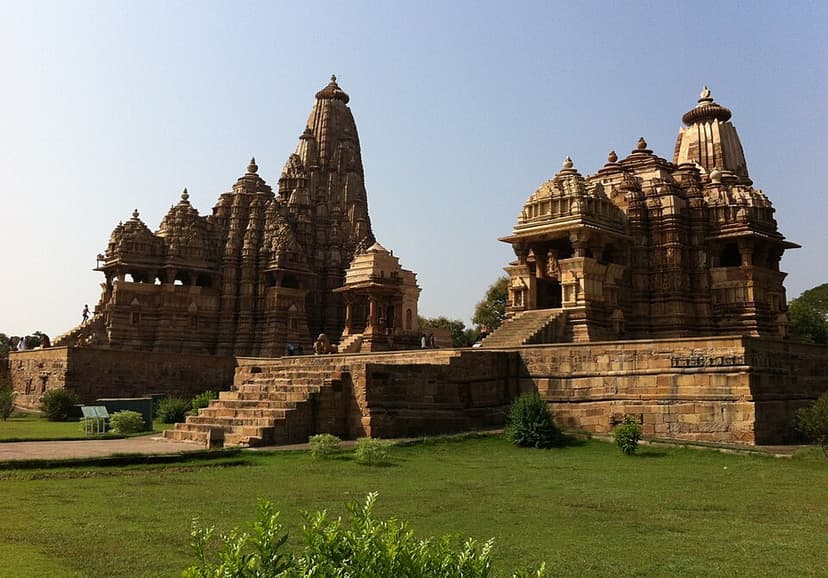
Khajuraho Group of Monuments
The Khajuraho Group of Monuments is a collection of Hindu and Jain temples located in Madhya Pradesh, India, renowned for their Nagara-style architecture and intricate sculptures, including notable erotic carvings. Primarily constructed by the Chandela dynasty between the 9th and 11th centuries, these temples showcase a blend of religious acceptance and artistic expression, reflecting aspects of medieval Indian life and Hindu philosophy.