
Khajuraho Group of Monuments
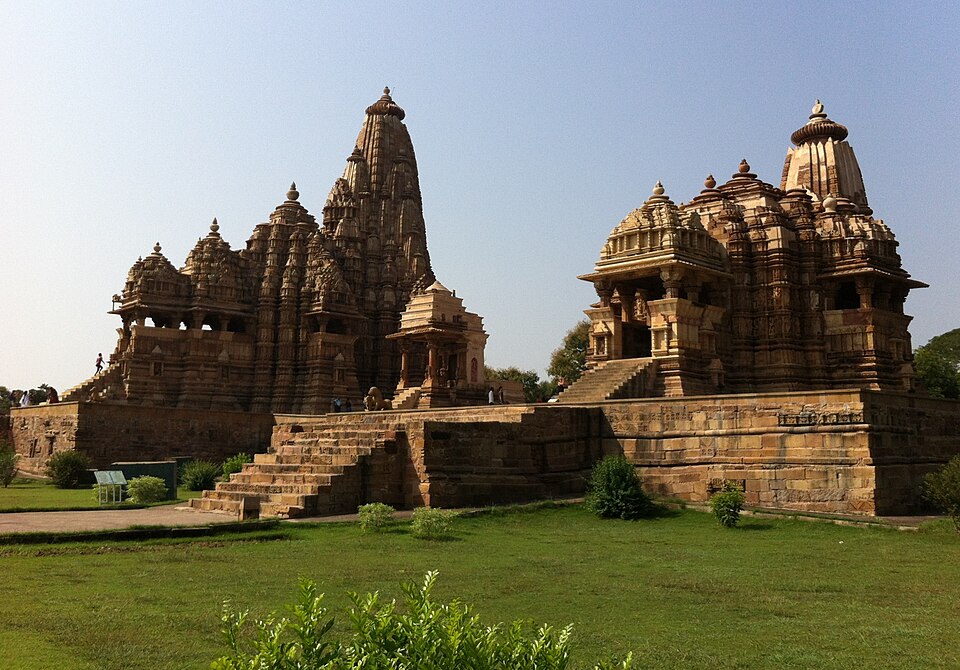
The Khajuraho Group of Monuments is a collection of Hindu and Jain temples located in Madhya Pradesh, India, renowned for their Nagara-style architecture and intricate sculptures, including notable erotic carvings. Primarily constructed by the Chandela dynasty between the 9th and 11th centuries, these temples showcase a blend of religious acceptance and artistic expression, reflecting aspects of medieval Indian life and Hindu philosophy.
Key Facts
- ›The monuments are a UNESCO World Heritage Site, inscribed in 1986.
- ›The temples were predominantly built by the Chandela dynasty between 885 CE and 1000 CE.
- ›Khajuraho temples are famous for their Nagara-style architecture and detailed sculptures, with erotic themes covering less than 10% of the artwork.
- ›The site originally comprised 85 temples, with about 25 surviving today.
- ›The temples are dedicated to both Hinduism and Jainism, indicating religious tolerance.
- ›The Kandariya Mahadeva Temple is the largest and most famous surviving temple.
Shiva, Vishnu, Ganesha, Sun God, Jain Tirthankaras
- Outstanding Architecture
- Diversity of Temple Forms
- Testimony To the Chandela Civilization
- Symbolic Representation of Hindu Philosophy
- Example of Religious Tolerance Between Hinduism and Jainism
Chandela Dynasty
Shivaratri
Sandstone, Granite
Yashovarman, Dhanga, Vidyadhara
Erotic Sculptures, Sculptures Depicting Everyday Life, Sculptures of Women Putting On Makeup, Musicians and Dancers, Vyalas
Sib Sagar, Khajur Sagar, Khudar Nadi
About Khajuraho Group of Monuments
The Khajuraho Group of Monuments is a remarkable UNESCO World Heritage Site located in the Chhatarpur district of Madhya Pradesh, India. This extensive complex features a collection of Hindu and Digambara Jain temples, celebrated for their distinctive Nagara-style architecture and the elaborate, often erotic, sculptures that adorn their walls. Primarily constructed between 885 CE and 1000 CE by the Chandela dynasty, these temples stand as a testament to the artistic and religious achievements of medieval India.
History and Context
Originally comprising 85 temples spread across a vast area, only about 25 of these structures have survived to the present day. The Chandela rulers, including kings Yashovarman, Dhanga, and Vidyadhara, were instrumental in the construction of these magnificent edifices. The temples were built in proximity to the Chandela capital of Mahoba and were active places of worship until the 12th century. Following the invasion by the Delhi Sultanate in the 13th century, many temples fell into neglect and were eventually overgrown by jungles, remaining largely forgotten until their rediscovery by British engineer Captain T.S. Burt in 1838.
The coexistence of Hindu and Jain temples at Khajuraho highlights a tradition of religious tolerance and mutual respect prevalent during the Chandela era. The architectural design of the temples, based on the principles of vastu-purusha-mandala, reflects a deep understanding of cosmology and symbolism. The orientation of most temples to face the sunrise further enhances their spiritual significance.
Architecture and Sculpture
The architecture of the Khajuraho temples is characterized by its intricate planning, symmetry, and the harmonious integration of geometric principles and spiritual beliefs. The structures typically consist of a sanctum (garbhagriya) topped by a spire (shikhara), surrounded by mandapas (pillared halls). The temples are constructed from sandstone, held together by precise mortise and tenon joints, with some megalithic elements weighing up to 20 tons.
While the temples are widely known for their erotic sculptures, these represent less than 10% of the total artwork. The majority of the carvings depict various facets of human life, including daily activities, mythical narratives, and the four goals of Hindu life: dharma, kama, artha, and moksha. The sculptures are renowned for their fine details, such as strands of hair, manicured nails, and intricate jewelry, showcasing the exceptional skill of the artisans. The Kandariya Mahadeva Temple, with its over 870 statues, is particularly noted for its artistic richness.
Religious Significance and Current Status
Khajuraho temples are dedicated to various Hindu deities, including Shiva and Vishnu, as well as Jain Tirthankaras. This religious diversity underscores the syncretic nature of the period. The Matangeshvara temple remains an active site of worship, drawing devotees for rituals and pilgrimage, particularly during festivals like Shivaratri. The architectural layout and symbolic imagery within the temples are designed to convey core Hindu values and cosmological concepts, making Khajuraho a significant site for understanding ancient Indian art, religion, and society.
Source: Wikipedia ↗
Frequently Asked Questions
What is the origin of the name Khajuraho?
The name Khajuraho is derived from the Sanskrit words 'kharjura' (date palm) and 'vahaka' (bearer). Local legends suggest the temples were once flanked by two golden date-palm trees at their entrance. Another interpretation links it to 'scorpion bearer,' a symbolic name for Lord Shiva.
When were the Khajuraho temples built and by whom?
Most of the Khajuraho temples were constructed by the Chandela dynasty between approximately 885 CE and 1000 CE. Major building activity occurred during the reigns of kings Yashovarman, Dhanga, and Vidyadhara.
What religions are represented at Khajuraho?
The Khajuraho group of temples are dedicated to both Hinduism and Digambara Jainism. This coexistence suggests a tradition of acceptance and respect for diverse religious views among the people of the region during the Chandela era.
Why are the Khajuraho temples famous for their sculptures?
The temples are celebrated for their intricate and detailed sculptures that cover numerous aspects of human life, daily activities, and spiritual values important in Hindu tradition. While famous for erotic sculptures, these constitute a small portion of the overall artwork, which also depicts mythical stories and secular themes.
Which is the largest and most significant temple at Khajuraho?
The Kandariya Mahadeva Temple is the largest and most famous of the surviving temples at Khajuraho. It is noted for its profusion of sculptures, intricate details, and its spire that rises 116 feet.
Are the Khajuraho temples still active places of worship?
Yes, the Matangeshvara temple remains an active site of worship. While many temples in the complex are historical monuments, this particular temple continues to be used for religious rituals.
Related Temples (Hindu)

Bahulara Ancient Temple
The Bahulara Ancient Temple, also known as the Siddheshwara Shiva temple, is a significant brick-built temple located in West Bengal, India. It is renowned for its unique Nagara-style sikhara and exquisite ornamentation, believed to have originated as a Jain or Buddhist shrine before being reconsecrated for Shaivite worship. The temple stands as a notable example of medieval Bengali temple architecture.

Kalika Mata Temple, Pavagadh
The Kalika Mata Temple, also known as Mahakali Mata Temple, is a significant Hindu pilgrimage center located atop Pavagadh Hill in Gujarat, India. It is renowned as one of the 51 Great Shakti Peethas and is dedicated to the worship of the goddess Mahakali, who is revered in her forms of Durga and Chandi. The temple complex, part of the Champaner-Pavagadh Archaeological Park, boasts ancient origins dating back to the 10th-11th centuries.

Brihadeeswarar Temple
The Brihadeeswarar Temple, also known as Rajarajesvaram and Peruvudaiyar Kovil, is a magnificent Shaivite Hindu temple located in Thanjavur, Tamil Nadu, India. Built by the Chola emperor Rajaraja I between 1003 and 1010 CE, it is a prime example of Tamil architecture and a UNESCO World Heritage Site.