
Virupaksha Temple
The Virupaksha Temple, located in Hampi, India, is a significant Hindu temple dedicated to Virupaksha, a form of Shiva. With origins tracing back to the 7th century, it evolved from a small shrine into a large complex, particularly under the patronage of the Vijayanagara Empire. It remains an active pilgrimage site and is recognized as part of the UNESCO World Heritage Site, the Group of Monuments at Hampi.
Key Facts
- ›Dedicated to Virupaksha, a form of Shiva.
- ›Origins date back to the 7th century CE, with uninterrupted worship.
- ›Expanded significantly during the Vijayanagara Empire period.
- ›Part of the UNESCO World Heritage Site: Group of Monuments at Hampi.
- ›Central pillared hall and eastern gopuram are attributed to Emperor Krishnadevaraya.
- ›Remains an active center of pilgrimage and worship.

Virupaksha, Pampa
- Main Center of Pilgrimage At Hampi
- Part of the Unesco World Heritage Site: Group of Monuments At Hampi
- Active Place of Worship Since the 7th Century
- Architectural Contributions From the Vijayanagara Empire
Vijayanagara Empire
- Betrothal and Wedding Festivities of Virupaksha and Pampa
- Annual Chariot Festival
Brick, Stone
Lakkan Dandesha, Deva Raya Ii, Krishnadevaraya
Tungabhadra River
About Virupaksha Temple
The Virupaksha Temple, situated in Hampi within the Vijayanagara district of Karnataka, India, stands as a prominent Hindu temple dedicated to Virupaksha, a manifestation of Shiva. Its historical roots are deep, with origins tracing back to the 7th century CE, establishing it as a site of uninterrupted worship for over a millennium. The temple complex as it exists today, however, saw significant expansion and development primarily under the patronage of the Vijayanagara Empire.
History and Development
The Virupaksha-Pampa sanctuary predates the establishment of the Vijayanagara capital at Hampi. Inscriptions from the 9th and 10th centuries provide early evidence of Shiva worship at the site. What began as a modest shrine gradually grew into a sprawling complex, with notable additions made during the late Chalukyan and Hoysala periods. The most substantial construction and expansion were undertaken during the Vijayanagara period, with chieftain Lakkana Dandesha playing a key role under ruler Deva Raya II. Emperor Krishnadevaraya was a particularly significant patron, credited with commissioning the ornate central pillared hall around 1510 CE to commemorate his accession, as well as the eastern gateway tower.
Architectural Significance and Current Status
The temple's architecture is characterized by its intricate carvings on pillars, a multi-tiered eastern gateway measuring 50 meters, and various courtyards and smaller shrines. A unique aspect noted is the application of mathematical concepts, such as fractal patterns, in its construction and decoration. The temple complex includes a sanctum, ante chambers, and pillared halls that served diverse purposes, from housing deities during special performances to conducting ritualistic ceremonies. Despite the destruction of many other temples in Hampi, the Virupaksha Temple has been remarkably well-preserved and maintained, continuing to function as the primary active place of worship and pilgrimage in the region. It is recognized as an integral part of the Group of Monuments at Hampi, a designated UNESCO World Heritage Site.
Source: Wikipedia ↗
Frequently Asked Questions
What is the Virupaksha Temple dedicated to?
The Virupaksha Temple is dedicated to Virupaksha, who is considered a form of the Hindu deity Shiva. The temple's history is closely associated with the goddess Pampa, and their betrothal and wedding festivities are celebrated annually.
When was the Virupaksha Temple built?
The temple has a history stretching back to about the 7th century CE. While a small shrine existed earlier, significant expansions and construction of the larger complex are attributed to the Vijayanagara period, with contributions from rulers like Deva Raya II and Krishnadevaraya.
Is the Virupaksha Temple a UNESCO World Heritage Site?
Yes, the Virupaksha Temple is part of the Group of Monuments at Hampi, which has been designated as a UNESCO World Heritage Site. This recognition highlights its historical and cultural importance.
What are some notable architectural features of the Virupaksha Temple?
The temple complex includes a sanctum, ante chambers, and ornately carved pillared halls, the most prominent of which is believed to be an addition by Emperor Krishnadevaraya. The nine-tiered eastern gateway, standing at 50 meters, is a striking feature. Mathematical concepts like fractals are also noted in its design and decoration.
What festivals are celebrated at the Virupaksha Temple?
The temple hosts significant festivals, including the betrothal and wedding festivities of Virupaksha and Pampa, which take place in December. An annual chariot festival is also celebrated here in February.
Is the Virupaksha Temple still an active place of worship?
Yes, the Virupaksha Temple remains an active place of worship and is the main center of pilgrimage at Hampi. Worship has persisted uninterrupted through the centuries, even after the destruction of the Vijayanagara capital.
Related Temples (Hindu)

Lakshna Devi Temple
The Lakshana Devi Temple in Bharmour, Himachal Pradesh, is a significant post-Gupta era Hindu temple dedicated to Durga in her Mahishasura-mardini form. Constructed in the second half of the 7th-century, it is recognized as one of India's oldest surviving wooden temples and the oldest structure in the former capital of Bharmour.

Chennakeshava Temple, Belur
The Chennakeshava Temple, located in Belur, Karnataka, is a 12th-century Hindu temple dedicated to Vishnu. Commissioned by King Vishnuvardhana, the temple is renowned for its intricate architecture, detailed sculptures, and narrative friezes depicting scenes from Hindu epics and daily life. It stands as a significant pilgrimage site and a testament to the artistic and theological achievements of the Hoysala Empire.
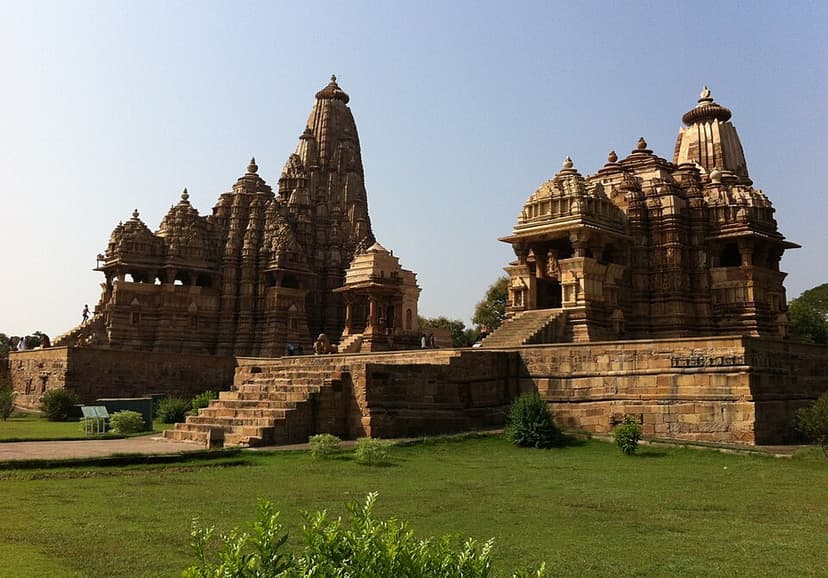
Khajuraho Group of Monuments
The Khajuraho Group of Monuments is a collection of Hindu and Jain temples located in Madhya Pradesh, India, renowned for their Nagara-style architecture and intricate sculptures, including notable erotic carvings. Primarily constructed by the Chandela dynasty between the 9th and 11th centuries, these temples showcase a blend of religious acceptance and artistic expression, reflecting aspects of medieval Indian life and Hindu philosophy.