
Hampi
Hampi, also known as the Group of Monuments at Hampi, is a UNESCO World Heritage Site located in Karnataka, India. Once the prosperous capital of the Vijayanagara Empire, Hampi is now a sprawling archaeological site featuring over 1,600 surviving remains of forts, temples, royal complexes, and water structures, spread across 4,100 hectares. It continues to be a significant religious center, particularly with the active Virupaksha Temple.
Key Facts
- ›Hampi was the capital of the Vijayanagara Empire from 1336 to 1565.
- ›It is estimated to have been the world's second-largest city by 1500, after Beijing.
- ›The site contains over 1,600 surviving monuments, including forts, temples, and royal complexes.
- ›Hampi is situated on the banks of the Tungabhadra River.
- ›The site predates the Vijayanagara Empire and is mentioned in Hindu epics like the Ramayana.
- ›Hampi was declared a UNESCO World Heritage Site.

Shiva, Pampa Devi, Parvati, Vishnu, Krishna, Narasimha, Durga
- Former Capital of the Vijayanagara Empire
- Unesco World Heritage Site
- Significant Religious Pilgrimage Destination
- Archaeologically Important For the Vijayanagara Period
- Historical Importance As A Major Medieval City
Vijayanagara Empire
Maha Shivaratri, Annual FêTe With Chariot Procession
Granite, Stone
Harihara I, Bukka I, Krishnadevaraya
- Reliefs Depicting Hindu Deities and Themes
- Erotic Sculptures On the Gopuram
- Hindu-Related Reliefs On Pillars
- Painted Ceilings Showing Shaivism and Vaishnavism Legends
- Outsized Yalis On Mandapa Pillars
- Reliefs of All Ten Avatars of Vishnu
- Friezes of Battle Formation and Soldiers
Tungabhadra River
About Hampi
Hampi: A Glimpse into the Vijayanagara Empire
Hampi, also known as the Group of Monuments at Hampi, stands as a remarkable testament to the grandeur of the Vijayanagara Empire. This UNESCO World Heritage Site, located in Karnataka, India, was once the thriving capital of one of South India's last great Hindu kingdoms, flourishing from 1336 to 1565. Before its imperial prominence, Hampi was recognized in Hindu scriptures like the Ramayana and Puranas as Pampa Devi Tirtha Kshetra, a significant religious center.
Historical Significance and Decline
By the year 1500, Hampi-Vijayanagara is estimated to have been the second-largest city globally, rivaling Beijing in size, and likely India's wealthiest. Its prosperity attracted traders from Persia and Portugal, and chronicles from the era describe it as a prosperous, wealthy, and grand city situated along the Tungabhadra River, replete with numerous temples, farms, and bustling markets. The empire's strength and wealth, however, attracted conflict. In 1565, a coalition of Muslim sultanates defeated the Vijayanagara Empire, leading to the conquest, pillaging, and destruction of its capital. Hampi was subsequently abandoned, leaving behind its magnificent ruins.
Archaeological Marvel
Today, the ruins of Hampi spread over 4,100 hectares, presenting an "austere, grandiose site" with over 1,600 surviving structures. These remains include forts, riverside features, royal and sacred complexes, temples, shrines, pillared halls, memorial structures, and intricate water systems. The site is characterized by its hilly terrain formed by granite boulders, with monuments predominantly built between 1336 and 1570 CE under Vijayanagara rule. While most monuments are Hindu, reflecting a multi-religious and multi-ethnic society, Jain and Islamic structures are also present.
Religious and Architectural Heritage
Hampi continues to be a vital religious center, most notably with the Virupaksha Temple, which remains an active place of worship. This temple, dedicated to Shiva and Pampa Devi, is the principal destination for pilgrims and tourists. The architectural style is largely Dravidian, with influences from earlier South Indian traditions and the art of the Hoysala Empire. Some structures, like the Queen's Bath and Elephant Stables, exhibit Indo-Islamic architectural elements, demonstrating the site's diverse cultural influences. The site's historical and archaeological significance continues to be explored through ongoing excavations by the Archaeological Survey of India.
Source: Wikipedia ↗
Frequently Asked Questions
What is Hampi famous for?
Hampi is famous for being the former capital of the Vijayanagara Empire and its extensive ruins, which have been designated a UNESCO World Heritage Site. It showcases a vast array of monuments, including temples, royal palaces, fortifications, and water structures, offering a glimpse into a once-grand medieval city.
What deities are primarily worshipped at Hampi?
While Hampi contains numerous temples dedicated to various Hindu deities, the Virupaksha Temple, an active place of worship, is dedicated to Shiva (as Virupaksha) and his consort Pampa Devi. Other temples within the complex are dedicated to deities like Krishna and Narasimha.
When was Hampi the capital of the Vijayanagara Empire?
Hampi served as the capital of the Vijayanagara Empire from 1336 to 1565. During this period, it grew into a prosperous and significant city, attracting traders from across the globe.
What happened to Hampi after the Vijayanagara Empire?
After the defeat of the Vijayanagara Empire in 1565, Hampi was conquered, pillaged, and destroyed by Muslim armies. The city was abandoned and remained in ruins for centuries, becoming an archaeological site of immense historical importance.
What is the architectural style of the monuments at Hampi?
The architecture at Hampi predominantly follows the South Indian Hindu style, with roots in the developments of the second half of the 1st millennium in the Deccan region. Elements of the Hoysala Empire's art and architecture are also present, and some monuments incorporate Indo-Islamic styles.
Is Hampi still an active place of worship?
Yes, Hampi continues to be a religious center. The Virupaksha Temple, in particular, is an active Hindu worship site that attracts pilgrims and tourists.
Related Temples (Hindu)
Kotappakonda
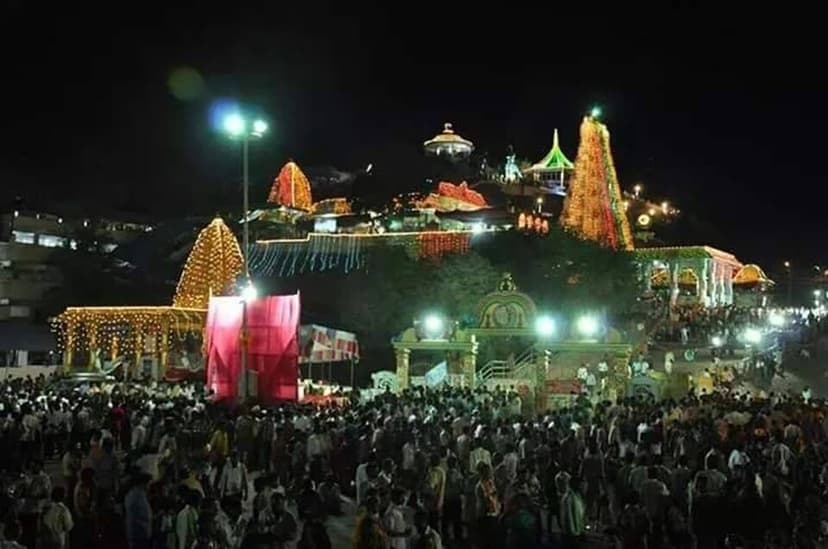
Kotappakonda is a significant Hindu pilgrimage site in Andhra Pradesh, India, centered around the ancient Sri Trikoteswara Swamy Temple, dedicated to Lord Shiva. Renowned for its three distinct peaks, the site is a major Shaivite center, drawing large crowds, especially during the annual Maha Shivaratri festival.

Gangaikonda Cholapuram Temple
The Gangaikonda Cholapuram Temple, located in Tamil Nadu, India, is a significant Hindu temple built by Chola emperor Rajendra I. It was intended to commemorate his victory over the Pala Dynasty and served as the Chola capital for approximately 250 years. The temple is renowned for its monumental scale and exceptional sculptural quality, surpassing even the Brihadishvara Temple at Thanjavur in the latter aspect.

Shore Temple
The Shore Temple, located in Mahabalipuram, Tamil Nadu, India, is an 8th-century AD structural stone temple complex overlooking the Bay of Bengal. Built from granite blocks during the reign of the Pallava king Narasimhavarman II, it is one of the oldest such temples in South India and a significant UNESCO World Heritage Site.