
Badami
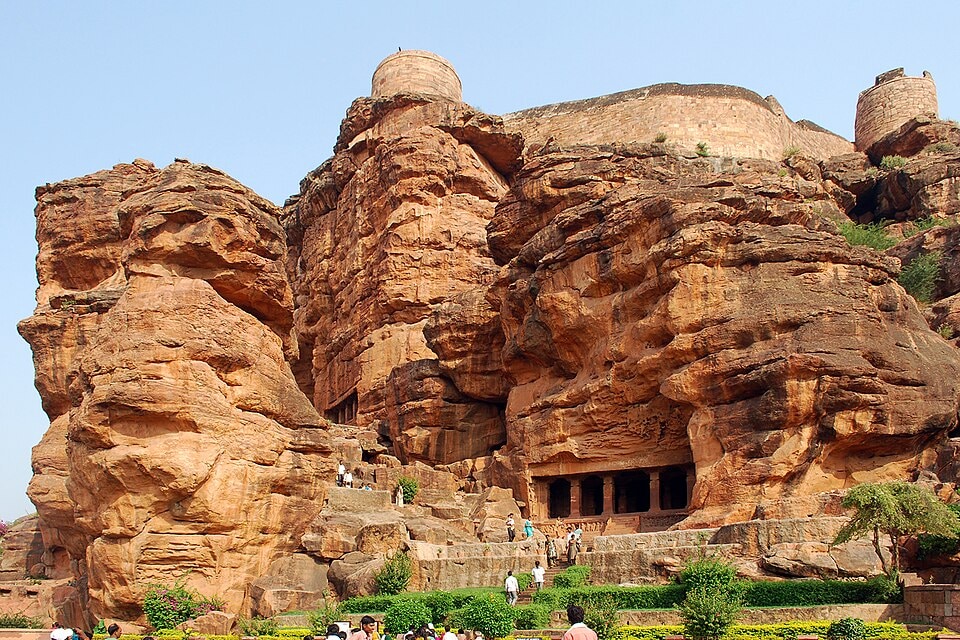
Badami, formerly known as Vātāpi, served as the regal capital of the Badami Chalukyas from 540 to 757 CE. This town is renowned for its rock-cut monuments, including the Badami cave temples, and structural temples like the Bhutanatha group. Situated in a ravine surrounded by red sandstone cliffs and the Agastya lake, Badami is a significant heritage city in India.
Key Facts
- ›Badami was the capital of the Badami Chalukya dynasty from 540 to 757 CE.
- ›The town is famous for its rock-cut cave temples and structural temples, primarily built between the 6th and 8th centuries.
- ›It is located in a ravine surrounded by red sandstone cliffs and the man-made Agastya lake.
- ›Badami was selected as a heritage city under the HRIDAY scheme by the Government of India.
- ›The region was a cradle of Hindu and Jain temple architecture, showcasing both Dravida and Nagara styles.
- ›The red sandstone cliffs make Badami a popular destination for rock climbing and bouldering.
Shiva, Vishnu, Jain Tirthankaras
- Capital of the Badami Chalukyas
- Center For Early Hindu and Jain Temple Architecture
- Rock-Cut Cave Temples
- Heritage City
Badami Chalukyas, Rashtrakutas, Later Chalukyas, Vijayanagara Empire
Red Sandstone
Pulakeshin I, Kirtivarman I, Mangalesha
- Mural Fragments In Cave 3 Depicting Secular Art and Legends of Shiva and Parvati
Agastya Lake
About Badami
Badami, historically known as Vātāpi, is a town in the Bagalkot district of Karnataka, India, renowned for its significant rock-cut and structural temples. It served as the regal capital of the Badami Chalukyas from 540 to 757 CE, a period critical to the development of South Indian temple architecture.
History and Architecture
The town's strategic location in a ravine, protected by red sandstone cliffs, made it an ideal capital for the Chalukyas. Pulakeshin I fortified the hill above 'Vatapi' in 544 CE, laying the groundwork for the dynasty's capital. His successors, Kirtivarman I and Mangalesha, are credited with the construction of the famous cave temples, which are carved directly into the sandstone cliffs. These temples, along with structural temples like the Bhutanatha group and Jambulingesvara Temple, showcase a blend of Dravida and Nagara architectural styles, making Badami a key site for understanding the evolution of temple art from the 6th to the 8th centuries CE.
Cultural and Religious Significance
Badami was a vibrant center of art and culture, fostering the development of Hindu and Jain temple architecture schools. The town also features the Agastya lake, a man-made reservoir completed in the 7th century, which served as a vital water source and became a focal point for temple construction. While many of the original paintings within the cave temples are lost, fragments in Cave 3 offer glimpses into early Hindu art. The town's historical importance is further underscored by its selection as one of India's heritage cities under the HRIDAY scheme.
Modern Relevance
In contemporary times, Badami continues to attract visitors for its historical monuments and natural beauty. The red sandstone cliffs are also a popular destination for rock climbers and boulderers. The town's rich past is preserved through its numerous monuments, some of which have inscriptions dating back to the 6th century, providing valuable insights into its history, language, and art.
Source: Wikipedia ↗
Frequently Asked Questions
What is the historical significance of Badami?
Badami served as the capital of the Badami Chalukya dynasty between the 6th and 8th centuries CE. During this period, it emerged as a vital center for art and temple architecture, contributing significantly to the development of Hindu and Jain styles in the region.
What are the main attractions in Badami?
Badami is most famous for its rock-cut cave temples, which are intricately carved into sandstone cliffs. Additionally, structural temples such as the Bhutanatha temples, Badami Shivalaya, and Jambulingesvara Temple are significant attractions, showcasing early temple architecture.
Who were the rulers associated with Badami's construction?
The town's development is strongly linked to the Badami Chalukyas. Pulakeshin I fortified the area in 544 CE, and his son Kirtivarman I and brother Mangalesha were instrumental in constructing the cave temples. The famous Pulakeshin II also ruled from Vatapi.
What architectural styles are found in Badami?
Badami showcases both Dravida and Nagara styles of temple architecture, reflecting its role as a significant cultural and artistic hub. These styles are evident in the various temples and cave complexes found in and around the town.
When is the best time to visit Badami?
The best time to visit Badami is considered to be between November and March, during the low-humidity season. The weather during these months is pleasant, with temperatures ranging from 14 to 29 degrees Celsius in winter.
Related Temples (Hindu)

Bhutanatha group of temples, Badami
The Bhutanatha group of temples is a collection of Hindu shrines located east of Agastya lake in Badami, Karnataka, India, dating from the 7th to 12th centuries. The complex is divided into two main subgroups: the East Bhutanatha group, primarily in Dravida style, and the North Bhutanatha group (also known as the Mallikarjuna group), predominantly in Nagara style.

Harishchandragad
Harishchandragad is an ancient hill fort located in the Ahilyanagar district of India, with a history stretching back to the 6th century. It served as a strategic defensive point and cultural hub, featuring ancient caves, temples, and significant geological formations. The fort is renowned for its historical importance, architectural remnants, and natural beauty.

Badami cave temples
The Badami cave temples are a significant complex of rock-cut caves located in Badami, Karnataka, India, renowned for their early examples of Indian rock-cut architecture, particularly the Badami Chalukya style. Dating back to the 6th century, these temples showcase a blend of Hindu, Jain, and possibly Buddhist influences, and are crucial for understanding the evolution of temple architecture in the Deccan region.