
Neelkanth Mahadev Temple
Neelkanth Mahadev Temple is a Hindu temple dedicated to Nilkanth, an aspect of Lord Shiva, located in the Pauri Garhwal district of Uttarakhand, India. Its architecture is significantly influenced by the Dravidian style, and it is situated amidst dense forests, near the Nar-Narayan mountain ranges and the confluence of the Pankaja and Madhumati rivers. The temple is revered as the site where Shiva consumed the Halahala poison, turning his throat blue, and is a popular pilgrimage destination, especially during Maha Shivaratri.
Key Facts
- ›Dedicated to Nilkanth, an aspect of Lord Shiva, representing his blue throat after consuming poison.
- ›Architecture shows significant influence from the Dravidian style.
- ›Located in Pauri Garhwal district, Uttarakhand, India, surrounded by dense forests.
- ›Sited at the confluence of the Pankaja and Madhumati rivers.
- ›Celebrates Maha Shivaratri as its most prominent festival, attracting numerous devotees.
- ›Features a Shivalinga in the shape of a 'throat' as the presiding deity.
Shiva, Nilkanth
- Religious Pilgrimage Site
- Sacred Location of Shiva Consuming Halahala Poison
- Architectural Influence of Dravidian Style
Maha Shivaratri, Shivratri of Shraavana
- Sculptures of Devas and Asuras Depicting Samudramanthan On the Shikhara
Pankaja River, Madhumati River, Natural Spring
About Neelkanth Mahadev Temple
Neelkanth Mahadev Temple is a significant Hindu temple dedicated to Lord Shiva, specifically to his form as Nilkanth, which references the blue hue of his throat after consuming the Halahala poison. The temple is located in the scenic Pauri Garhwal district of Uttarakhand, India, approximately 120 km from Pauri town and 32 km from Rishikesh.
Legend and Significance
The temple is steeped in mythology, believed to be situated at the very spot where Lord Shiva drank the world-saving poison during the cosmic churning of the ocean (Samudramanthan). This act turned his throat blue and led to his revered name, Neelkanth. To mitigate the poison's effects, Shiva is said to have meditated for extensive periods beneath a Panchpani tree at the confluence of the Pankaja and Madhumati rivers. It is here that he is believed to have installed the 'throat'-shaped Shivalinga that is worshipped today.
Architecture and Location
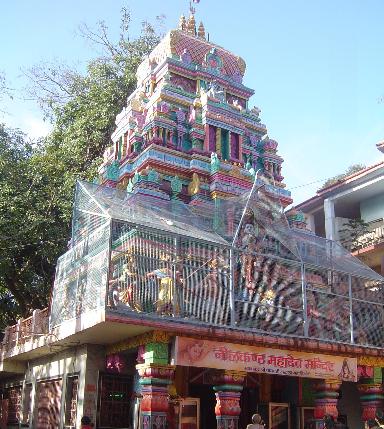
The architectural style of Neelkanth Mahadev Temple bears a strong influence of the Dravidian style, evident in its tiered, pyramid-shaped Gopura or shikhara, which is adorned with intricate motifs and friezes. These carvings often depict scenes from the Samudramanthan, illustrating the cosmic struggle between Devas and Asuras. The temple complex is enveloped by dense forests and situated between the mountain ranges of Nar-Narayan and the valleys of Manikoot, Brahmakoot, and Vishnukoot, adding to its serene and sacred atmosphere. A natural spring within the complex is also a point of spiritual significance for devotees.
Worship and Festivals
Neelkanth Mahadev Temple is a popular Hindu pilgrimage site, attracting devotees seeking blessings from Lord Shiva. The most prominent festival celebrated here is Maha Shivaratri, during which thousands of pilgrims visit the temple. Devotees offer Bael leaves, coconut, flowers, milk, honey, fruits, and water to the deity. The temple also observes annual fairs on the occasions of Maha Shivratri and the Shivratri of Shraavana month, often marked by devotees undertaking treks from Haridwar.
Source: Wikipedia ↗
Frequently Asked Questions
What is the legend behind the Neelkanth Mahadev Temple?
According to Hindu legend, the temple stands at the sacred spot where Lord Shiva consumed the Halahala poison generated during the churning of the ocean (Samudramanthan). This act turned his throat blue, earning him the name Neelkanth. He then meditated here for 60,000 years to counteract the poison's effects.
What is the architectural style of the Neelkanth Mahadev Temple?
The temple's architecture is notably influenced by the Dravidian style. It features a Gopura or shikhara that rises in a tiered, pyramid-like fashion, adorned with intricate carvings and friezes.
Where is Neelkanth Mahadev Temple located?
The temple is situated in the Pauri Garhwal district of Uttarakhand, India. It is approximately 120 km from Pauri town and 32 km from Rishikesh, nestled within dense forests and near the Nar-Narayan mountain ranges.
What are the main festivals celebrated at Neelkanth Mahadev Temple?
The most prominent festival is Maha Shivaratri, which draws a large number of devotees. The temple also observes the Shivratri of Shraavana month. During these festivals, devotees often undertake a pilgrimage trek from Haridwar to the temple.
What is the significance of the presiding deity at Neelkanth Mahadev Temple?
The presiding deity is Neelkanth Mahadev in the form of a Shivalinga. This form symbolizes Lord Shiva's blue throat, a consequence of him consuming the potent Halahala poison to save the world during the Samudramanthan.
Are there any natural water bodies associated with the temple?
Yes, the temple is located at the confluence of the rivers Pankaja and Madhumati. There is also a natural spring within the temple complex where devotees often take a holy bath before entering the shrine.
Related Temples (Hindu)
Kotappakonda
Kotappakonda is a significant Hindu pilgrimage site in Andhra Pradesh, India, centered around the ancient Sri Trikoteswara Swamy Temple, dedicated to Lord Shiva. Renowned for its three distinct peaks, the site is a major Shaivite center, drawing large crowds, especially during the annual Maha Shivaratri festival.

Kumararama
The Kumararama Temple, also known as Bhimarama or Chalukya Kumararama Bhimeswara Temple, is a significant Hindu temple dedicated to Lord Shiva, located in Samalkota, Andhra Pradesh. It is one of the five Pancharama Kshetras and is renowned for its unique limestone Shiva Lingam, which is 16 feet tall and pierces through the roof to the second floor.

Venkateswara Temple, Tirumala
The Venkateswara Temple, also known as Tirumala Temple, is a significant Hindu pilgrimage site located in the Tirumala hills of Andhra Pradesh, India. Dedicated to Venkateswara, a form of Vishnu, the temple is renowned for its Dravidian architecture and is considered one of the wealthiest and most visited religious sites globally. It is administered by the Tirumala Tirupati Devasthanams (TTD), an autonomous body under the Government of Andhra Pradesh.