
Moreshwar Temple, Morgaon
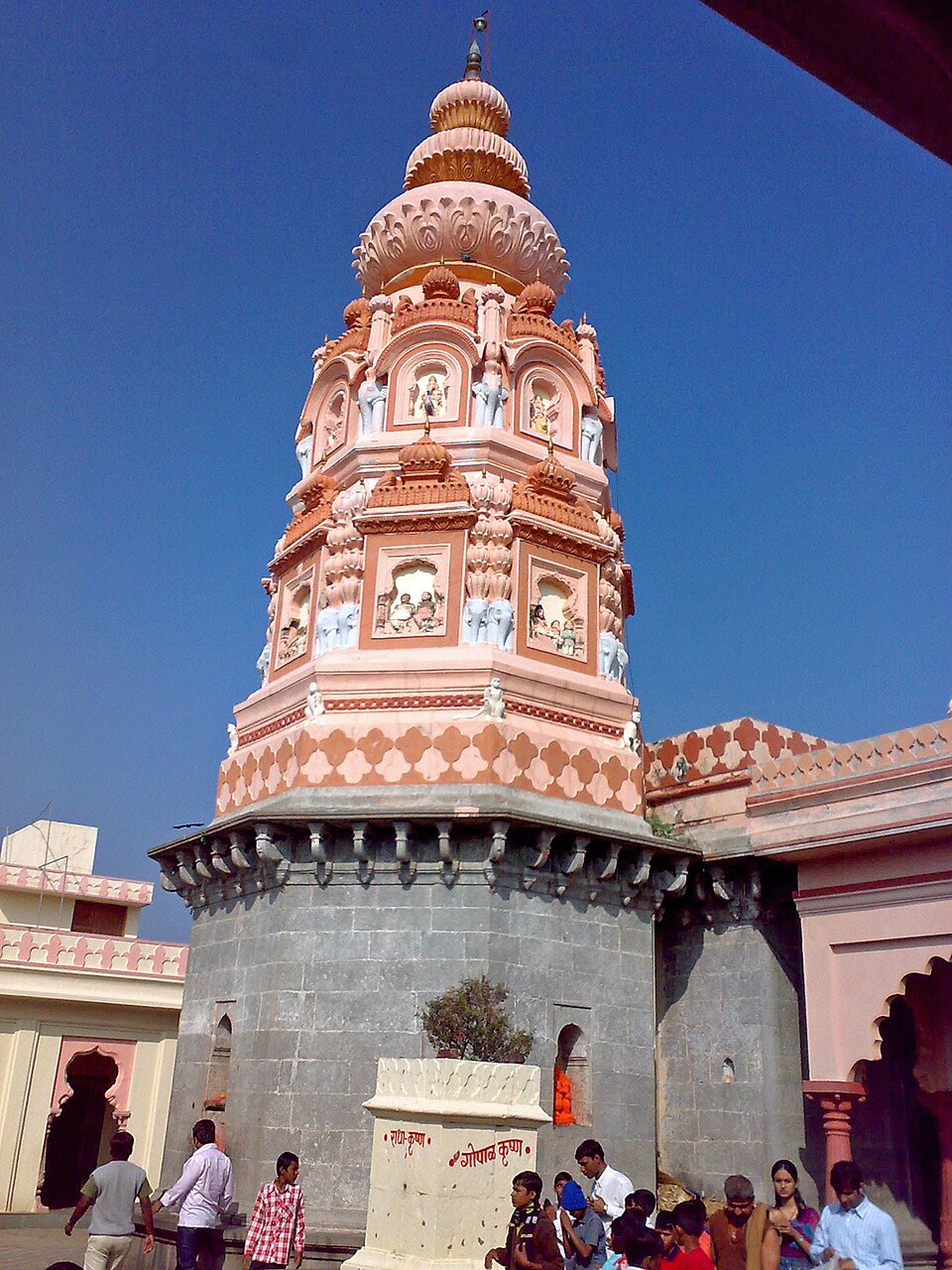
The Moreshwar Temple, also known as Shri Mayureshwar Mandir, is a significant Hindu temple dedicated to Lord Ganesha, located in Morgaon, Maharashtra, India. It serves as the crucial starting and ending point for the Ashtavinayak pilgrimage, a circuit of eight revered Ganesha temples, and is considered the foremost center of worship for the Ganapatya sect, which venerates Ganesha as the Supreme Being.
Key Facts
- ›The temple is dedicated to Lord Ganesha, appearing as Mayureshwar or Moreshwar.
- ›It is the starting and ending point for the Ashtavinayak pilgrimage, a circuit of eight Ganesha temples.
- ›Morgaon is considered the primary center of worship for the Ganapatya sect.
- ›Legends associate the temple with Ganesha's avatar, Mayuresvara, who killed the demon Sindhura.
- ›The temple's architecture features a tall stone boundary wall with minarets and four gates, suggesting Muslim influence.
- ›The central Ganesha image is believed to be svayambhu (self-existent).
Ganesha
- Starting and Ending Point of the Ashtavinayak Pilgrimage
- Foremost Center of Worship For the Ganapatya Sect
- Pilgrimage Site
- Religious Significance Described In Mudgala Purana and Ganesha Purana
Peshwa Rulers
Ganesh Jayanti, Ganesh Chaturthi, Vijayadashami, Shukla Chaturthi, Krishna Chaturthi, Somavati Amavasya
Stone, Saffron-Colored Sindoor
Brahma, Peshwa Rulers, Patwardhan Rulers of Kurundwad, Morya Gosavi
Sculpted 6-Foot Mouse, Huge Nandi Bull Sculpture, Idols of Vishnu and Lakshmi, Images of Various Forms of Ganesha, Idol of Sakshi Vinayaka
Karha River
About Moreshwar Temple, Morgaon
The Moreshwar Temple, also known as Shri Mayureshwar Mandir, is a prominent Hindu temple dedicated to Lord Ganesha, situated in Morgaon, within the Pune District of Maharashtra, India. This temple holds exceptional religious importance as it serves as both the starting and concluding point for the Ashtavinayak pilgrimage, a revered circuit comprising eight important Ganesha temples. Morgaon itself is recognized as the foremost center for the Ganapatya sect, a denomination that regards Ganesha as the Supreme Being.
Religious Significance and Legends
The temple's significance is deeply rooted in its role within the Ashtavinayak circuit, with the pilgrimage considered incomplete without visiting the Morgaon temple. Scriptures like the Mudgala Purana and Ganesha Purana highlight Morgaon's greatness, with the latter placing it among the three most vital Ganesha sites on Earth. Legends describe Ganesha's incarnation as Mayuresvara, who rode a peacock (mayura) to vanquish the demon Sindhura, an event central to the temple's lore. The name "Moreshwar" itself is derived from "Mora," the Marathi word for peacock, or from the village's historical association with peacocks.
Historical Context and Patronage
While the exact date of the temple's construction is unknown, the Ganapatya saint Moraya Gosavi is strongly associated with its popularization, likely from the 17th century or earlier. The temple flourished significantly due to the patronage of the Peshwa rulers of the Maratha Empire during the 18th century, who considered Ganesha their family deity. The descendants of Morya Gosavi also maintained considerable influence over the temple's administration and finances.
Architectural Features
The Moreshwar Temple is enclosed by a tall stone boundary wall adorned with minarets at its corners, suggesting a possible influence of Islamic architecture. The temple features four gates, each facing a cardinal direction, and is decorated with images of Ganesha in various forms. Notable architectural elements include two Deepmalas (lamp towers), a sculpted mouse serving as Ganesha's vahana, and a large Nandi bull sculpture positioned unusually outside the main sanctum. The central sanctum houses the svayambhu (self-existent) image of Ganesha as Moreshwar, depicted with four arms and three eyes, smeared with a distinctive saffron-colored vermilion.
Worship and Festivals
The daily worship at the Moreshwar Temple includes rituals performed at scheduled times, with significant crowds gathering during major festivals such as Ganesh Jayanti and Ganesh Chaturthi. Processions from the Mangalmurti temple in Chinchwad often arrive during these celebrations. Other fairs and celebrations are held on occasions like Vijayadashami and various Chaturthi days.
Source: Wikipedia ↗
Frequently Asked Questions
What is the religious significance of the Moreshwar Temple in Morgaon?
The Moreshwar Temple is highly significant as it marks the beginning and end of the Ashtavinayak pilgrimage, a sacred journey to eight Ganesha temples. It is also the foremost center for the Ganapatya sect, which considers Ganesha the Supreme Being, and is praised in key scriptures of this sect.
What legends are associated with the Moreshwar Temple?
One prominent legend states that Ganesha incarnated as Mayuresvara to kill the demon Sindhura, who terrorized the worlds. Another legend explains the temple's name derives from the peacock (mora), Ganesha's mount, or from the village being populated by peacocks.
What is the architectural style of the Moreshwar Temple?
The temple is surrounded by a tall stone boundary wall with minarets, indicating possible Muslim architectural influence. It has four gates, each facing a cardinal direction, and features structures like Deepmalas (lamp towers) and a sabha-mandapa (assembly hall).
Who was Morya Gosavi and what is his connection to the temple?
Morya Gosavi was a prominent Ganapatya saint who worshipped at the Morgaon Ganesha temple before establishing a new temple in Chinchwad. He is credited with popularizing the Morgaon temple, and his descendants played a significant role in its administration and finances.
What are the main festivals celebrated at the Moreshwar Temple?
The temple sees large gatherings during Ganesh Jayanti and Ganesh Chaturthi. Fairs and celebrations also take place on Vijayadashami, Shukla Chaturthi, Krishna Chaturthi, and Somavati Amavasya.
What is unique about the central Ganesha image in the Moreshwar Temple?
The central image of Ganesha as Mayureshwar is believed to be svayambhu, meaning self-existent. It is depicted with four arms, three eyes, and its trunk turned to the left, and is coated in a thick layer of saffron-colored sindoor that peels off approximately once a century.
Related Temples (Hindu)

Taraknath Temple
The Taraknath Temple, located in Tarakeswar, West Bengal, India, is a significant Hindu pilgrimage site dedicated to Lord Shiva, worshiped here as Tarakanatha. Constructed in 1729, it features a distinct Bengal architectural style with an 'atchala' structure and an adjacent 'natmandir'. The temple is renowned for its belief that a dip in the nearby Dudhpukur tank fulfills prayers and is considered one of the 64 Jyotirlingas.

Tanot Mata Temple
The Tanot Mata Temple is a significant Hindu shrine located in the Jaisalmer district of Rajasthan, India, near the Pakistan border. Revered as a form of Goddess Hinglaj Mata, the temple is famously associated with the Indian victories in the Indo-Pakistani Wars of 1965 and 1971, with local folklore attributing the successful outcomes to divine intervention. The Border Security Force of India now manages the temple complex, which also includes a victory tower and a war museum.
Thriprayar Temple
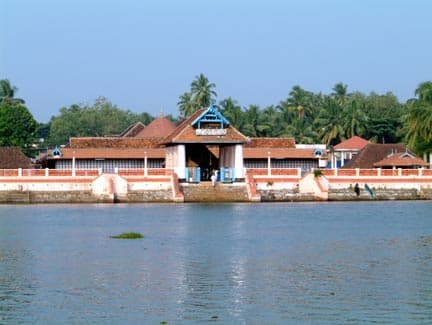
The Thriprayar Temple, also known as the Shree Ramaswami Temple, is a significant Hindu temple located in Triprayar, Thrissur district, Kerala, India. It is dedicated to Lord Rama, the seventh incarnation of Vishnu, who is depicted with four arms holding a conch, discus, bow, and garland. The temple's origin story involves the idol being worshipped by Krishna in Dwarka, later immersed in the sea, and eventually found by fishermen.