
Morya Gosavi
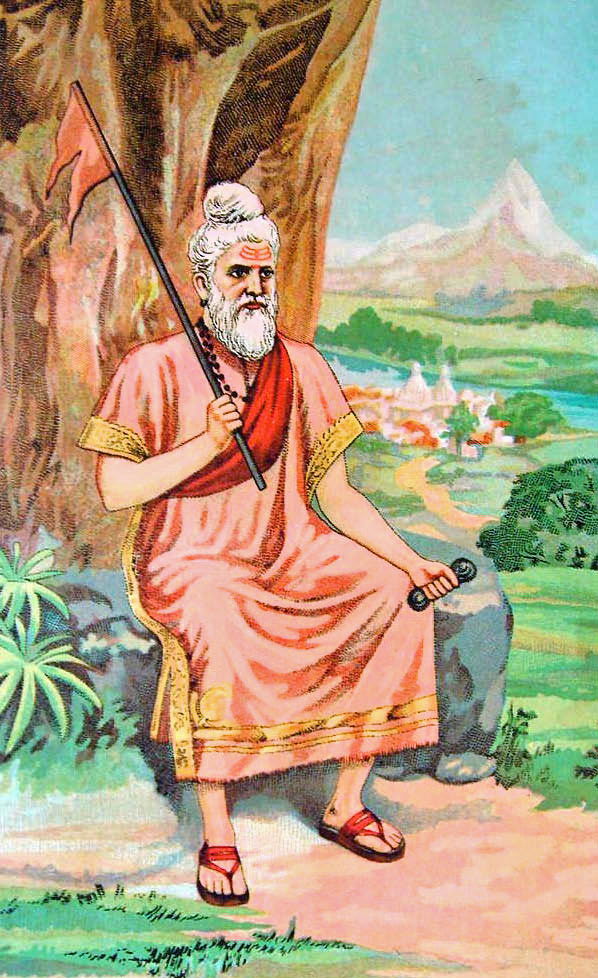
Morya Gosavi was a prominent saint of the Hindu Ganapatya sect, revered for his deep devotion to Ganesha. He is considered the chief spiritual progenitor of the sect and is credited with popularizing the Morgaon Ganesha temple. Legends recount his move from Morgaon to Chinchwad, where he built a temple and took sanjeevan samadhi.
Key Facts
- ›Considered the chief spiritual progenitor of the Ganapatya sect, which worships Ganesha as the Supreme God.
- ›His lifetime is speculated to be between the 13th and 17th century, with specific dates varying among scholars.
- ›Associated with legends involving the Morgaon Ganesha temple, where he was a devoted worshipper.
- ›Relocated to Chinchwad, where he built a Ganesha temple and took sanjeevan samadhi by burying himself alive.
- ›His son, Chintamani, was venerated as a living incarnation of Ganesha and succeeded by six more 'Devs'.
- ›The tomb of Morya Gosavi and the Ganesha temple at Chinchwad continue to attract many Ganesha devotees.
Ganesha
Spiritual Progenitor of the Ganapatya Sect, Popularized the Morgaon Ganesha Temple, Site of Sanjeevan Samadhi Attracting Devotees
Ganesh Chaturthi
Morya Gosavi
Pavana River
About Morya Gosavi
Morya Gosavi, also known as Moraya Gosavi or Moroba Gosavi, was a highly influential saint within the Hindu Ganapatya sect, a tradition that venerates Ganesha as the supreme deity. He is widely regarded as the principal spiritual progenitor of the Ganapatya tradition and is celebrated as Ganesha's most devoted follower. The precise period of Morya Gosavi's life is a subject of scholarly discussion, with estimations placing him anywhere between the 13th and 17th centuries.
Legends surrounding Morya Gosavi frequently depict his profound connection with the Ganesha temple at Morgaon. It is believed that Ganesha himself guided Morya to relocate from Morgaon to Chinchwad, promising to manifest there for Morya's worship. In Chinchwad, Morya established a Ganesha temple and later attained sanjeevan samadhi, a state of conscious burial, within his tomb. This tomb and the temple he built continue to be significant pilgrimage destinations for devotees of Ganesha.
Morya Gosavi's lineage is also notable. He had a son named Chintamani, who was venerated as a living incarnation of Ganesha. Chintamani was succeeded by six more spiritual leaders, forming a lineage known as the 'Dev' family. The devotional poetry attributed to these successors survives, preserving their spiritual contributions. Morya Gosavi is also credited with popularizing the Morgaon temple and is an important figure in the religious landscape of Maharashtra.
Source: Wikipedia ↗
Frequently Asked Questions
Who was Morya Gosavi?
Morya Gosavi was a revered saint within the Hindu Ganapatya sect, a tradition that considers Lord Ganesha as the Supreme God. He is widely recognized as the primary spiritual ancestor of this sect and is often described as Ganesha's most devoted follower.
When did Morya Gosavi live?
The exact period of Morya Gosavi's life is a subject of scholarly debate, with estimates ranging from the 13th to the 17th century. Some sources place him in the 13th-14th century, while others suggest the 16th century or the early to mid-17th century.
What is the story of Morya Gosavi moving from Morgaon to Chinchwad?
According to legend, Morya Gosavi faced hindrances in his worship at the crowded Morgaon temple. Ganesha appeared to him in a dream, promising to reside with him in Chinchwad. Consequently, Morya moved to Chinchwad and established a shrine there, eventually taking his sanjeevan samadhi.
What is the significance of Chinchwad in relation to Morya Gosavi?
Chinchwad is significant as the place where Morya Gosavi built a Ganesha temple and took his sanjeevan samadhi. The tomb of Morya Gosavi and the temple he constructed remain important pilgrimage sites for devotees of Ganesha.
Who succeeded Morya Gosavi?
Morya Gosavi had a son named Chintamani, who was revered as a living embodiment of Ganesha. Chintamani was followed by six more spiritual successors, collectively known as the 'Dev' family, who continued the lineage and tradition.
Related Temples (Hindu)

Mundeshwari Temple
The Mundeshwari Devi Temple, located on the Mundeshwari Hills in Bihar, India, is an ancient Hindu temple dedicated to Goddess Durga and Lord Shiva. It is recognized by the Archaeological Survey of India as a protected monument and is claimed by some scholars to be the oldest functional Hindu temple in the world, with evidence suggesting continuous worship since at least the 6th-7th century CE.

Mahalasa Narayani Temple, Mardol
The Mahalasa Narayani Temple in Mardol, Goa, is a significant Hindu shrine dedicated to Goddess Mahalasa, an avatar of Vishnu known as Mohini. The temple's icon was rescued from destruction by the Portuguese and reconsecrated in the 17th century within its current location, which was outside Portuguese control.

Ballaleshwar Pali
Ballaleshwar Pali is one of the eight Ashtavinayak temples dedicated to Lord Ganesha, uniquely known by the name of his devotee, Ballal. Located in the village of Pali, Maharashtra, the temple is situated between the Sarasgad fort and the Amba river. It is renowned for its unique architecture and the legend of the devoted young boy Ballal.