
Mahamaya Dham
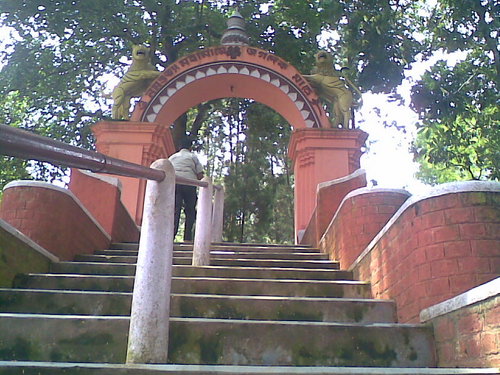
Mahamaya Dham, also known as the Mahamaya Temple of Bogribari, is a significant Shakta pitham in Lower Assam, India, drawing numerous Hindu pilgrims. It is considered the second most important temple for pilgrims in the region after the Kamakhya Temple. The temple is dedicated to Goddess Mahamaya, traditionally worshipped by local communities and formerly the presiding deity of the Zamindar of Parvatjowar.
Key Facts
- ›Mahamaya Dham is a prominent Shakta pitham in Lower Assam, India.
- ›It is located approximately 30 km east of Dhubri town and 10 km west of Bilasipara town.
- ›The temple is dedicated to Goddess Mahamaya, a deity traditionally worshipped by local communities such as Kacharies, Koches, and Naths.
- ›It holds a 400-year-old tradition of animal sacrifice, particularly during Durga Puja.
- ›A related site, Mahamaya Snaanghat Temple, is located on the bank of the Tipkai River, believed to be where Goddess Mahamaya bathed.
- ›A Shakti Yagya is performed annually at Mahamaya Snaanghat Temple in January.
Mahamaya
Shakta Pitham, Pilgrimage Destination
Durga Puja
Tipkai River, Brahmaputra River
About Mahamaya Dham
Mahamaya Dham, also referred to as the Mahamaya Temple of Bogribari, stands as a significant Shakta pitham for Hindu pilgrims in Lower Assam, India. Located in the Kokrajhar district, it is situated approximately 30 km east of Dhubri town and 10 km west of Bilasipara town. In terms of its importance to visitors, it is ranked second only to the Kamakhya Temple in Guwahati.
Religious Significance and Deity
The temple is dedicated to Goddess Mahamaya, a deity traditionally revered by the local populations of Parvatjowar, including communities such as the Kacharies, Koches, and Naths. Historically, Goddess Mahamaya was also the presiding deity of the Zamindar (landlord) of Parvatjowar. Over time, the worship of the goddess gained wider acceptance, and today, all Hindus in Lower Assam venerate Mother Mahamaya.
Traditions and Associated Sites
Mahamaya Dham is known for a centuries-old tradition of animal sacrifice, particularly during the observance of Durga Puja. This practice, which has a history of 400 years, involves the sacrifice of hundreds of animals and birds like buffaloes, goats, pigeons, and ducks. It is often rumored that animal sacrifices are performed when large-scale construction projects, such as bridges, are undertaken. This tradition has faced opposition from animal welfare advocates.
A related place of worship connected to Goddess Mahamaya is the Mahamaya Snaanghat Temple. This temple is located a few kilometers from the main Mahamaya temple, on the banks of the Tipkai River, a tributary of the Brahmaputra River. According to local belief, this is the ancient site where Goddess Mahamaya used to bathe, hence its name. Annually, in January, the temple priests conduct a Shakti Yagya at this location.
Source: Wikipedia ↗
Frequently Asked Questions
What is Mahamaya Dham and where is it located?
Mahamaya Dham, also known as the Mahamaya Temple of Bogribari, is a significant Hindu pilgrimage site in Lower Assam, India. It is situated in the Kokrajhar district, about 30 km east of Dhubri town and 10 km west of Bilasipara town.
What is the religious significance of Mahamaya Dham?
Mahamaya Dham is considered a major Shakta pitham, a sacred center for the worship of the Goddess. It is the second most important temple for pilgrims in Lower Assam after the Kamakhya Temple.
Who is the presiding deity at Mahamaya Dham?
The primary deity worshipped at Mahamaya Dham is Goddess Mahamaya. She was traditionally venerated by local communities like the Kacharies, Koches, and Naths, and was also the presiding deity of the Zamindar of Parvatjowar.
What traditions are associated with Mahamaya Dham?
The temple is known for its 400-year-old tradition of animal sacrifice, especially during Durga Puja, where hundreds of animals and birds are offered. There is also a related site, Mahamaya Snaanghat Temple, on the Tipkai River, where a Shakti Yagya is performed annually in January.
Related Temples (Hindu)

Taraknath Temple
The Taraknath Temple, located in Tarakeswar, West Bengal, India, is a significant Hindu pilgrimage site dedicated to Lord Shiva, worshiped here as Tarakanatha. Constructed in 1729, it features a distinct Bengal architectural style with an 'atchala' structure and an adjacent 'natmandir'. The temple is renowned for its belief that a dip in the nearby Dudhpukur tank fulfills prayers and is considered one of the 64 Jyotirlingas.

Tanot Mata Temple
The Tanot Mata Temple is a significant Hindu shrine located in the Jaisalmer district of Rajasthan, India, near the Pakistan border. Revered as a form of Goddess Hinglaj Mata, the temple is famously associated with the Indian victories in the Indo-Pakistani Wars of 1965 and 1971, with local folklore attributing the successful outcomes to divine intervention. The Border Security Force of India now manages the temple complex, which also includes a victory tower and a war museum.
Thriprayar Temple
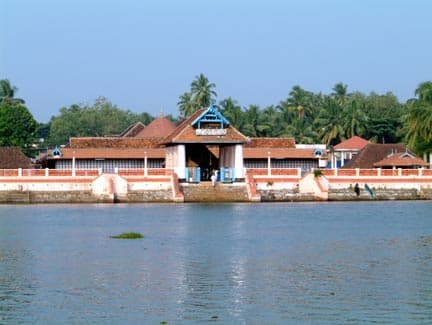
The Thriprayar Temple, also known as the Shree Ramaswami Temple, is a significant Hindu temple located in Triprayar, Thrissur district, Kerala, India. It is dedicated to Lord Rama, the seventh incarnation of Vishnu, who is depicted with four arms holding a conch, discus, bow, and garland. The temple's origin story involves the idol being worshipped by Krishna in Dwarka, later immersed in the sea, and eventually found by fishermen.