
Jyotiba Temple at Wadi
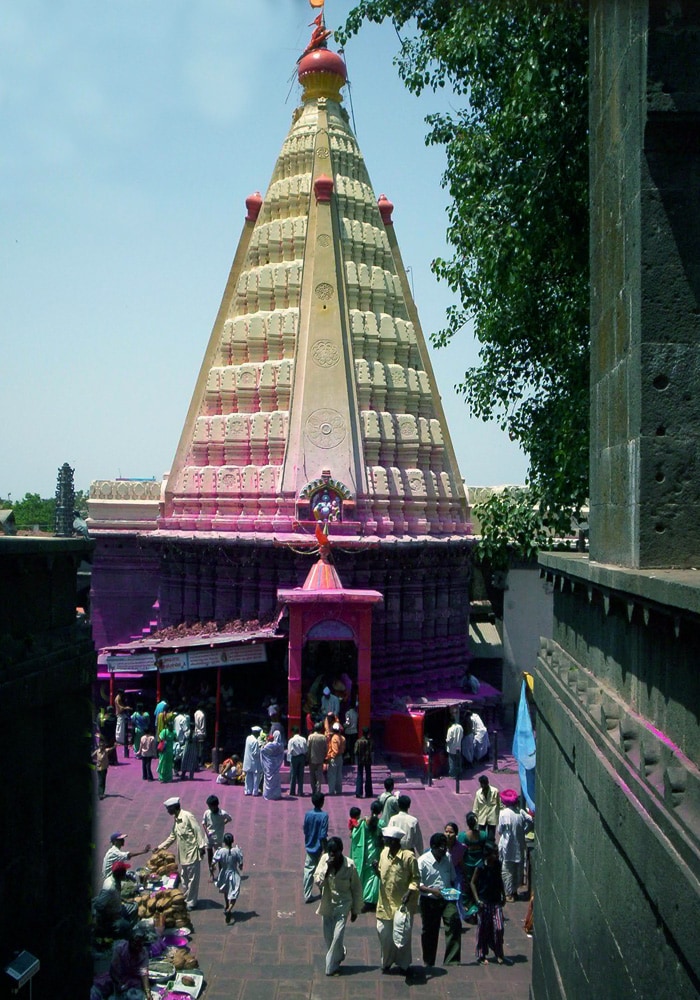
Jyotiba Temple, located near Wadi Ratnagiri in Maharashtra, India, is a significant Hindu pilgrimage site dedicated to the deity Jyotiba. The temple is renowned for its annual fair held on the full moon of Chaitra and Vaishakha, where devotees participate in traditions involving scattering gulal, which famously turns the temple complex and hill pink.
Key Facts
- ›The temple is dedicated to the deity Jyotiba, a manifestation of Brahma, Vishnu, and Shiva.
- ›The current Jyotiba temple was constructed in 1730 by Ranoji Shinde.
- ›Craftsmen known as Kedar, descendants of those who worked on Kedarnath Temple, built the temple using fine black basalt stones.
- ›An annual fair takes place on the full moon night of the Hindu months of Chaitra and Vaishakha.
- ›During the fair, devotees scatter gulal, giving the temple and hill a distinctive pink hue, leading to its nickname 'Pink Temple'.
- ›The temple is situated at an altitude of 3124 feet above sea level.
Jyotiba
- Significant Hindu Pilgrimage Site
- Known For Its Annual Fair and Distinctive Pink Appearance Due To Gulal Scattering
- Associated With the Nath Sampradaya
Chaitra Poornima, Vaishakha Poornima
Black Basalt Stones
Ranoji Shinde, Navaji Sayaji, Malji Nilam Panhalkar, Daulatrao Shinde
About Jyotiba Temple at Wadi
Jyotiba Temple, situated near Wadi Ratnagiri in the Kolhapur district of Maharashtra in western India, is a revered Hindu pilgrimage site dedicated to the deity Jyotiba. The temple complex stands at an elevation of 3124 feet above sea level.
History and Construction
While a smaller temple existed previously, the present Jyotiba temple was constructed in 1730 by Ranoji Shinde. The temple's construction was undertaken by craftsmen known as Kedar, who were recognized for their sculptural skills and were considered descendants of the artisans who re-constructed the Kedarnath Temple in the 8th century A.D. under Adi Shankaracharya. The main shrine of Jyotiba measures 57 ft x 37 ft with a height of 77 ft, including the spire. The Kedareshwar temple within the complex stands 49 ft x 22 ft and reaches a height of 89 ft. Another temple, Ramling, constructed circa 1780 by Malji Nilam Panhalkar, measures 13 ft x 13 ft with a 40 ft high dome. Fine black basalt stones, as prescribed by scriptures, were utilized in its construction.
Deity and Mythology
The presiding deity, Jyotiba, is a significant deity in Hinduism, often seen as a combined manifestation of Brahma, Vishnu, and Shiva. He is also considered an avatar of Shiva by many devotees, particularly in his form as Kedareshwar. Legend states that Jyotiba incarnated to destroy the evil Ratnasura and other demons, liberating the region. He is also noted for assisting Ambabai in her battles against demonic forces. The idol of Lord Jyotiba is depicted as four-armed and is associated with the Nath sampradaya. The deity is believed to have founded his kingdom on this mountain.
Festivals and Traditions
A major annual fair is held at Jyotiba Temple on the full moon night of the Hindu months of Chaitra and Vaishakha. This event draws a large number of devotees, some of whom bring tall sticks known as 'Sasan' sticks. A unique and visually striking tradition during this festival is the scattering of 'Gulal' (colored powder) by the devotees. This practice results in the temple complex and the surrounding Jyotiba hill being covered in a vibrant pink hue, leading to the temple being popularly referred to as the 'Pink Temple'. As Sunday is considered a day dedicated to Jyotiba, the temple experiences a consistent rush of visitors on this day.
Source: Wikipedia ↗
Frequently Asked Questions
Who is the primary deity worshipped at Jyotiba Temple?
The primary deity worshipped at Jyotiba Temple is Jyotiba, who is considered a combined manifestation of Brahma, Vishnu, and Shiva. Devotees also identify him as an avatar of Shiva, particularly due to his name Kedareshwar. Legend states that Jyotiba incarnated to destroy evil demons and helped Ambabai in her battles.
When was the present Jyotiba Temple constructed?
The present Jyotiba Temple was constructed in the year 1730. It was built on the site of a smaller, older temple. Ranoji Shinde is credited with its construction.
What is the significance of the annual fair at Jyotiba Temple?
The annual fair is held on the full moon night of the Hindu months of Chaitra and Vaishakha and attracts lakhs of devotees. A prominent tradition involves devotees scattering 'Gulal' (colored powder), which covers the temple complex and the hill in a pink color, earning it the moniker 'Pink Temple'.
What architectural style or materials are notable at Jyotiba Temple?
The temple was constructed using fine black basalt stones, as specified by scriptures. The craftsmen who built it were known as Kedar, who were renowned for their sculptures and were believed to be descendants of those who worked on the Kedarnath Temple.
What is the legend behind the deity Jyotiba?
According to legend, Shri Jyotiba or Kedareshvar is a manifestation of Brahma, Vishnu, and Shiva, and a part of sage Jamadgni's anger. He is believed to have destroyed evil forces like Ratnasura and Raktabhoja Rakshasa, liberating the region. The idol of Lord Jyotiba is depicted with four arms.
Related Temples (Hindu)

Taraknath Temple
The Taraknath Temple, located in Tarakeswar, West Bengal, India, is a significant Hindu pilgrimage site dedicated to Lord Shiva, worshiped here as Tarakanatha. Constructed in 1729, it features a distinct Bengal architectural style with an 'atchala' structure and an adjacent 'natmandir'. The temple is renowned for its belief that a dip in the nearby Dudhpukur tank fulfills prayers and is considered one of the 64 Jyotirlingas.

Ugratara Devalaya
Ugratara Devalaya is a significant Shakti shrine located in Guwahati, Assam, India, dedicated to the goddess Ugratara. Legend connects the temple to the navel of Sati, and it is noted for its unique representation of the deity as a water-filled pit rather than an idol.

Tara Devi Temple
Tara Devi Temple is a prominent Hindu religious site located at an altitude of 7200 feet above sea level near Shimla, India. The temple is dedicated to Goddess Tara Devi and is believed to grant blessings and fulfill the wishes of devotees who visit with unwavering faith. It is a popular destination, drawing thousands of visitors, especially on weekends.