
Kedarnath Temple
Kedarnath Temple is a Hindu temple in the Garhwal Himalayas dedicated to Lord Shiva, forming one of the twelve Jyotirlingas. Due to its high altitude and extreme weather, it is accessible to pilgrims only for a limited period each year, requiring a significant trek to reach. The temple is a vital part of the Char Dham pilgrimage and holds deep religious significance for devotees.
Key Facts
- ›It is one of the twelve Jyotirlingas, considered the holiest shrines of Shiva.
- ›The temple is located in the Garhwal Himalayan range at an altitude of approximately 3,583 meters.
- ›It is a major site in India's Char Dham pilgrimage and the first of the Panch Kedar sites.
- ›The temple is only open to the public between April (Akshaya Tritiya) and November (Kārtika PūrṇIMā).
- ›According to legend, it was initially built by the Pandavas, who worshipped Shiva here to atone for their sins.
- ›The temple structure remained largely undamaged during the 2013 flash floods, protected by a large rock.

Shiva
Major Pilgrimage Site, One of the Twelve Jyotirlingas, Part of the Char Dham Pilgrimage, Part of the Panch Kedar Pilgrimage
Stone
Pandavas
Images of Parvati, Images of the Five Pandava Princes, Statues of the Five Pandava Brothers, Statues of Krishna, Statues of Nandi, Statues of Virabhadra, Statues of Draupadi
Mandakini River
About Kedarnath Temple
Kedarnath Temple is a revered Hindu temple situated in the Garhwal Himalayan range in Uttarakhand, India, dedicated to Lord Shiva. It stands as one of the twelve Jyotirlingas, which are considered the holiest abodes of Shiva. The temple is located at a high altitude of approximately 3,583 meters (11,755 feet) near the Mandakini River, making it a significant yet challenging destination for pilgrims.
Accessibility and Opening Periods
Due to the extreme weather conditions prevalent in the region, Kedarnath Temple is open to the public only for a specific period each year, typically from the auspicious occasion of Akshaya Tritiya in April or May until the autumn full moon (Kārtika Pūrṇimā) in November. During the harsh winter months, the idol of the deity is transferred to Ukhimath, where worship continues for the following six months. Reaching the temple requires a substantial trek of about 17 kilometers from Gaurikunda, as it is not directly accessible by road. Services like ponies, palanquins, and helicopter rides are available to assist pilgrims on this journey.
Historical and Legendary Associations
While the exact date of its original construction is uncertain, Kedarnath Temple holds deep historical and legendary significance. According to Hindu tradition, the temple was initially built by the Pandavas, the protagonists of the epic Mahabharata, who performed penance here to atone for the sins committed during the Kurukshetra War. It is also believed to be the site where Adi Shankara, the 8th-century philosopher, attained Mahasamadhi. The temple is a crucial component of the Char Dham pilgrimage circuit in Northern India and is also the first among the Panch Kedar pilgrimage sites, a group of five Shiva temples in the Himalayas.
Architectural Features and Religious Significance
The temple is constructed from stone and features a small pillared hall adorned with images of Parvati and the five Pandava brothers. Inside, statues of the Pandava princes, Krishna, Nandi (Shiva's vehicle), and Virabhadra are present. An unusual aspect is the triangular stone lingam, which is believed to be massaged with ghee in memory of an event where Bhima massaged Shiva's body with ghee. The temple's presiding deity, Kedarnath, is considered a svayambhu, meaning self-manifested.
Resilience during the 2013 Floods
Kedarnath Temple demonstrated remarkable resilience during the catastrophic flash floods of June 2013. While the surrounding town and complex suffered extensive damage, the temple structure itself incurred no major harm. A large rock, now revered as 'God's Rock' (Bheem Shila), became lodged behind the temple and effectively diverted the flow of the floodwaters and debris, thus protecting the shrine. Following the event, extensive assessments confirmed the structural integrity of the temple, and efforts were undertaken to rebuild the surrounding infrastructure, enabling the resumption of the pilgrimage.
Source: Wikipedia ↗
Frequently Asked Questions
What is Kedarnath Temple dedicated to?
Kedarnath Temple is dedicated to Lord Shiva, who is worshipped locally by the name Kedarnath. The presiding image is a three-sided lingam, believed to be svayambhu (self-manifested).
Why is Kedarnath Temple only open for a few months each year?
The temple is open to the public only between April (Akshaya Tritiya) and November (Kārtika Pūrṇimā) due to extreme weather conditions in the Garhwal Himalayas. During winter, the deity's vigraha is moved to Ukhimath for worship.
How do you reach Kedarnath Temple?
Kedarnath Temple is not directly accessible by road and requires a 17-kilometer uphill trek from Gaurikunda. Pilgrims can also use ponies, palanquins, or helicopter services.
What is the significance of the 'God's Rock' at Kedarnath?
During the 2013 flash floods, a large rock got lodged behind Kedarnath Temple, acting as a natural barrier that protected the main structure from the devastating debris and water flow. This rock is now worshipped as the 'God's Rock' (Bheem Shila).
What is the legend behind the Panch Kedar sites?
According to legend, after the Kurukshetra War, the Pandavas sought Shiva's blessings. Shiva, in the form of a bull, disappeared into the ground and reappeared in five different parts at five different locations, which are now known as the Panch Kedar sites, including Kedarnath.
Related Temples (Hindu)

Taraknath Temple
The Taraknath Temple, located in Tarakeswar, West Bengal, India, is a significant Hindu pilgrimage site dedicated to Lord Shiva, worshiped here as Tarakanatha. Constructed in 1729, it features a distinct Bengal architectural style with an 'atchala' structure and an adjacent 'natmandir'. The temple is renowned for its belief that a dip in the nearby Dudhpukur tank fulfills prayers and is considered one of the 64 Jyotirlingas.

Tanot Mata Temple
The Tanot Mata Temple is a significant Hindu shrine located in the Jaisalmer district of Rajasthan, India, near the Pakistan border. Revered as a form of Goddess Hinglaj Mata, the temple is famously associated with the Indian victories in the Indo-Pakistani Wars of 1965 and 1971, with local folklore attributing the successful outcomes to divine intervention. The Border Security Force of India now manages the temple complex, which also includes a victory tower and a war museum.
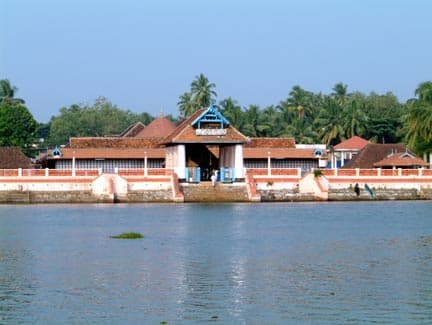
Thriprayar Temple
The Thriprayar Temple, also known as the Shree Ramaswami Temple, is a significant Hindu temple located in Triprayar, Thrissur district, Kerala, India. It is dedicated to Lord Rama, the seventh incarnation of Vishnu, who is depicted with four arms holding a conch, discus, bow, and garland. The temple's origin story involves the idol being worshipped by Krishna in Dwarka, later immersed in the sea, and eventually found by fishermen.