
Tara Devi Temple
Tara Devi Temple is a prominent Hindu religious site located at an altitude of 7200 feet above sea level near Shimla, India. The temple is dedicated to Goddess Tara Devi and is believed to grant blessings and fulfill the wishes of devotees who visit with unwavering faith. It is a popular destination, drawing thousands of visitors, especially on weekends.
Key Facts
- ›Located atop a ridge at 7200 feet above sea level, approximately 7 km from Shimla.
- ›Originally built by the Sen dynasty kings around 1766 A.D.
- ›Rebuilt in 2018 with significant use of precious metals and traditional wooden carvings.
- ›Dedicated to Goddess Tara Devi, considered a source of all energies and a deity of wisdom.
- ›Celebrates major festivals like Dussehra and Durga Ashtami with large feasts.
- ›Attracts 12,000 to 15,000 devotees on weekends.

Tara Devi
Religious Pilgrimage Site, Architectural Preservation, Believed To Fulfill Wishes
Sen Dynasty
Dussehra, Durga Ashtami
Ashtadhatu, Wood, Gold, Silver
King Bhupendra Sen, King Balbir Sen
Wooden Statue of Goddess Tara Devi, Ashtadhatu Idol of Goddess Tara Devi
About Tara Devi Temple
The Tara Devi Temple is a significant Hindu pilgrimage destination situated in the Taradevi area of Shimla, India. Perched atop a ridge at an elevation of 7200 feet above sea level, the temple is approximately 7 km from the Shimla city center and offers panoramic views, with the Himalayas as a backdrop. It is one of the most visited religious places in the region, attracting thousands of devotees, particularly on weekends.
History and Legends
The temple's origins are traced back to the Sen dynasty kings, with its establishment occurring around 1766 A.D. According to local lore, King Bhupendra Sen was inspired to build the temple after experiencing a divine vision where Goddess Tara Devi instructed him to erect a place for people to receive her blessings. He subsequently installed a wooden statue of the Goddess. Later, King Balbir Sen, in another vision, was directed to build the temple specifically on the Tarav hill top and created an idol of the Goddess from 'Ashtadhatu,' a metal alloy comprising eight precious elements.
The Goddess Tara
Goddess Tara is a revered figure in both Hinduism and Buddhism, recognized as the second of the Ten Great Wisdoms, or 'Mahavidyas,' and is understood as a font of all energies. The name 'Tara' originates from the Sanskrit root 'tr,' signifying 'to cross,' and in many Indian languages, 'tara' also translates to 'star.' This association suggests a celestial connection, with beliefs that she watches over all from the skies and bestows blessings.
Reconstruction and Features
The temple underwent a substantial rebuilding process completed in 2018, lasting three and a half years and costing over ₹6 crore. The reconstruction prioritized maintaining the original 'pahari' style of wood carving, and precious metals like gold and silver were incorporated into its decoration. The new idol of Tara Devi was consecrated on July 20, 2018, with the participation of 90 priests. Idols of Goddess Saraswati and Goddess Kali are also housed within the temple complex. Nearby, a temple dedicated to Batuk Bhairav is also present.
Festivals and Visiting Information
Tara Devi Temple observes significant festivals such as Dussehra and Durga Ashtami, during which large feasts are organized and attended by numerous devotees. While the temple is accessible year-round, visits can become challenging during periods of snowfall and heavy rainfall. The temple is open to visitors daily from 7 AM to 6:30 PM, with an estimated visit duration of two hours. Entry to the temple is free of charge.
Source: Wikipedia ↗
Frequently Asked Questions
What is the history of the Tara Devi Temple?
The Tara Devi Temple was originally constructed by Sen dynasty kings around 1766 A.D. Legend states that King Bhupendra Sen had a vision where Goddess Tara Devi instructed him to build a temple. Later, King Balbir Sen was guided to build the temple on the Tarav hill top.
Who is Goddess Tara Devi?
Goddess Tara Devi is revered in Hinduism and Buddhism as one of the Ten Great Wisdoms, known as 'Mahavidyas.' The name 'Tara' is derived from a Sanskrit root meaning 'to cross' and also signifies 'star' in several Indian languages. She is considered a source of all energies and a benevolent deity.
What is significant about the idol at Tara Devi Temple?
The current idol of Goddess Tara Devi, installed by King Balbir Sen, is made of 'Ashtadhatu,' an alloy of eight precious elements. The idol was reportedly carried to the site on an element named Shankar. The statue was reinstalled on July 20, 2018, after the temple's reconstruction.
What renovations has the Tara Devi Temple undergone?
The temple underwent a significant reconstruction that concluded in 2018, taking three and a half years to complete at a cost exceeding ₹6 crore. The renovation aimed to preserve the original 'pahari' style of wood carving and incorporated precious metals like gold and silver for decoration.
When is the best time to visit Tara Devi Temple?
The temple is open daily from 7 AM to 6:30 PM. While it is a popular year-round destination, visiting can be difficult during snowfall and the rainy season. Weekends see a large influx of devotees.
What major festivals are celebrated at Tara Devi Temple?
Major festivals celebrated at Tara Devi Mandir include Dussehra and Durga Ashtami. During these times, a large feast is arranged, attracting a significant number of devotees.
Related Temples (Hindu)

Taraknath Temple
The Taraknath Temple, located in Tarakeswar, West Bengal, India, is a significant Hindu pilgrimage site dedicated to Lord Shiva, worshiped here as Tarakanatha. Constructed in 1729, it features a distinct Bengal architectural style with an 'atchala' structure and an adjacent 'natmandir'. The temple is renowned for its belief that a dip in the nearby Dudhpukur tank fulfills prayers and is considered one of the 64 Jyotirlingas.

Ugratara Devalaya
Ugratara Devalaya is a significant Shakti shrine located in Guwahati, Assam, India, dedicated to the goddess Ugratara. Legend connects the temple to the navel of Sati, and it is noted for its unique representation of the deity as a water-filled pit rather than an idol.
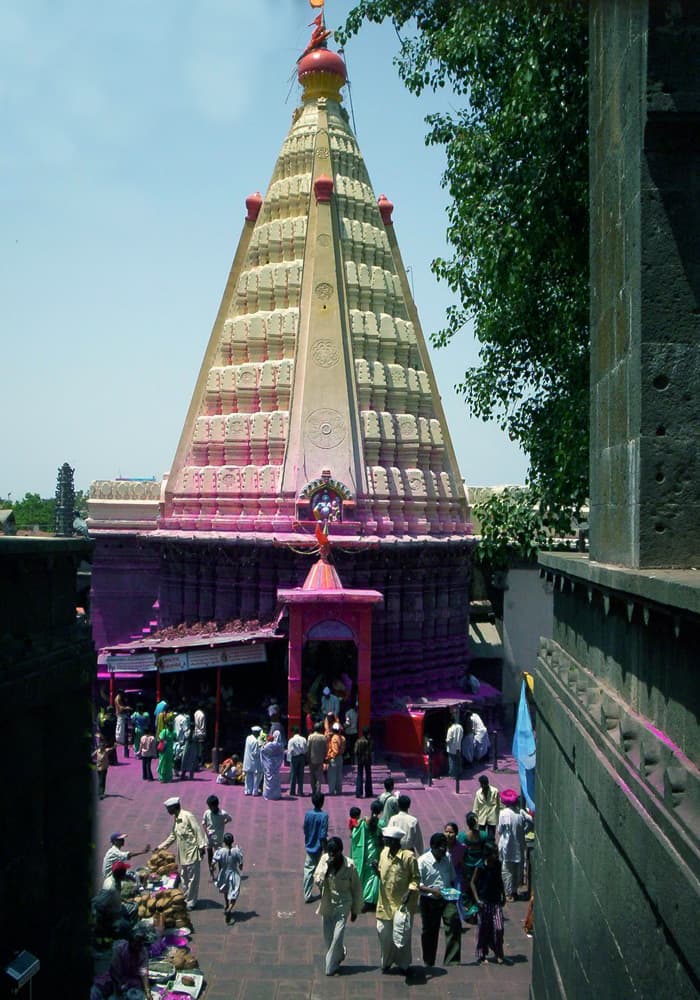
Jyotiba Temple at Wadi
Jyotiba Temple, located near Wadi Ratnagiri in Maharashtra, India, is a significant Hindu pilgrimage site dedicated to the deity Jyotiba. The temple is renowned for its annual fair held on the full moon of Chaitra and Vaishakha, where devotees participate in traditions involving scattering gulal, which famously turns the temple complex and hill pink.