
Jagannath Temple, Digha
The Jagannath Temple in Digha, West Bengal, is a newly constructed Hindu temple dedicated to Lord Jagannath, a form of Vishnu, along with his siblings Balarama and Subhadra. Conceived as a near-replica of the famous Jagannath Temple in Puri, Odisha, it was inaugurated on April 30, 2025, and features Kalingan architectural style with a height of 65 meters.
Key Facts
- ›The temple is dedicated to Lord Jagannath, Balarama, and Subhadra.
- ›It was inaugurated on April 30, 2025.
- ›The temple's architecture is in the Kalingan style, aiming to replicate the Puri Jagannath Temple.
- ›Construction commenced in 2022 and was completed in 2025.
- ›The temple complex is situated on 20 acres of land provided by the Digha-Shankarpur Development Authority.
- ›The temple's height is 65 meters (213 ft).

Jagannath, Balarama, Subhadra
- Replica of the Famous Jagannath Temple In Puri
- Attracts Devotees and Tourists
- Architectural Homage To Eastern India's Traditions
Marble, Sandstone, Neem Wood
Mamata Bannerjee, Government of West Bengal
About Jagannath Temple, Digha
The Jagannath Temple in Digha, located in the Purba Medinipur district of West Bengal, India, is a significant Hindu temple dedicated to Lord Jagannath, a form of Vishnu, along with his siblings Balarama and Subhadra. Inaugurated on April 30, 2025, following a prana pratishtha ceremony, the temple was conceived and constructed as a near-replica of the iconic Jagannath Temple in Puri, Odisha, aiming to replicate its scale and architectural style.
Planning and Construction
The project was announced by the Chief Minister of West Bengal, Mamata Banerjee, on December 20, 2018, with the goal of creating a grand temple complex to draw devotees and tourists. After bypassing a potential site on the seashore due to environmental restrictions, land was selected next to the Digha railway station. The Digha-Shankarpur Development Authority provided 20 acres for the temple, with construction entrusted to West Bengal Housing Infrastructure Development Corporation (HIDCO). The construction work was officially launched in May 2022, with an allocated budget of ₹2 billion.
Architecture and Deities
The temple is built in the Kalingan architectural style, standing at a height of 65 meters (213 ft) and featuring a grand vimana. It incorporates marble flooring imported from Vietnam and sandstone from Rajasthan's Banshi Hills, reflecting craftsmanship from multiple states. The primary deities enshrined are Jagannath, Balabhadra, and Subhadra, along with Sudarshan.
Controversies
The inauguration of the Digha temple was met with controversy, particularly from servitor groups in Puri. Concerns were raised about the replication of sacred rituals outside the original shrine and the use of the designation 'Jagannath Dham,' which is traditionally associated with the Puri temple. Allegations also surfaced regarding the use of surplus sacred neem wood (Daru) from the 2015 Nabakalebara ceremony of the Puri temple for crafting the idols in Digha. Investigations and statements from officials, including the Shree Jagannath Temple Administration (SJTA) and the Odisha Law Minister, ultimately confirmed that ordinary neem wood was used and that no sacred Daru from the Nabakalebara ritual was involved. One senior servitor from Puri, Ramakrushna Dasmohapatra, who participated in the Digha consecration, was suspended by the SJTA for his involvement and controversial statements.
Political and Naming Disputes
The project also faced political scrutiny, with opposition parties accusing the state government of misusing public funds for religious purposes and alleged political motivations. A significant naming dispute arose over the use of 'Jagannath Dham' for the Digha complex, with Odisha's Chief Minister requesting its removal. Following a change in government in West Bengal, the designation 'Dham' was indeed removed from the temple complex's name, with the new administration stating the project was initially approved as a cultural center and the term 'Dham' distorted Sanatan traditions.
Source: Wikipedia ↗
Frequently Asked Questions
When was the Jagannath Temple in Digha inaugurated?
The Jagannath Temple in Digha was inaugurated on April 30, 2025. The pre-inauguration ceremonies, including a Yajna, began on April 24, 2025.
What is the architectural style of the Jagannath Temple in Digha?
The temple is built in the Kalingan architectural style. It is designed to be a near-replica in scale and style of the Jagannath Temple in Puri, Odisha.
Who are the main deities worshipped at the Jagannath Temple in Digha?
The primary deities worshipped at the temple are Lord Jagannath, his elder brother Balarama, and sister Subhadra. Sudarshan is also enshrined.
What materials were used in the construction of the temple?
The temple features marble flooring imported from Vietnam and is constructed with sandstone from Rajasthan's Banshi Hills. The idols are made of neem wood.
Was there any controversy surrounding the Digha Jagannath Temple?
Yes, there was controversy involving servitor groups from Puri, particularly regarding the use of the term 'Jagannath Dham' and allegations of using surplus sacred wood from the Nabakalebara ceremony. A senior servitor from Puri was suspended for his involvement and statements.
Related Temples (Hindu)

Konark Sun Temple
The Konark Sun Temple, a 13th-century Hindu temple in Odisha, India, is dedicated to the Sun god Surya. Designed as a colossal chariot with immense stone wheels and horses, it represents the zenith of Kalingan architecture and artistic achievement. Though much of the temple now lies in ruins, its surviving structures are celebrated for their intricate carvings, depicting religious themes, daily life, and erotic scenes.
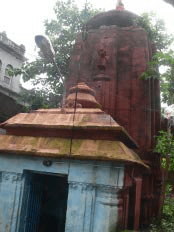
Tirthesvara Siva temple
The Tirthesvara Siva temple is a Hindu temple located in Bhubaneswar, Odisha, India, notable for its architectural style and religious significance. Constructed in the 14th century, it features elements of the Kalingan style and is dedicated to Lord Shiva.

Varaha Lakshmi Narasimha temple, Simhachalam
The Varaha Lakshmi Narasimha temple in Simhachalam, Andhra Pradesh, is a significant Hindu temple dedicated to Lord Vishnu, worshipped as Varaha Narasimha. Renowned for its unique Kalingan architecture and the sandalwood-covered idol that resembles a lingam, the temple has a history spanning nearly a thousand years and has been patronized by various dynasties.