
Tirthesvara Siva temple
The Tirthesvara Siva temple is a Hindu temple located in Bhubaneswar, Odisha, India, notable for its architectural style and religious significance. Constructed in the 14th century, it features elements of the Kalingan style and is dedicated to Lord Shiva.
Key Facts
- ›The temple is located in Bhubaneswar, Odisha, India.
- ›It is believed to have been established in the 14th century AD.
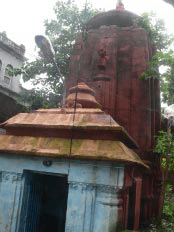
- ›The temple follows the Kalingan architectural style, with a rekha deul vimana and a pidha deul jagamohana.
- ›The primary construction material used is fine-grained ochrous sandstone.
- ›It is a living temple actively used for worship.
- ›The temple is surrounded by private residential buildings and faces west.
Shiva
Religious Functions Observed, Architectural Style
Ganga Dynasty
Sankranti, Shiva Chaturdarshi, Samabar Jalabhisekha, Dahana-Chori
Sandstone
Gajalaxmi, Saiva Dvarapalas
Bindusagar
About Tirthesvara Siva temple
The Tirthesvara Siva temple is a Hindu place of worship located in Bhubaneswar, the capital city of Odisha, India. Its architectural characteristics suggest it was established during the 14th century, aligning with the Ganga period.
Location and Orientation
The temple is situated in the Old Town area of Bhubaneswar on Talabazar road. It faces west and is positioned on the left side of the road that connects Bindusagar to the Lingaraja temple. The temple is surrounded by private residential buildings on its eastern, northern, and southern sides, with the Tala Bazaar road to its west.
Architecture and Construction
The Tirthesvara Siva temple is built in the Kalingan style. It comprises a vimana, which is a rekha deul, and a jagamohana, a pidha deul. The primary construction material is fine-grained ochrous sandstone, utilizing a dry masonry technique. The temple walls are covered with lime plaster and finished with a red wash. The vimana has a panchanga bada structure, while the jagamohana, considered a later addition, features a trianga bada. The sanctum houses a Siva lingam atop a circular Yonipitha, located approximately 0.94 meters below the ground level.
Notable Features and Current State
The raha niches on the temple's exterior are surmounted by khakhara mundis but are currently empty. The doorjambs of the vimana feature niches at the base that enshrine two Saiva dvarapalas. The lintel above the doorway includes an architrave with nine grahas flanked by atlantid ganas, and the lalatabimba niche displays an image of Gajalaxmi. An image of a four-armed Sidhivinayaka is located to the right of the vimana entrance. The temple is considered a living temple, actively used for worship, and is maintained and renovated by local residents and its priest.
Significance and Challenges
The Tirthesvara Siva temple holds cultural significance, hosting various religious functions throughout the year, such as Sankranti, Shiva Chaturdarshi, Samabar Jalabhisekha, and Dahana-chori. However, the monument faces significant conservation challenges. The growth of vegetation, including pipal trees, on the superstructure endangers the temple by widening the joints in the stone masonry and facilitating water seepage. Encroachment by surrounding buildings contributes to water stagnation within the temple precinct, necessitating immediate attention for its preservation.
Source: Wikipedia ↗
Frequently Asked Questions
Where is the Tirthesvara Siva temple located?
The Tirthesvara Siva temple is situated in Bhubaneswar, the capital of Odisha, India. It is located on Talabazar road in the Old Town area, on the left side of the road leading from Bindusagar to the Lingaraja temple.
When was the Tirthesvara Siva temple built?
Based on its architectural features, which resemble those from the Ganga period, it is believed that the Tirthesvara Siva temple was established in the 14th century AD.
What is the architectural style of the Tirthesvara Siva temple?
The Tirthesvara Siva temple is built in the Kalingan style. It features a rekha deul for the vimana (sanctum) and a pidha deul for the jagamohana (assembly hall).
What are the main materials used in the construction of the temple?
The temple is constructed from fine-grained ochrous sandstone. A dry masonry construction technique was employed in its building.
What religious functions are observed at the Tirthesvara Siva temple?
The temple holds cultural significance and observes various religious functions, including Sankranti, Shiva Chaturdarshi, Samabar Jalabhisekha, and Dahana-chori.
What are the current conservation challenges facing the temple?
The temple faces threats from the growth of trees and vegetation on its superstructure, particularly on the mastaka, which expands gaps in the dry stone masonry and causes water seepage. Encroachment by residential buildings also leads to water stagnation within the temple precinct.
Related Temples (Hindu)
Manibhadresvara Siva Temple – I
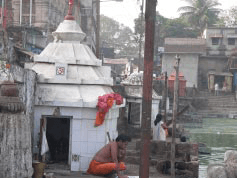
The Manibhadresvara Siva Temple, located in Bhubaneswar, India, is a Hindu temple dedicated to Lord Shiva. Constructed around the 14th century, it is situated on the eastern embankment of the Bindusagar tank and features a Siva-lingam as its primary deity.

Konark Sun Temple
The Konark Sun Temple, a 13th-century Hindu temple in Odisha, India, is dedicated to the Sun god Surya. Designed as a colossal chariot with immense stone wheels and horses, it represents the zenith of Kalingan architecture and artistic achievement. Though much of the temple now lies in ruins, its surviving structures are celebrated for their intricate carvings, depicting religious themes, daily life, and erotic scenes.

Varaha Lakshmi Narasimha temple, Simhachalam
The Varaha Lakshmi Narasimha temple in Simhachalam, Andhra Pradesh, is a significant Hindu temple dedicated to Lord Vishnu, worshipped as Varaha Narasimha. Renowned for its unique Kalingan architecture and the sandalwood-covered idol that resembles a lingam, the temple has a history spanning nearly a thousand years and has been patronized by various dynasties.