
Manibhadresvara Siva Temple – I
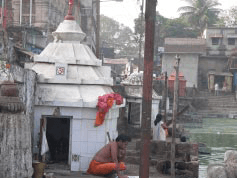
The Manibhadresvara Siva Temple, located in Bhubaneswar, India, is a Hindu temple dedicated to Lord Shiva. Constructed around the 14th century, it is situated on the eastern embankment of the Bindusagar tank and features a Siva-lingam as its primary deity.
Key Facts
- ›The temple is dedicated to Lord Shiva, with the enshrined deity being a Siva-lingam.
- ›It was built around the 14th century AD.
- ›The temple is located in Bhubaneswar, Orissa, India, on the eastern embankment of the Bindusagar tank.
- ›Its architectural style is described as Kalingan.
- ›The temple is constructed using laterite with dry masonry techniques.
- ›Rituals such as Sankranti, Sradha, pindadana, and mundanakriya are performed here.
Shiva
- Cultural Significance Due To the Celebration of Rituals Like Sankranti.
- Social Significance As A Site For Ceremonies Like Sradha, Pindadana, and Mundanakriya.
- Historical Significance, Though Local Legends Attributing It To the Kesaris Do Not Align With Its Architecture.
Sankranti
Laterite
Bindusagar Tank
About Manibhadresvara Siva Temple – I
The Manibhadresvara Siva Temple is a Hindu place of worship located in Bhubaneswar, Orissa, India. Constructed around the 14th century AD, the temple is dedicated to Lord Shiva and features a Siva-lingam as the central deity housed within a circular yoni pitha.
Location and Surroundings
The temple is strategically situated on the eastern embankment of the Bindusagar tank, a significant water body in the area. It lies to the right of the road that connects Kedara-Gouri to the Lingaraja temple, placing it within a historically important religious precinct. The temple's coordinates are Latitude 20° 14’ 45" N and Longitude 85° 50’ 14" E, with an elevation of 55 ft.
Architectural Features and Construction
Architecturally, the Manibhadresvara Siva Temple follows the Kalingan style. Its plan includes a pidha Vimana measuring 1.70 m², supported by a low pista of 0.38 m height. The vimana's elevation is divided into the bada, gandi, and mastaka, with the bada having a threefold division known as a trianga bada. The temple was built using laterite stone through dry masonry construction techniques, a method that relies on precisely cut stones without mortar.
Religious and Cultural Significance
The primary deity is a Siva-lingam, indicating the temple's role as a Shaivite center. Beyond its primary religious function, the temple holds cultural and social importance. Rituals such as Sankranti are observed here, and it serves as a venue for important social ceremonies including Sradha, pindadana, and mundanakriya. While local traditions sometimes attribute the temple's origin to the Kesari dynasty, its architectural style does not fully conform to that period's known characteristics.
Source: Wikipedia ↗
Frequently Asked Questions
Where is the Manibhadresvara Siva Temple located?
The Manibhadresvara Siva Temple is situated in Bhubaneswar, Orissa, India. It is specifically located on the eastern embankment of the Bindusagar tank, to the right of the road branching from Kedara-Gouri to Lingaraja temple.
When was the Manibhadresvara Siva Temple built?
Historical records indicate that the Manibhadresvara Siva Temple was built around the 14th century AD. This places its construction during a significant period of temple building in the region.
What deity is worshipped at the Manibhadresvara Siva Temple?
The primary deity worshipped at the Manibhadresvara Siva Temple is Lord Shiva. The enshrined deity is a Siva-lingam placed within a circular yoni pitha at the center of the sanctum.
What are the architectural characteristics of the temple?
The temple features a pidha Vimana measuring 1.70 m² and stands on a low pista. Its elevation includes a bada, gandi, and mastaka. The bada is divided into three parts, a trianga bada, with specific measurements for the pabhaga, jangha, and baranda sections.
What materials and techniques were used to build the temple?
The Manibhadresvara Siva Temple is constructed using laterite as the primary building material. It was built using dry masonry construction techniques, characteristic of the Kalingan style.
What cultural and social activities take place at the temple?
Culturally, rituals like Sankranti are celebrated at the temple. Socially, it serves as a site for ceremonies such as Sradha, pindadana, and mundanakriya.
Related Temples (Hindu)
Tirthesvara Siva temple
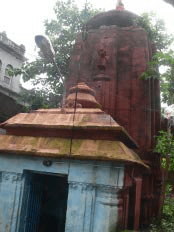
The Tirthesvara Siva temple is a Hindu temple located in Bhubaneswar, Odisha, India, notable for its architectural style and religious significance. Constructed in the 14th century, it features elements of the Kalingan style and is dedicated to Lord Shiva.

Konark Sun Temple
The Konark Sun Temple, a 13th-century Hindu temple in Odisha, India, is dedicated to the Sun god Surya. Designed as a colossal chariot with immense stone wheels and horses, it represents the zenith of Kalingan architecture and artistic achievement. Though much of the temple now lies in ruins, its surviving structures are celebrated for their intricate carvings, depicting religious themes, daily life, and erotic scenes.

Varaha Lakshmi Narasimha temple, Simhachalam
The Varaha Lakshmi Narasimha temple in Simhachalam, Andhra Pradesh, is a significant Hindu temple dedicated to Lord Vishnu, worshipped as Varaha Narasimha. Renowned for its unique Kalingan architecture and the sandalwood-covered idol that resembles a lingam, the temple has a history spanning nearly a thousand years and has been patronized by various dynasties.