
Harishankar Temple
The Harishankar Temple is a Hindu temple situated on the Gandhamardhan hills in the Bolangir District of Odisha, India. It is revered for its natural beauty and its dedication to both Vishnu and Shiva, symbolizing their union. The temple is a significant pilgrimage site, offering visitors a sense of peace amidst its scenic surroundings and a flowing stream.
Key Facts
- ›Located on the slopes of the Gandhamardhan hills in Odisha, India.
- ›Dedicated to the Hindu deities Vishnu and Shiva, often referred to as Hari-Shankar.
- ›The deity was discovered by a king of the Chauhan dynasty of the Patna kingdom in the 14th century.
- ›The temple was constructed by order of Queen Durlabha Devi.
- ›Surrounded by natural scenery and a stream flowing over a granite bed.
- ›Ancient Buddhist ruins, potentially from Parimalgiri University, have been found on the plateau between Harishankar and Nrusinghanath temples.

Vishnu, Shiva
Religious Pilgrimage Site, Connection To Deities Vishnu and Shiva, Scenic Natural Beauty, Proximity To Ancient Buddhist Ruins
Chauhan Dynasty
Ekadashi, Sankranti, Shivratri, Makar Sankranti, Maagha Mela
Granite
Queen Durlabha Devi, Chauhan Dynasty King of Patna Kingdom
Dancing Ganesha Image
Stream
About Harishankar Temple
The Harishankar Temple is a significant Hindu place of worship located on the Gandhamardhan hills in the Bolangir District of Odisha, India. This temple is particularly noted for its harmonious blend of natural beauty and spiritual significance, drawing visitors with its serene environment and its dedication to two principal Hindu deities: Vishnu and Shiva.
History and Construction
The deity of Harisankar was reportedly discovered during the 14th century by a king belonging to the Chauhan dynasty of the Patna kingdom in Odisha. Worship of the deity commenced from that time. Historical records indicate that the temple itself was constructed under the directive of Queen Durlabha Devi, wife of Maharaja Vaijjal Dev Chauhan. A dancing Ganesha image found at the site has been traced to the early 12th century, suggesting a long-standing religious presence.
Religious and Natural Significance
The temple is revered for its connection to both Vishnu and Shiva, symbolizing their union. Visitors often experience a profound sense of peace, enhanced by the natural surroundings, including a stream that flows over a granite bed. The location on the Gandhamardhan hills provides scenic vistas that are said to have attracted the deities themselves.
Archaeological Context
Interestingly, the plateau situated between the Harishankar Temple and the Nrusinghanath Temple on the opposite side of the Gandhamardhan hills has yielded ancient Buddhist ruins. These remnants are believed to be associated with the ancient Parimalgiri University, adding a layer of historical depth to the region.
Festivals and Accessibility
Harishankar Temple observes several important Hindu festivals, including all Ekadashi and Sankranti days, Shivratri, Makar Sankranti, and the Maagha Mela. The temple is accessible, with Harishankar Road being the nearest railway station, located approximately 32 km away, from where regular taxis are available.
Source: Wikipedia ↗
Frequently Asked Questions
What deities are worshipped at Harishankar Temple?
The Harishankar Temple is dedicated to two primary Hindu lords: Vishnu and Shiva. The combined form of these deities is often referred to as Hari-Shankar, symbolizing their unity.
When was the Harishankar Temple constructed?
The temple was constructed by the order of Queen Durlabha Devi of Maharaja Vaijjal Dev Chauhan. The deity of Harisankar itself was discovered by a Chauhan dynasty king of the Patna kingdom during the 14th century, and has been worshipped since then.
What is the significance of the Gandhamardhan hills to the temple?
The Harishankar Temple is situated on the slopes of the Gandhamardhan hills, which contribute to its scenic beauty and natural appeal. The area's scenery is noted for attracting the two lords to stay together.
Are there any historical sites near the Harishankar Temple?
Yes, ancient Buddhist ruins have been discovered on the plateau between the Harishankar Temple and the Nrusinghanath Temple on the opposite side of the Gandhamardhan hills. These ruins are believed to be remnants of the ancient Parimalgiri University.
What festivals are celebrated at Harishankar Temple?
Several festivals are observed at the Harishankar Temple, including all Ekadashi and Sankranti days, Shivratri, and Makar Sankranti. The Maagha Mela is also a significant event celebrated here.
Related Temples (Hindu)
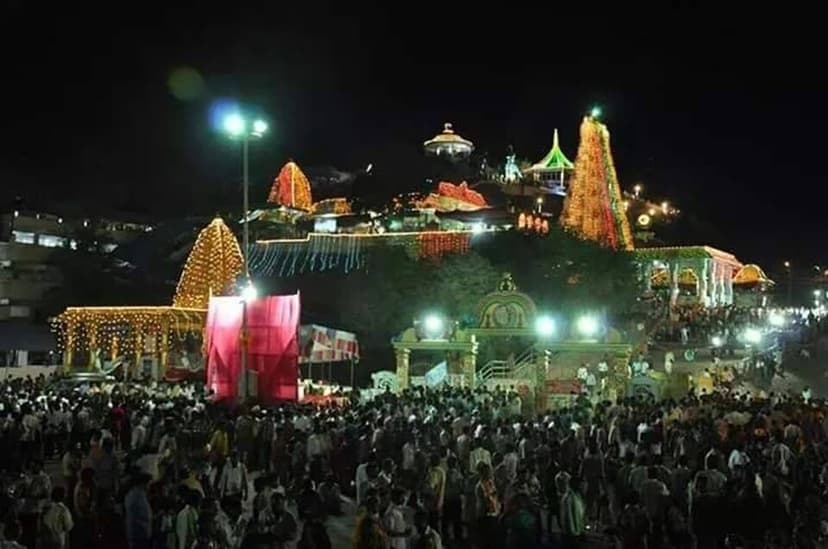
Kotappakonda
Kotappakonda is a significant Hindu pilgrimage site in Andhra Pradesh, India, centered around the ancient Sri Trikoteswara Swamy Temple, dedicated to Lord Shiva. Renowned for its three distinct peaks, the site is a major Shaivite center, drawing large crowds, especially during the annual Maha Shivaratri festival.

Kapilesvara Siva Temple
The Kapilesvara Siva Temple is a Hindu temple dedicated to Shiva, located in Bhubaneswar, Odisha, India. Situated in a precinct with 33 other monuments, it is considered a sacred site, with local legend identifying it as the birthplace of Lord Shiva. The temple complex, which includes various shrines and mandapas, has a rich architectural history, with some structures dating back to the 10th or 11th century and others renovated or built later.

Hampi
Hampi, also known as the Group of Monuments at Hampi, is a UNESCO World Heritage Site located in Karnataka, India. Once the prosperous capital of the Vijayanagara Empire, Hampi is now a sprawling archaeological site featuring over 1,600 surviving remains of forts, temples, royal complexes, and water structures, spread across 4,100 hectares. It continues to be a significant religious center, particularly with the active Virupaksha Temple.