
Kapilesvara Siva Temple
The Kapilesvara Siva Temple is a Hindu temple dedicated to Shiva, located in Bhubaneswar, Odisha, India. Situated in a precinct with 33 other monuments, it is considered a sacred site, with local legend identifying it as the birthplace of Lord Shiva. The temple complex, which includes various shrines and mandapas, has a rich architectural history, with some structures dating back to the 10th or 11th century and others renovated or built later.
Key Facts
- ›Dedicated to Lord Shiva, with the presiding deity being a Siva-lingam.
- ›Located in the village of Kapilesvara, Old Town, Bhubaneswar, Odisha, India.
- ›The temple precinct contains 33 other monuments.
- ›Local legend claims it is the birthplace of Lord Shiva.
- ›Includes various subsidiary shrines such as Adi Kapilesvara, Baidyanatha Siva, Ghanteswara Siva, Guptesvara Siva, and Siddhesvara Siva temples.
- ›Features architectural elements from different periods, with some structures dating to the 10th-11th centuries and others from the 14th, 15th, and 18th centuries.

Shiva
- Sacred Site Identified As the Birthplace of Lord Shiva In Local Legend
- Historical Center of Social, Political, and Ritual Life
- Architectural Complex With Structures From Various Periods
- Part of A Larger Temple Precinct With 33 Other Monuments
Gajapati Dynasty
Sandstone, Laterite, Chlorite
Kapilendra Deva
- Parsvadevata Niches Housing Parvati, Kartikeya, and Ganesha
- Gajalakshmi At the Lalatabimba
- Saivate Dvarapalas and River Goddesses Ganges and Yamuna
Manikarnika Tank
About Kapilesvara Siva Temple
The Kapilesvara Siva Temple is a significant Hindu temple dedicated to Lord Shiva, located in the south-western outskirts of Kapilesvara village, within the Old Town of Bhubaneswar, Odisha, India. It stands as a prominent religious site, further distinguished by local legends that identify it as the birthplace of Lord Shiva himself. The temple is an active place of worship, maintained by the Kapilesvara Temple Trust Board.
Historical Context and Legends
Local tradition imbues the Kapilesvara Siva Temple with profound spiritual significance, asserting it as the very birthplace of Lord Shiva, revered as the father of the Universe. This belief underscores its status as a sacred destination for devotees. Historically, the temple complex was not merely a spiritual center but also a hub for social, political, and educational activities, significantly influencing the region's life until the mid-20th century.
Architectural Narrative
The construction of the Kapilesvara Siva Temple is attributed to the 14th century CE, during the rule of the Gajapati dynasty, specifically under King Kapilendra Deva. However, archaeological evidence, including inscriptions, suggests that the original temple structure may have existed even earlier, possibly before the 11th century CE. The temple has undergone renovations over time, with some later additions and repairs utilizing materials from the original construction. The primary temple structure comprises a vimana (shrine) in the rekha order, a jagamohana in the pidha order, and a flat-roofed nata-mandira and bhoga-mandapa, indicating layered construction phases.
Precinct and Subsidiary Shrines
The Kapilesvara Siva Temple is part of a larger precinct that houses approximately 33 other monuments. This extensive complex includes several other notable shrines, such as the Adi Kapilesvara Shrine, Baidyanatha Siva Temple, Ghanteswara Siva Temple, Guptesvara Siva temple, Siddhesvara Siva temple, and the Sombara Mandapa, which appears to be a Vishnu Temple. These subsidiary structures, built across various centuries from the 10th to the 18th century, contribute to the rich architectural and religious tapestry of the site. The precinct is situated on the northern embankment of the Manikarnika tank, covering an area of 44.00 square meters.
Source: Wikipedia ↗
Frequently Asked Questions
Where is the Kapilesvara Siva Temple located?
The Kapilesvara Siva Temple is situated in the south-western outskirts of the village Kapilesvara, in the Old Town area of Bhubaneswar, Odisha, India. It is located at the end of Kapilesvara road, which leads from the Lingaraj temple to Kapilesvara Village.
What deity is worshipped at the Kapilesvara Siva Temple?
The Kapilesvara Siva Temple is dedicated to Lord Shiva. The presiding deity is a Siva-lingam housed within a circular yonipitha (base) in the sanctum.
What is the historical significance of the Kapilesvara Siva Temple?
According to local legend, the Kapilesvara Siva Temple is considered the birthplace of Lord Shiva, making it a sacred site. The temple complex also serves as a center for social, political, and educational activities, and historically dominated the ritual life of the area.
What are the architectural features of the Kapilesvara Siva Temple?
The main temple features a vimana (shrine) in rekha order, a jagamohana in pidha order, and a nata-mandira and bhoga-mandapa which are later, flat-roofed constructions. Inscriptions suggest the original temple may predate the 11th century, though it has undergone renovations.
Are there other notable shrines within the Kapilesvara temple precinct?
Yes, the Kapilesvara temple precinct is extensive and includes several other shrines. Among these are the Adi Kapilesvara Shrine, Baidyanatha Siva Temple, Ghanteswara Siva Temple, Guptesvara Siva temple, Siddhesvara Siva temple, and Somabaresvara Siva Temple, each dedicated to Shiva or other deities.
When was the Kapilesvara Siva Temple constructed?
The Kapilesvara Siva Temple was built during the 14th century CE, during the Gajapati rule of Kapilendra Deva. However, inscriptions suggest the original temple could be earlier than the 11th century CE.
Related Temples (Hindu)
Kotappakonda
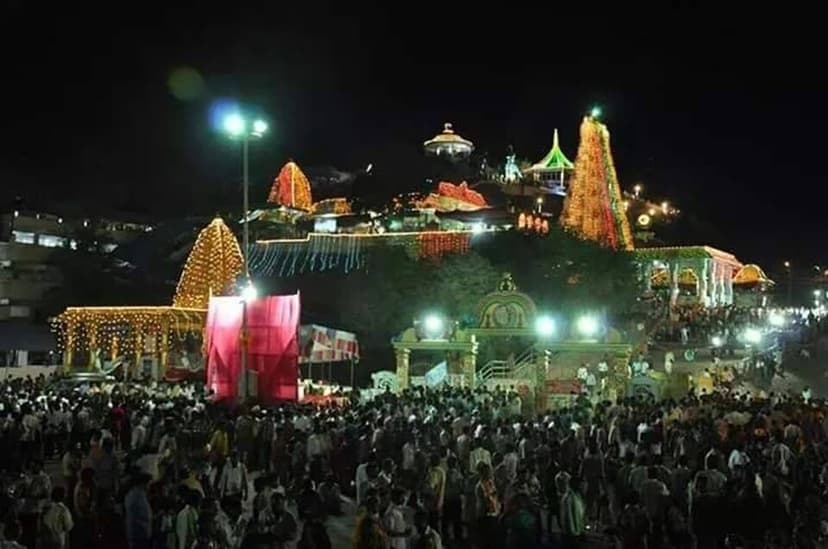
Kotappakonda is a significant Hindu pilgrimage site in Andhra Pradesh, India, centered around the ancient Sri Trikoteswara Swamy Temple, dedicated to Lord Shiva. Renowned for its three distinct peaks, the site is a major Shaivite center, drawing large crowds, especially during the annual Maha Shivaratri festival.

Hampi
Hampi, also known as the Group of Monuments at Hampi, is a UNESCO World Heritage Site located in Karnataka, India. Once the prosperous capital of the Vijayanagara Empire, Hampi is now a sprawling archaeological site featuring over 1,600 surviving remains of forts, temples, royal complexes, and water structures, spread across 4,100 hectares. It continues to be a significant religious center, particularly with the active Virupaksha Temple.

Ghati Subramanya
Ghati Subramanya is a significant Hindu temple located in Karnataka, India, known for its unique dual deity shrine featuring Lord Karthikeya and Lord Narasimha. The temple holds a history of over 600 years and is a popular pilgrimage destination, particularly for those seeking blessings for children and for the worship of the deity Kethu.