
Ghati Subramanya
Ghati Subramanya is a significant Hindu temple located in Karnataka, India, known for its unique dual deity shrine featuring Lord Karthikeya and Lord Narasimha. The temple holds a history of over 600 years and is a popular pilgrimage destination, particularly for those seeking blessings for children and for the worship of the deity Kethu.
Key Facts
- ›The temple is situated in the village of Sri Subamanya Ghati, near Doddaballapura, Karnataka, India.
- ›It is approximately 60 km from the city of Bangalore.
- ›The primary deities are Lord Karthikeya, represented with a seven-headed cobra, and Lord Narasimha.
- ›Both idols are believed by devotees to have emerged from the earth, with Karthikeya facing east and Narasimha facing west.
- ›A notable feature is a large mirror placed in the sanctum to allow simultaneous viewing of both deities.
- ›The temple is an important center in South India for the worship of the Hindu deity Kethu.

Karthikeya, Narasimha, Kethu
Popular Pilgrimage Center, Unique Dual Deity Shrine, Important Center For Kethu Worship, Site For Vows For Children
Ghorpade Rulers of Sandur
Brahmarathotsava, Narasimha Jayanti
Ghorpade Rulers of Sandur
Idol of Kartikeya With A Seven-Headed Cobra, Idol of Lord Narasimha
About Ghati Subramanya
Ghati Subramanya is a prominent Hindu temple located in the village of Sri Subamanya Ghati, near Tubagere in Doddaballapura, Karnataka, India. Situated approximately 60 kilometers from Bangalore, it is a well-regarded pilgrimage destination. The temple is distinguished by its unique shrine housing two principal deities: Lord Karthikeya, often depicted with a seven-headed cobra, and Lord Narasimha. According to local tradition and mythology, both idols are believed to have self-emerged from the earth.
History and Tradition
The recorded history of Ghati Subramanya extends over 600 years, with its initial development attributed to the Ghorpade rulers of Sandur. Beyond its historical significance, the temple is a center of devotional practices. It is believed that couples who are childless can seek blessings for offspring by making vows at the temple. A related ritual involves the installation of snake idols, and thousands of such representations can be found near the temple premises, highlighting its association with Naga worship.
Architectural and Religious Significance
The sanctum sanctorum of Ghati Subramanya features a unique arrangement for its twin deities. The idol of Kartikeya faces eastward, while the idol of Narasimha faces westward. To facilitate simultaneous darshan (viewing) of both deities by devotees, a large mirror is placed in the rear of the sanctum. The temple also holds importance as a significant center in South India for the worship of the Hindu deity Kethu.
Festivals and Events
Two major festivals are celebrated annually at Ghati Subramanya. The Brahmarathotsava is a significant event observed on the day of Pushya shudda Shashti. Narasimha Jayanti, commemorating the birth of Lord Narasimha, is another important festival celebrated with devotion at the temple. Additionally, a famous cattle fair takes place in December, drawing participants and visitors from various parts of Karnataka and neighboring states.
Source: Wikipedia ↗
Frequently Asked Questions
What deities are worshipped at Ghati Subramanya?
The primary deities worshipped at Ghati Subramanya are Lord Karthikeya and Lord Narasimha. Lord Karthikeya is depicted with a seven-headed cobra, and Lord Narasimha is found on the rear side of the idol. The temple is also an important center for the worship of the Hindu deity Kethu.
What is unique about the idol design at Ghati Subramanya?
The temple's idol of Kartikeya, believed to have emerged from the earth, is accompanied by Lord Narasimha on its rear side. To allow devotees to see both deities simultaneously, a large mirror is strategically placed in the sanctum sanctorum.
What is the history of Ghati Subramanya?
Ghati Subramanya has a recorded history spanning over 600 years. Its initial development is attributed to the Ghorpade rulers of Sandur, who once governed parts of Bellary.
What are the significant festivals celebrated at Ghati Subramanya?
Two major festivals are celebrated at Ghati Subramanya. The Brahmarathotsava is observed on the day of Pushya shudda Shashti, and Narasimha Jayanti is another important annual celebration.
What traditions are associated with Ghati Subramanya?
A significant tradition at Ghati Subramanya involves childless couples making vows to be blessed with children by the lord. As a related ritual, many devotees install idols of snakes (Naga idols) near the temple, with thousands of such idols visible.
Is there a famous fair held at Ghati Subramanya?
Yes, a very famous cattle fair is held at Ghati Subramanya in December. This fair attracts farmers from neighboring states like Tamil Nadu, Andhra Pradesh, and Kerala, as well as from various parts of Karnataka.
Related Temples (Hindu)
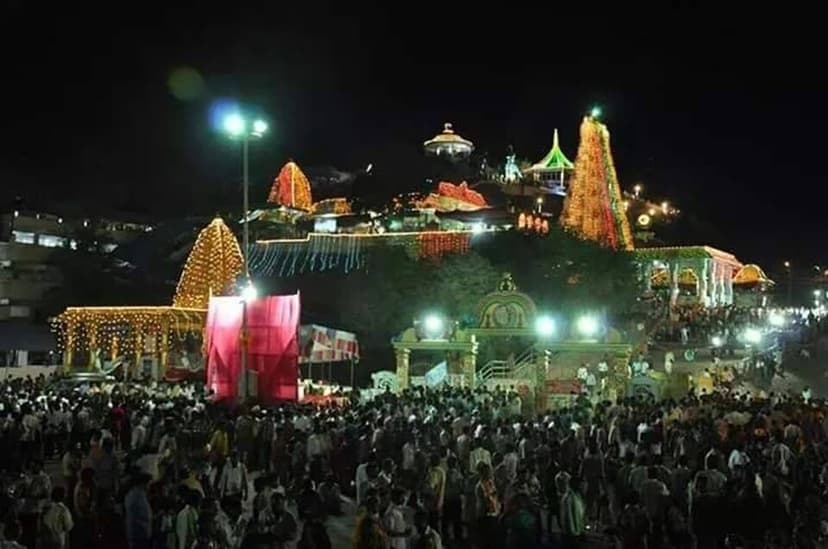
Kotappakonda
Kotappakonda is a significant Hindu pilgrimage site in Andhra Pradesh, India, centered around the ancient Sri Trikoteswara Swamy Temple, dedicated to Lord Shiva. Renowned for its three distinct peaks, the site is a major Shaivite center, drawing large crowds, especially during the annual Maha Shivaratri festival.

Kapilesvara Siva Temple
The Kapilesvara Siva Temple is a Hindu temple dedicated to Shiva, located in Bhubaneswar, Odisha, India. Situated in a precinct with 33 other monuments, it is considered a sacred site, with local legend identifying it as the birthplace of Lord Shiva. The temple complex, which includes various shrines and mandapas, has a rich architectural history, with some structures dating back to the 10th or 11th century and others renovated or built later.

Hampi
Hampi, also known as the Group of Monuments at Hampi, is a UNESCO World Heritage Site located in Karnataka, India. Once the prosperous capital of the Vijayanagara Empire, Hampi is now a sprawling archaeological site featuring over 1,600 surviving remains of forts, temples, royal complexes, and water structures, spread across 4,100 hectares. It continues to be a significant religious center, particularly with the active Virupaksha Temple.