
Chhinnamasta Temple, Rajrappa
Chhinnamasta Temple, located in Rajrappa, Jharkhand, India, is a prominent Hindu pilgrimage center dedicated to the fierce Tantric goddess Chinnamasta. Situated at the confluence of the Damodar and Bhera rivers, the temple is renowned for its unique Tantric architectural style and attracts devotees from across India and neighboring countries.
Key Facts
- ›Dedicated to Goddess Chinnamasta, a Tantric deity and one of the Mahavidyas.
- ›Located at the confluence of the Damodar and Bhera rivers in Rajrappa, Jharkhand, India.
- ›Known for its Tantric architectural design, comparable to Kamakhya Temple.
- ›Attracts pilgrims from Jharkhand, West Bengal, Bihar, Assam, and Nepal.
- ›Features smaller temples dedicated to other deities like Surya, Hanuman, Shiva, and the Ashtamatrikas.
- ›Animal sacrifice is still practiced, particularly on Tuesdays, Saturdays, and during Kali Puja.

Chhinnamasta
- Hindu Pilgrimage Center
- Tantric Architectural Design
- Site For Tantric Accomplishment
- Important For Santal and Tribal Communities For Immersion of Ashes
Makar Sankranti, Vijayadashami, Kali Puja
Ashtadhatu
Damodar River, Bhera River
About Chhinnamasta Temple, Rajrappa
Chhinnamasta Temple, situated in Rajrappa within the Ramgarh district of Jharkhand, India, stands as a significant Hindu pilgrimage center dedicated to Goddess Chinnamasta. The temple is particularly renowned for its distinctive Tantric architectural style and draws a large number of devotees from Jharkhand and neighboring states like West Bengal and Bihar.
History and Devotion
The site has been a place of worship for tribals since ancient times and was well-established as a center for Chhinnamasta worship by the 18th century. The goddess herself, often referred to as Chhinnamastika or Prachanda Chandika, is one of the Mahavidyas, a group of ten Tantric goddesses. Her iconography is fearsome, depicting a self-decapitated goddess holding her own head, a scimitar, and drinking blood from her severed neck, symbolizing her fierce aspect.
Geography and Symbolism
The temple's location at the confluence of the Damodar and Bhera (Bhairavi) rivers is of great symbolic importance in Tantrism. The union of these rivers, with the Bhairavi nadi considered feminine and the Damodar nada masculine, represents the concept of 'vipareeta rati' or 'opposite copulation,' signifying the active shakti and passive male elements.
Architectural and Religious Significance
The architectural design of Chhinnamasta Temple is noted for its Tantric influences, drawing comparisons to the Kamakhya Temple in Assam. A natural rock formation covered with an ashtadhatu (eight-metal alloy) kavacha is worshipped as the primary idol of Goddess Chhinnamasta. The temple complex includes smaller shrines dedicated to other deities like Surya, Hanuman, Shiva, and various Mahavidyas.
Practices at the temple include the offering of Kheer and animal sacrifices, which continue to be performed, particularly on Tuesdays, Saturdays, and during Kali Puja. The temple is also a place for devotees seeking blessings for new vehicles and for Tantrics pursuing spiritual accomplishments. It is also a significant site for the Santal and other tribal communities, who immerse the ashes of their deceased loved ones in the Damodar River, viewing Rajrappa as their spiritual final resting place.
Festivals and Tourism
Major festivals celebrated at the temple include Makar Sankranti, which features a large fair, and Vijayadashami. The natural beauty of the region, with its hilly landscape, forests, and the waterfall formed by the Bhera River joining the Damodar, also makes it an attractive picnic spot and draws foreign tourists.
Source: Wikipedia ↗
Frequently Asked Questions
What is the significance of the location of Chhinnamasta Temple?
The temple is situated at the confluence of the Damodar and Bhera rivers, a location that holds special significance in Tantric traditions. The union of the rivers, with the Bhairavi nadi (female) and Damodar nada (male), symbolically represents the 'vipareeta rati' or 'opposite copulation' pose described in the goddess's meditation.
What is the iconography of Goddess Chinnamasta?
Goddess Chinnamasta is depicted with her own severed head in one hand and a scimitar in the other. Three jets of blood flow from her neck, which are drunk by her severed head and two attendants. She is often shown standing on a copulating couple, signifying her fierce and powerful aspect.
What kind of architecture does Chhinnamasta Temple feature?
The temple is popular for its Tantric style of architectural design. This style is considered notable and similar to that of the Kamakhya Temple in Assam, another significant Tantric site.
What practices are observed at Chhinnamasta Temple?
Devotees offer Kheer and animal sacrifices to the goddess. Animal sacrifice is a practice that continues, especially on Tuesdays, Saturdays, and during Kali Puja. Pilgrims also tie red threads around a rock for wish fulfillment.
Are there other deities besides Chinnamasta worshipped at Rajrappa?
Yes, apart from the main Chhinnamasta temple, there are ten other temples dedicated to various deities. These include temples for Surya, Hanuman, Shiva, and the Mahavidyas such as Tara, Shodashi, Bhuvaneswari, Bhairavi, Bagla, Kamla, Matangi, and Dhumavati.
What is the significance of Rajrappa for tribal communities?
Rajrappa is also a significant pilgrimage center for the Santals and other tribal communities. They come to immerse the ashes of their loved ones in the Damodar River, viewing it as their final resting place, particularly during December.
What are the major festivals celebrated at the temple?
A special fair is held here in January during the festival of Makar Sankranti, attracting a large number of people. Another fair is organized during Vijayadashami, also drawing significant crowds.
Related Temples (Hindu)

Taraknath Temple
The Taraknath Temple, located in Tarakeswar, West Bengal, India, is a significant Hindu pilgrimage site dedicated to Lord Shiva, worshiped here as Tarakanatha. Constructed in 1729, it features a distinct Bengal architectural style with an 'atchala' structure and an adjacent 'natmandir'. The temple is renowned for its belief that a dip in the nearby Dudhpukur tank fulfills prayers and is considered one of the 64 Jyotirlingas.

Tanot Mata Temple
The Tanot Mata Temple is a significant Hindu shrine located in the Jaisalmer district of Rajasthan, India, near the Pakistan border. Revered as a form of Goddess Hinglaj Mata, the temple is famously associated with the Indian victories in the Indo-Pakistani Wars of 1965 and 1971, with local folklore attributing the successful outcomes to divine intervention. The Border Security Force of India now manages the temple complex, which also includes a victory tower and a war museum.
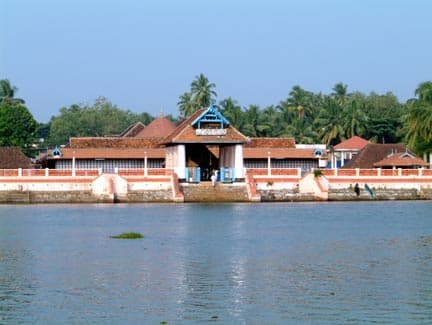
Thriprayar Temple
The Thriprayar Temple, also known as the Shree Ramaswami Temple, is a significant Hindu temple located in Triprayar, Thrissur district, Kerala, India. It is dedicated to Lord Rama, the seventh incarnation of Vishnu, who is depicted with four arms holding a conch, discus, bow, and garland. The temple's origin story involves the idol being worshipped by Krishna in Dwarka, later immersed in the sea, and eventually found by fishermen.