
Ananthapura Lake Temple
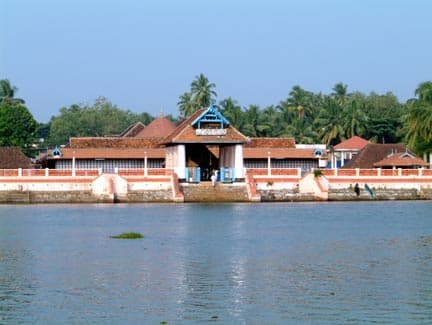
The Ananthapura Lake Temple, also known as Sri Ananthapadmanabha Swamy Temple, is a unique Hindu temple situated in the Kasaragod district of Kerala, India. It is notable for being the only temple in Kerala located in the center of a lake, believed by some traditions to be the original seat of Lord Anantha Padmanabhaswamy.
Key Facts
- ›It is the only temple in Kerala situated in the middle of a lake.
- ›Believed by some traditions to be the Moolasthanam (original seat) of Lord Anantha Padmanabhaswamy.
- ›The principal deity is Lord Vishnu, in the form of Anantha Padmanabhaswamy.
- ›The original idols were made of a rare combination of over 70 medicinal materials, later replaced by panchaloha metals.
- ›The temple features intricate wood carvings depicting the Dashavatara and painted depictions of the Nava-grahas.
- ›A cave in the vicinity is legendarily believed to be the path the deity took to Thiruvananthapuram.

Lord Vishnu, Anantha Padmanabhaswamy
- Believed To Be the Original Seat of Anantha Padmanabha Swami.
- Considered One of the 108 Abhimana Kshethram of the Vaishnavate Tradition.
- Unique Architectural Setting In the Center of A Lake.
- Historical and Mythological Importance Connecting It To Thiruvananthapuram.
Kadu-Sharkara-Yogam, Panchaloha Metals, Wood
Divakara Muni Vilwamangalam
Dashavatara Wood Carvings, Nava-Grahas Paintings
Lake
About Ananthapura Lake Temple
The Ananthapura Lake Temple, officially known as Sri Ananthapadmanabha Swamy Temple, is a significant Hindu temple located in Ananthapura village, Kasaragod district, Kerala, India. It holds a unique distinction as the only temple in Kerala situated in the center of a lake, which is often referred to as a 'lake' and measures approximately 2 acres. This distinctive setting contributes to its fame and spiritual aura.
Legends and Significance
Tradition holds the Ananthapura Lake Temple as the original seat (Moolasthanam) of Lord Anantha Padmanabhaswamy, the presiding deity of the famous Padmanabhaswamy Temple in Thiruvananthapuram. It is revered as one of the 108 Abhimana Kshethram within the Vaishnavate tradition. Local legends recount the penance of sage Divakara Muni Vilwamangalam, who is said to have encountered Lord Narayana as a child at this site. A cave near the lake is believed to be the divine passage the deity used to relocate to Thiruvananthapuram, thus linking the two sacred sites.
Structure and Worship
The temple complex itself is built within the lake, with the sanctum sanctorum, Namaskara-mandapam, Thitappalli, and shrines for Jala-Durga located in the water. A foot-bridge connects the Namaskara-mandapam to the eastern rock, serving as the sole access to the Sreekovil. The principal idol of Lord Vishnu is depicted in a sitting posture upon a serpent king with five hoods. While the original idols were made of a rare blend of over 70 medicinal materials, they were replaced with panchaloha metals in 1972, though efforts are underway to reinstate the original composition. The temple is known for its exquisite wood carvings on the Mandapam ceilings, depicting the Dashavatara, and painted representations of the Nava-grahas. The temple actively welcomes visitors of all faiths and backgrounds.
Source: Wikipedia ↗
Frequently Asked Questions
What is unique about the Ananthapura Lake Temple's location?
The Ananthapura Lake Temple is unique because it is situated in the center of a lake, making it the only temple of its kind in Kerala. The sanctum sanctorum is built in the middle of this rectangular tank, which measures about 2 acres.
What deity is worshipped at the Ananthapura Lake Temple?
The principal deity worshipped at the Ananthapura Lake Temple is Lord Vishnu, specifically in the form of Anantha Padmanabhaswamy. The idol depicts the Lord in a sitting pose over a five-hooded serpent king, Lord Anantha.
What is the significance of the cave near the temple lake?
According to local legend, a cave located in the north corner of the lake is believed to be the passage through which the deity Anantha Padmanabha chose to travel to Thiruvananthapuram. This legend connects the Ananthapura Lake Temple to the Padmanabhaswamy Temple in Thiruvananthapuram.
What were the original idols of the Ananthapura Lake Temple made of?
The original idols in the sanctum sanctorum were not made of metal or stone. Instead, they were crafted from a unique combination of over 70 medicinal materials known as 'kadu-sharkara-yogam'.
Are there any notable artistic features within the temple?
Yes, the temple boasts an excellent collection of wood carvings on the ceilings of the Mandapam, which illustrate incidents from the Dashavatara (ten incarnations of Lord Vishnu). Additionally, the Nava-grahas (nine planets) are painted at the Muktha-mandapam.
Is the Ananthapura Lake Temple open to everyone?
Yes, the Ananthapura Lake Temple is open to all visitors, regardless of their caste or creed. This inclusive policy is a significant aspect of its accessibility.
Related Temples (Hindu)

Taraknath Temple
The Taraknath Temple, located in Tarakeswar, West Bengal, India, is a significant Hindu pilgrimage site dedicated to Lord Shiva, worshiped here as Tarakanatha. Constructed in 1729, it features a distinct Bengal architectural style with an 'atchala' structure and an adjacent 'natmandir'. The temple is renowned for its belief that a dip in the nearby Dudhpukur tank fulfills prayers and is considered one of the 64 Jyotirlingas.

Tanot Mata Temple
The Tanot Mata Temple is a significant Hindu shrine located in the Jaisalmer district of Rajasthan, India, near the Pakistan border. Revered as a form of Goddess Hinglaj Mata, the temple is famously associated with the Indian victories in the Indo-Pakistani Wars of 1965 and 1971, with local folklore attributing the successful outcomes to divine intervention. The Border Security Force of India now manages the temple complex, which also includes a victory tower and a war museum.
Thriprayar Temple
The Thriprayar Temple, also known as the Shree Ramaswami Temple, is a significant Hindu temple located in Triprayar, Thrissur district, Kerala, India. It is dedicated to Lord Rama, the seventh incarnation of Vishnu, who is depicted with four arms holding a conch, discus, bow, and garland. The temple's origin story involves the idol being worshipped by Krishna in Dwarka, later immersed in the sea, and eventually found by fishermen.