
Padmanabhaswamy Temple
The Padmanabhaswamy Temple is a prominent Hindu temple in Thiruvananthapuram, Kerala, India, dedicated to Lord Vishnu in the form of Anantha Padmanabhaswamy. It is recognized as one of the 108 Divya Desams, sacred sites in the Sri Vaishnava tradition, and holds significant historical and religious importance, being the tutelary deity of the Travancore royal family.
Key Facts
- ›Dedicated to Vishnu as Anantha Padmanabhaswamy, depicted in yogic sleep on his serpent mount, Shesha.
- ›Considered one of the 108 Divya Desams in Sri Vaishnavism.
- ›The temple is the tutelary deity of the Travancore royal family, whose current trustee is the titular Maharaja.
- ›Mentioned in ancient Hindu texts such as the Vishnu Purana, Brahma Purana, and Mahabharata.
- ›Has historical references in Sangam period literature, including the Cilappatikaram.
- ›Features a 100-foot high, 7-tier gopuram built in the Pandyan style.

Vishnu
Sacred Site In Sri Vaishnava Tradition, Tutelary Deity of the Travancore Royal Family, Historical References In Sangam Literature, Architectural Marvel With Detailed Carvings
Travancore Royal Family
Aipasi Festival, Panguni Festival, Navaratri Festival, Laksha Deepam, Murajapam
Granite, Saligramams
Parashurama, King Adithya Vikrama of Vanchi, Travancore Royal Family
- Idol of Anantha Padmanabhaswamy Made of 12,008 Saligramams
- Sculptured Granite-Stone Pillars With Elaborate Carvings
Padma Theertham
About Padmanabhaswamy Temple
The Padmanabhaswamy Temple, located in Thiruvananthapuram, Kerala, India, is a significant Hindu temple dedicated to Lord Vishnu. The principal deity is Anantha Padmanabhaswamy, a manifestation of Vishnu depicted in a perpetual state of yogic sleep upon his celestial serpent mount, Shesha. The temple is esteemed as one of the 108 Divya Desams, which are considered the most sacred sites within the Sri Vaishnava tradition.
Historical and Mythological Context
The temple is deeply interwoven with the history of the Travancore royal family, serving as their tutelary deity. Legends suggest its origins trace back to the Dvapara Yuga, with Parashurama purifying the idol and establishing its administration. Historical records indicate the temple's presence was known even during the Sangam period, with ancient Tamil literature referring to it and the city as possessing structures of pure gold. The temple's extensive historical records, known as 'Mathilakam' documents, have been preserved and studied, offering insights into its past management and rituals.
Temple Structure and Worship
The main shrine houses the reclining deity, Padmanabha, adorned with a Shiva lingam beneath his hand. The idol is meticulously crafted from 12,008 saligramams sourced from the Gandaki River in Nepal. The temple complex includes other shrines dedicated to deities like Ugra Narasimha and Krishna Swami. A prominent architectural feature is the 100-foot high, seven-tiered gopuram in the Pandyan style, and a vast corridor supported by 365 and a quarter intricately carved granite pillars. Worship at the temple is governed by strict entry protocols, allowing only those who profess Hindu faith to enter, and adhering to specific dress codes.
Festivals and Administration
Several important festivals are celebrated annually, including the bi-annual Aipasi and Panguni festivals, which involve a ceremonial 'Aarat' or holy bath in the sea. The Navaratri festival and the grand 'Laksha Deepam' festival, observed once every six years, are also major events. Historically, the temple was managed by bodies like the Ettara Yogam, with significant patronage from the Travancore royal family. Currently, the temple's secular administration is overseen by an Administrative Committee constituted under the direction of the Supreme Court of India, while preserving its religious customs.
Source: Wikipedia ↗
Frequently Asked Questions
What is the principal deity worshipped at Padmanabhaswamy Temple?
The principal deity is Lord Vishnu, worshipped in the form of Anantha Padmanabhaswamy. This form depicts Vishnu in a state of yogic sleep upon his divine serpent mount, Shesha.
What is the significance of the Padmanabhaswamy Temple in Hinduism?
The temple is revered as one of the 108 Divya Desams, considered the holiest abodes of Vishnu in Sri Vaishnavism. It also holds deep historical ties as the tutelary deity of the Travancore royal family.
Are there any specific legends associated with the temple's origin or construction?
According to legend, the idol was purified and venerated by Parashurama in the Dvapara Yuga, who then entrusted the temple's administration to several Potti families and the King of Vanchi for its protection. Another story links the temple to the sage Vilvamangalathu Swamiyar.
What architectural features are notable at Padmanabhaswamy Temple?
The temple boasts a 100-foot high, 7-tier gopuram in the Pandyan style. It also features a corridor with 365 and a quarter sculptured granite-stone pillars, renowned for their elaborate carvings.
What are the major festivals celebrated at the Padmanabhaswamy Temple?
Major festivals include the bi-annual Aipasi and Panguni festivals, culminating in the Aarat (holy bath) procession to Shankumugham Beach. The annual Navaratri festival and the grand Laksha Deepam (observed every six years) are also significant.
Who is permitted to enter the Padmanabhaswamy Temple?
Entry into the temple is restricted to individuals who profess the Hindu faith. Devotees are also required to adhere to a strict dress code, with men wearing a Vesti and Angavastram, and women wearing a sari.
Related Temples (Hindu)

Taraknath Temple
The Taraknath Temple, located in Tarakeswar, West Bengal, India, is a significant Hindu pilgrimage site dedicated to Lord Shiva, worshiped here as Tarakanatha. Constructed in 1729, it features a distinct Bengal architectural style with an 'atchala' structure and an adjacent 'natmandir'. The temple is renowned for its belief that a dip in the nearby Dudhpukur tank fulfills prayers and is considered one of the 64 Jyotirlingas.

Tanot Mata Temple
The Tanot Mata Temple is a significant Hindu shrine located in the Jaisalmer district of Rajasthan, India, near the Pakistan border. Revered as a form of Goddess Hinglaj Mata, the temple is famously associated with the Indian victories in the Indo-Pakistani Wars of 1965 and 1971, with local folklore attributing the successful outcomes to divine intervention. The Border Security Force of India now manages the temple complex, which also includes a victory tower and a war museum.
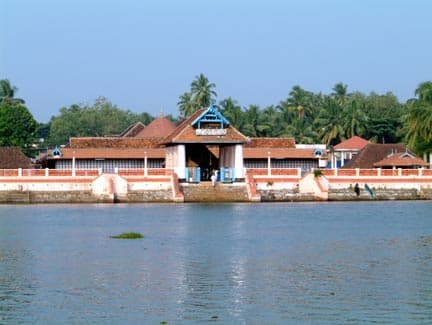
Thriprayar Temple
The Thriprayar Temple, also known as the Shree Ramaswami Temple, is a significant Hindu temple located in Triprayar, Thrissur district, Kerala, India. It is dedicated to Lord Rama, the seventh incarnation of Vishnu, who is depicted with four arms holding a conch, discus, bow, and garland. The temple's origin story involves the idol being worshipped by Krishna in Dwarka, later immersed in the sea, and eventually found by fishermen.