
Seth
July 26·1st century·Middle East
Seth is recognized in Abrahamic religions as the third son of Adam and Eve, born after the murder of his brother Abel. He is considered an important ancestor, particularly in Jewish and Islamic traditions, where he is seen as the progenitor of humanity after the Great Flood and the recipient of divine teachings.
Key Facts
- ›Seth is the third son of Adam and Eve, born after Abel's death.
- ›Eve believed Seth was appointed by God as a replacement for Abel.
- ›In Jewish tradition, Seth is credited with receiving secret teachings that became the Kabbalah.
- ›Josephus reported that Seth's descendants invented the wisdom of the heavenly bodies and built inscribed pillars.
- ›Christian Gnostic sects called Sethians venerated Seth as a divine incarnation.
- ›Islamic traditions regard Seth as a prophet and the receiver of early scriptures.
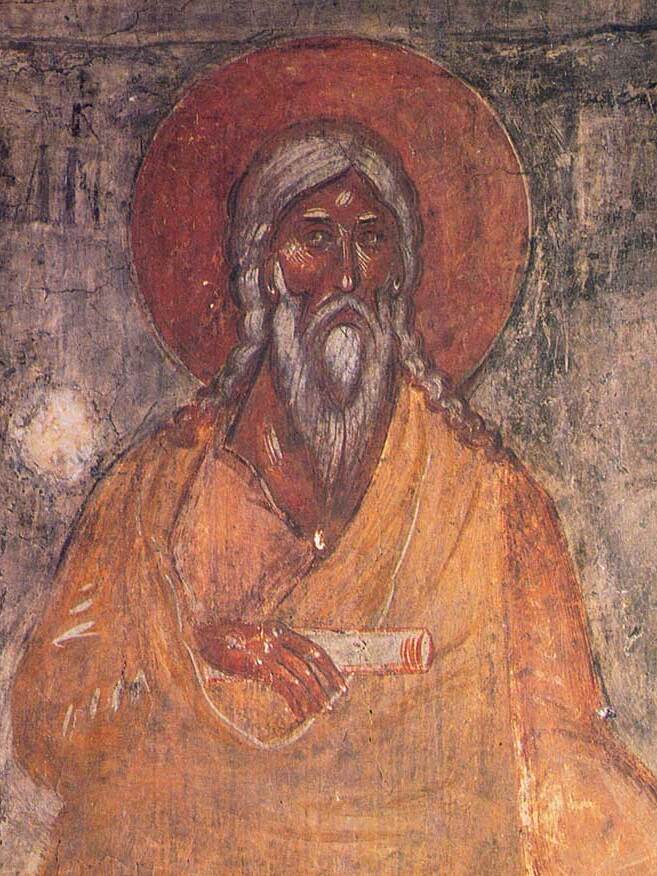
Shitil (Mandaeism), Shehid ibn Jerr (Yazidism), Šheeṯh ibn Ādam (Arabic), Nabi Shith (Arabic), Hazrat Shees
About Seth
Seth is a significant figure in Abrahamic religions, recognized as the third son of Adam and Eve. According to the Book of Genesis, he was born after his brother Abel was murdered by Cain, and Eve believed God appointed Seth as a divine replacement for Abel.
Biblical and Jewish Traditions
Genesis accounts state Seth was born when Adam was 130 years old (or 230 according to the Septuagint) and that he died at the age of 912. His genealogy is reiterated in 1 Chronicles. In the noncanonical Life of Adam and Eve, Seth and Eve sought oil from the Tree of Mercy, and Seth was later the sole witness to Adam's ascension. Jewish tradition attributes secret teachings, which became the Kabbalah, to Seth from Adam. The Zohar refers to him as the "ancestor of all the generations of the Egyptians or Tsetsaudim" (righteous ones).
Josephus and Later Traditions
The historian Josephus, in his Antiquities of the Jews, describes Seth as virtuous and states his descendants invented astronomical knowledge and built two pillars inscribed with scientific discoveries. These pillars, one of brick and one of stone, were intended to preserve knowledge against destruction by fire or flood. Josephus claimed the stone pillar remained in the 'land of Siriad' in his time.
Christianity, Islam, and Other Religions
Seth is included in the genealogy of Jesus in the Gospel of Luke. Christian Gnostic sects known as Sethians venerated Seth as a divine figure. In Islam, Seth is respected as a prophet, the righteous son of Adam, and the inheritor of God's law after Adam. He is sometimes identified as the recipient of the "first scriptures." Mandaean scriptures recognize Seth as the angelic figure Shitil, a prophet and revealer of their faith. Yazidis know him as Shehid ibn Jerr, believing him to be the ancestor of their people.
Shrines and Legacy
Traditional sites associated with Seth's tomb are found in Lebanon (al-Nabi Shayth), Palestine (Bashshit), and Afghanistan (Balkh). A shrine in Mosul, Iraq, was destroyed by ISIL forces. Seth's legacy is that of a crucial ancestral figure, through whom humanity's lineage continued, and as a conduit of divine wisdom and teachings across various religious and mystical traditions.
Source: Wikipedia ↗
Frequently Asked Questions
Who is Seth in Abrahamic religions?
Seth is the third son of Adam and Eve, born after the murder of his brother Abel. He is seen as a replacement for Abel and the progenitor of humanity in many traditions.
What role does Seth play in Jewish tradition?
In Jewish tradition, Seth is believed to have received secret teachings from Adam that formed the basis of the Kabbalah. He is considered an ancestor of Noah and the main lineage of mankind.
What is Seth's significance in Islamic tradition?
Islamic traditions respect Seth as a prophet and the righteous son of Adam and Eve, who inherited God's Law after Adam's death. Some sources identify him as the receiver of the 'first scriptures' mentioned in the Quran.
What are the Sethians in Christianity?
The Sethians were a Christian Gnostic sect who venerated Seth, depicting him in their creation myths as a divine incarnation. They believed Seth's offspring formed a superior elect within human society.
Where are Seth's tombs traditionally located?
Traditional tombs of Seth are located in al-Nabi Shayth in Lebanon, the former village of Bashshit in Palestine, and a site in Balkh, Afghanistan. Local beliefs in Ayodhya, India, also identify a grave as Seth's resting place.
What is the Mandaean connection to Seth?
In Mandaeism, Seth is cognate with the angelic figure Shitil, who is considered a son of Adam Kadmaya and a revealer of Mandaean teachings. Shitil is identified as the biblical Seth.
Related Saints
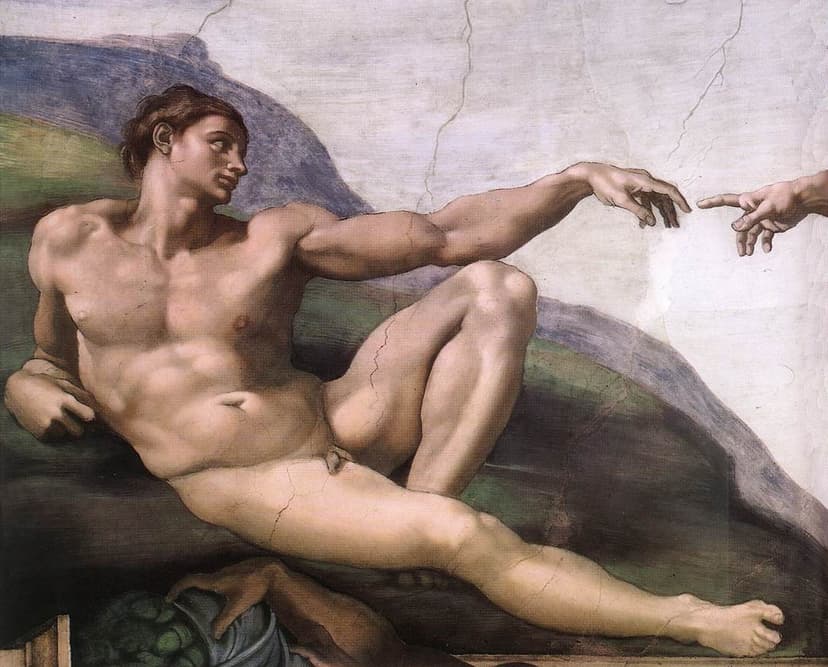
Adam
Adam is the first human being, created by God according to the Book of Genesis and revered in Judaism, Christianity, Islam, and other belief systems. He is remembered for his creation from dust, his sin in the Garden of Eden by eating forbidden fruit, and his subsequent expulsion, which introduced death and sin into the world. His story serves as a foundational narrative for understanding humanity's relationship with God, the origins of sin, and the concept of redemption.
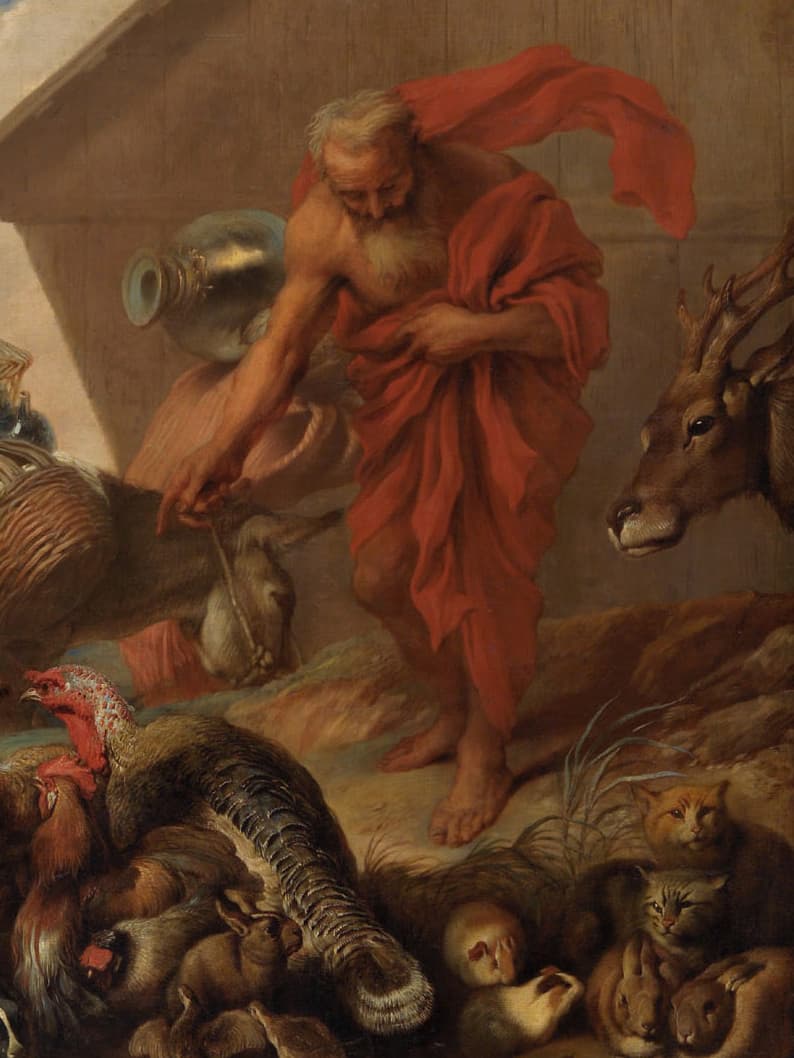
Noah
Noah is a pivotal figure in Abrahamic religions, most famously known for building the Ark to save his family and all land animals from a divine flood. God made a covenant with Noah after the flood, promising never to destroy the earth by water again. He is also remembered as the first cultivator of the vine and a figure associated with the Seven Laws of Noah.
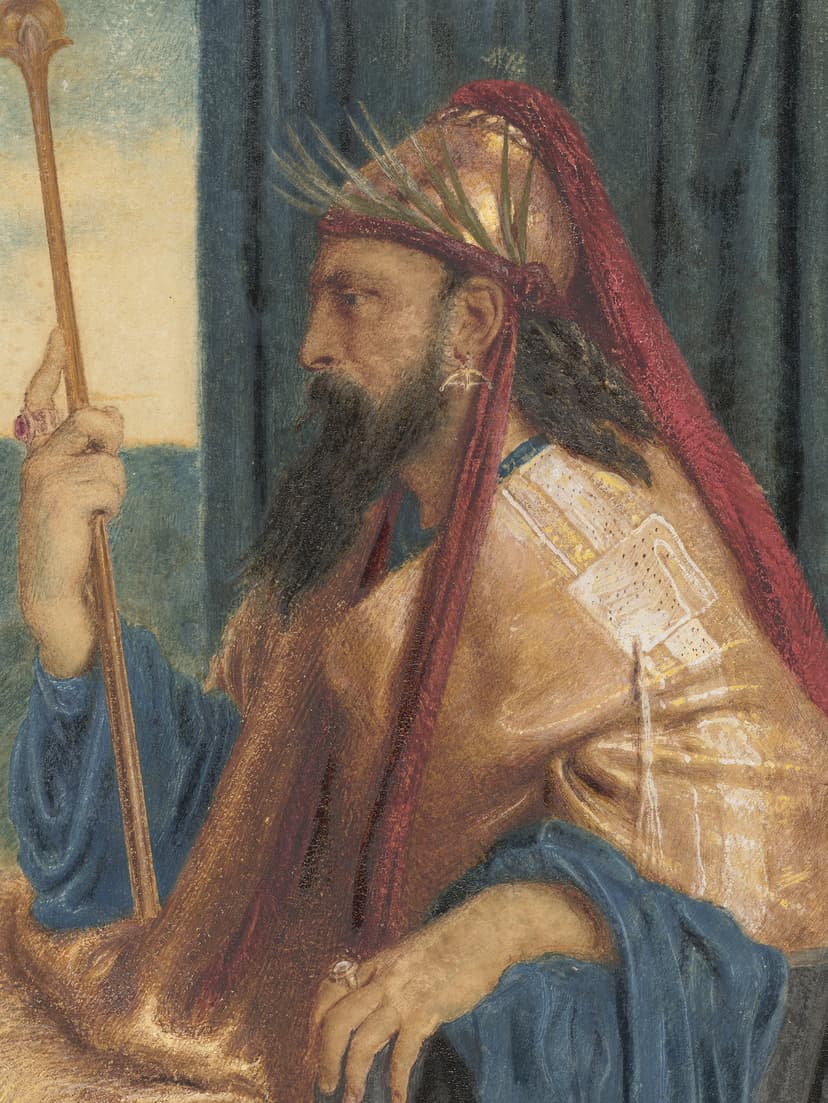
Solomon
Solomon was an ancient Israelite king, successor to his father David, reigning from approximately 970 to 931 BCE. He is celebrated in biblical narrative for immense wisdom, the construction of the First Temple in Jerusalem, and a reign of commercial prosperity. However, his accumulation of wealth and foreign wives who introduced idolatry led to divine punishment, resulting in the division of the kingdom after his death.