
Sergius of Radonezh
September 25·14th century·Russia
Sergius of Radonezh was a highly influential Russian Orthodox spiritual leader and monastic reformer who lived in the 14th century. He is best remembered as the founder of the Trinity Lavra of St. Sergius, Russia's most venerated monastic house, and for his role in the Russian spiritual and cultural revival of his time. His teachings and the monasteries founded by his disciples significantly shaped the Russian Orthodox Church.
Key Facts
- ›He was born Bartholomew near Rostov Veliky, receiving his baptismal name in honor of the Apostle Bartholomew.
- ›He moved to Radonezh with his family after their impoverishment and later founded the Trinity-St. Sergius Lavra on Makovets Hill.
- ›He was tonsured a monk and given the name Sergius, eventually becoming an abbot and priest who emphasized monastic labor.
- ›His disciples founded approximately 40 monasteries, extending his influence across central and northern Russia.
- ›He Blessed Dmitry Donskoy before the Battle of Kulikovo, contributing to his victory against the Tatars.
- ›His incorrupt relics were discovered in 1422, and he is commemorated on September 25 and July 5.

Bartholomew (birth name), Varfolomei (birth name), Abbot of Russia, Valiant voivod of the Russian land
About Sergius of Radonezh
Sergius of Radonezh (born Bartholomew, c. 1314 – 1392) was a pivotal Russian Orthodox spiritual leader and monastic reformer whose influence profoundly shaped the Russian Orthodox Church. He is primarily celebrated as the founder of the Trinity Lavra of St. Sergius, near Moscow, which has become Russia's most venerated monastic house.
Life and Ministry
Born Bartholomew to a boyar family near Rostov Veliky, Sergius later moved with his parents to the village of Radonezh. Following his parents' death, he joined his brother Stefan as a monk and together they sought a more secluded life. They established a monastic cell and church on Makovets Hill, which evolved into the Trinity-St. Sergius Lavra. After Stefan moved to Moscow, Bartholomew was tonsured a monk and given the name Sergius. He lived as a hermit for over a year before other monks joined him, eventually leading to his ordination as a priest and abbot.
Sergius's disciples were instrumental in spreading his teachings and founding numerous monasteries across central and northern Russia, with estimates suggesting around 40 such foundations. Notable among these are the Borisoglebsky, Ferapontov, Kirillo-Belozersky, and Vysotsky monasteries. He was also associated with the founding of Andronikov and Simonov monasteries in Moscow.
Role in Russian History and Culture
Although Sergius remained an ascetic and generally avoided direct political involvement, he played a significant spiritual role in national events. He famously blessed Dmitry Donskoy before the pivotal Battle of Kulikovo against the Tatars in 1380, a gesture that has been interpreted as a blessing for victory. His influence was such that Metropolitan Alexius once asked Sergius to succeed him as Metropolitan of Moscow, a request Sergius declined, preferring his monastic life.
Sergius, alongside figures like Epiphanius the Wise, Stephen of Perm, and the painter Andrei Rublev, is recognized by historians as a key figure in the Russian spiritual and cultural revival of the late 14th and early 15th centuries.
Death and Veneration
Sergius died on September 25, 1392. His relics were discovered to be incorrupt in 1422 and were placed in the new cathedral of the Trinity Lavra. He was canonized by the Russian Orthodox Church, with the exact year of canonization debated between 1448 and 1452. He is commemorated on his death date, September 25, and on July 5, the day his relics were uncovered.
Sergius is venerated not only within the Russian Orthodox Church but also by the Catholic Church and various churches within the Anglican Communion. The ecumenical Fellowship of Saint Alban and Saint Sergius is named in part for him. His memory has been preserved through hagiographical writings, most notably "The Life of St. Sergius of Radonezh" by Pachomius the Serb.
Source: Wikipedia ↗
Frequently Asked Questions
Who was Sergius of Radonezh?
Sergius of Radonezh was a highly venerated Russian Orthodox spiritual leader and monastic reformer of the 14th century. He is renowned for founding the Trinity Lavra of St. Sergius, a significant monastic center in Russia.
When was Sergius of Radonezh born and when did he die?
The exact year of Sergius of Radonezh's birth is uncertain, with possibilities including 1314, 1319, or 1322. He died on September 25, 1392.
What is Sergius of Radonezh most famous for?
He is most famous for founding the Trinity Lavra of St. Sergius, which became the most venerated monastic house in Russia. He also exerted a great influence on the Russian Orthodox Church and is considered a key figure in the Russian spiritual and cultural revival.
Did Sergius of Radonezh participate in politics?
While Sergius did not actively participate in political life, he famously blessed Dmitry Donskoy before the Battle of Kulikovo. He is said to have encouraged the pursuit of peaceful means before resorting to conflict.
Where are Sergius of Radonezh's relics located?
The incorrupt relics of Sergius of Radonezh are kept in the cathedral of the Trinity Lavra of St. Sergius, which he founded. These relics were uncovered in 1422.
How is Sergius of Radonezh venerated in other Christian traditions?
Sergius is officially recognized by the Catholic Church and is included in their liturgical calendar. He is also honored in the Calendar of Saints of several churches of the Anglican Communion, with a commemoration on September 25 in the Church of England.
Related Saints
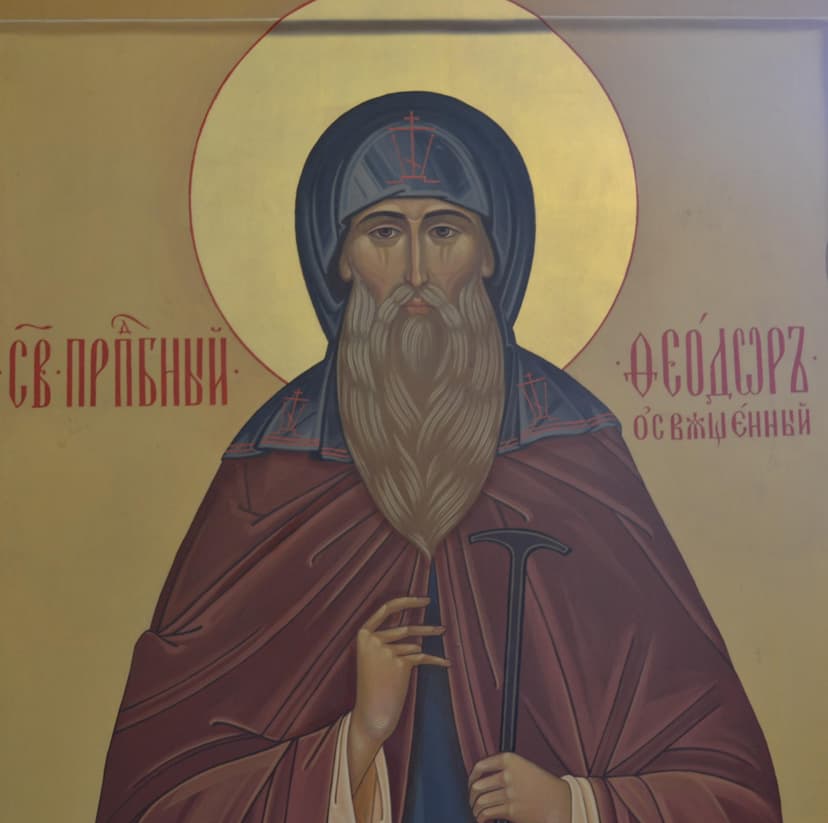
Theodore of Tabennese
Theodore of Tabennese was a pivotal successor to Pachomius, credited with preventing the collapse of the first Christian cenobitic monastic federation. He is chiefly remembered for his strong leadership and administrative skills in maintaining the Koinonia's stability after Pachomius's death.
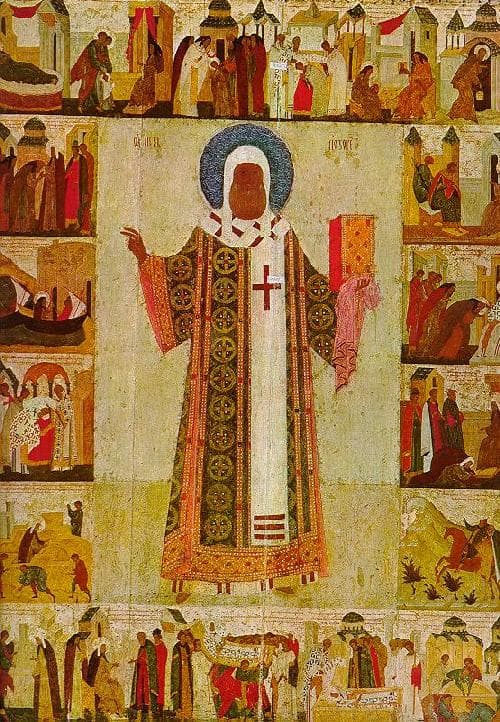
Peter of Moscow
Peter of Moscow was an Eastern Orthodox bishop of Kiev who moved his see to Moscow in 1325, significantly strengthening the city's position as a spiritual center. He is remembered for his ascetic life, his role in establishing Moscow as the spiritual capital of Rus', and his eventual proclamation as a patron saint of Moscow. His efforts contributed to the rebuilding and spiritual development of Moscow during a tumultuous period.
Abraham of Galich
Abraham of Galich was an abbot of the Russian Orthodox Church and a disciple of Sergius of Radonezh. He is remembered for founding four monasteries in the region of Galich, establishing a significant monastic presence there. His feast day is celebrated on July 20th.