
Samuel
August 20·1st millennium BCE·Ancient Israel
Samuel was a pivotal figure in ancient Israel, venerated as a prophet, judge, and seer across Judaism, Christianity, and Islam. He is chiefly remembered for his role in the transition from the biblical judges to the Israelite monarchy, anointing both Saul and David as kings. His life and prophecies marked a significant spiritual and political turning point for the Israelites.
Key Facts
- ›Samuel's mother was Hannah, who prayed for a child and dedicated him to God as a Nazirite.
- ›He served under Eli the priest at Shiloh and was called by God at a young age.
- ›Samuel led the Israelites to victory against the Philistines, restoring peace after years of oppression.
- ›He appointed Saul as the first king of Israel but later denounced him for disobedience.
- ›Samuel secretly anointed David as the future king.
- ›He is described as being buried in Ramah, with tradition identifying his tomb in Nabi Samwil.
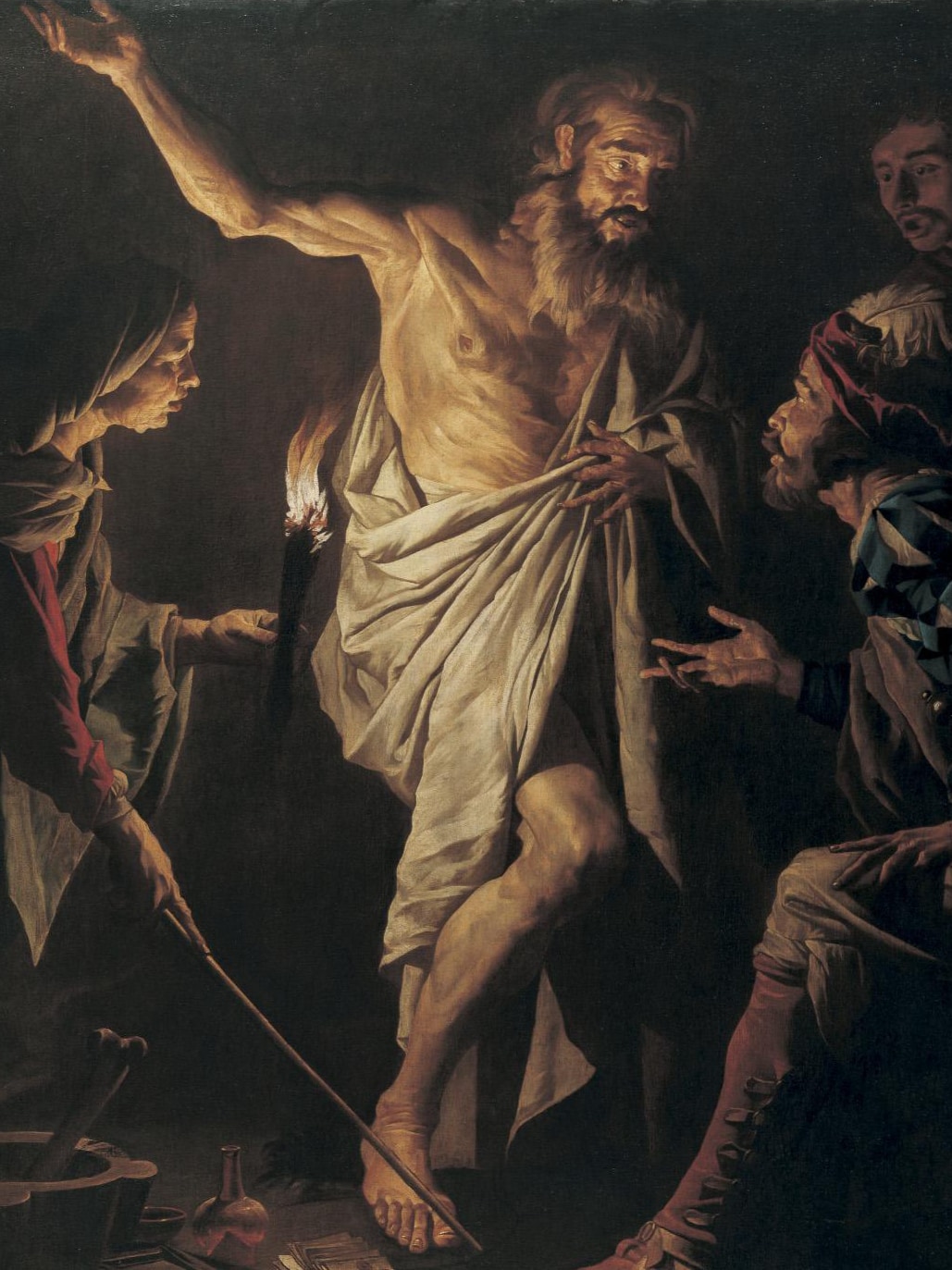
The Seer
About Samuel
Samuel stands as a pivotal figure in the Hebrew Bible, bridging the period of the biblical judges and the establishment of the Israelite monarchy. Venerated across Judaism, Christianity, and Islam as a prophet, judge, and seer, his life narrative is central to understanding the transition of Israelite governance and its spiritual direction.
Family and Early Life
Hannah, Samuel's mother, was unable to conceive, and after fervent prayer at the sanctuary in Shiloh, she vowed to dedicate any child she bore to God as a Nazirite. Her prayer was answered with the birth of Samuel. Upon his weaning, Hannah fulfilled her vow, leaving Samuel in the care of Eli, the priest of Shiloh, who was one of the last Israelite judges. Samuel worked under Eli, and it was during this time that God first called to him, revealing the impending doom of Eli's corrupt sons.
Prophetic Calling and Leadership
Samuel's calling marked him as a prophet through whom God communicated with Israel. He grew to be recognized throughout the land as a trustworthy prophet. Following a devastating defeat of the Israelites by the Philistines and the capture of the Ark of the Covenant, Samuel became a key figure in maintaining Israel's religious identity. After twenty years of Philistine oppression, Samuel led the Israelites to a decisive victory at Mizpah, ushering in a long period of peace.
King-Maker and Critic
As Samuel aged, his sons, whom he had appointed as judges, proved corrupt. The people, desiring a king to be like other nations and to provide defense against enemies, demanded Samuel appoint one. Reluctantly, and after divine revelation, Samuel anointed Saul as the first king of Israel. However, Samuel later denounced Saul for disobedience, particularly for sparing Agag and the best of the Amalekite livestock, an act that violated God's explicit command. This disobedience led to God rejecting Saul's kingship. Samuel then secretly anointed David, the future king, in Bethlehem, and later provided him sanctuary from Saul's jealousy.
Legacy and Veneration
Samuel is described as being buried in Ramah, with tradition locating his tomb in Nabi Samwil. His story is detailed in the Books of Samuel, and he is referenced in later biblical books, rabbinical literature, the Christian New Testament, and the Quran. For Christians, he is seen as a prophet, judge, and wise leader, and some view his combined roles as foreshadowing Christ. In Islam, he is recognized as a prophet associated with the anointing of Talut (Saul). His feast day is observed on August 20 in Catholic, Eastern Orthodox, and Lutheran traditions.
Source: Wikipedia ↗
Frequently Asked Questions
Who were Samuel's parents?
Samuel's mother was Hannah, and his father was Elkanah. Hannah prayed fervently for a child, and upon his birth, dedicated Samuel to God as a Nazirite.
What was Samuel's role in the transition to the Israelite monarchy?
Samuel was instrumental in the shift from the era of biblical judges to the United Kingdom of Israel. He anointed Saul as the first king and later, after Saul's disobedience, secretly anointed David as the future king.
What is the meaning of Samuel's name?
The name Samuel is interpreted in different ways. Hannah stated she named him Samuel because she asked him of the Lord, implying 'God has heard me'. Other interpretations suggest it means 'God has set' or 'God has placed'.
How did Samuel die?
The biblical narrative states that Samuel was buried in Ramah. After his death, King Saul consulted the Witch of Endor to conjure Samuel's spirit, indicating Samuel was deceased.
Is Samuel recognized in Islam?
Yes, Samuel is recognized as a prophet and seer in Islam, though he is not explicitly named in the Qur'an. Islamic narratives often focus on his birth and the anointing of Talut (Saul) as the first king of Israel.
Related Saints
Samson
Samson was the last of the judges of ancient Israel, renowned for his extraordinary strength granted by God as a Nazirite. He is chiefly remembered for his epic battles against the Philistines, his betrayal by Delilah, and his final act of collapsing a Philistine temple, killing himself and his enemies. His story highlights themes of divine power, betrayal, and sacrifice.

Aaron
Aaron was an Israelite prophet and the first High Priest, elder brother to Moses. He served as Moses' spokesman to the Pharaoh during the Exodus and was divinely appointed as the progenitor of the Israelite priesthood. Aaron is remembered for his role in establishing the Levitical priesthood and for his interactions with Moses during the Israelites' journey in the wilderness.
Miriam
Miriam was an ancient Israelite prophetess, sister to Moses and Aaron, and a key figure in the Exodus from Egypt. She is remembered for her role in leading the Israelites, particularly the women, and for her prophetic gifts. Her story highlights themes of divine authority, divine punishment, and enduring tradition.