
Samson
Samson was the last of the judges of ancient Israel, renowned for his extraordinary strength granted by God as a Nazirite. He is chiefly remembered for his epic battles against the Philistines, his betrayal by Delilah, and his final act of collapsing a Philistine temple, killing himself and his enemies. His story highlights themes of divine power, betrayal, and sacrifice.
Key Facts
- ›Samson was the last judge of ancient Israel, tasked with delivering his people from the Philistines.
- ›He was a Nazirite from birth, a vow symbolized by his uncut hair, which was the source of his superhuman strength.
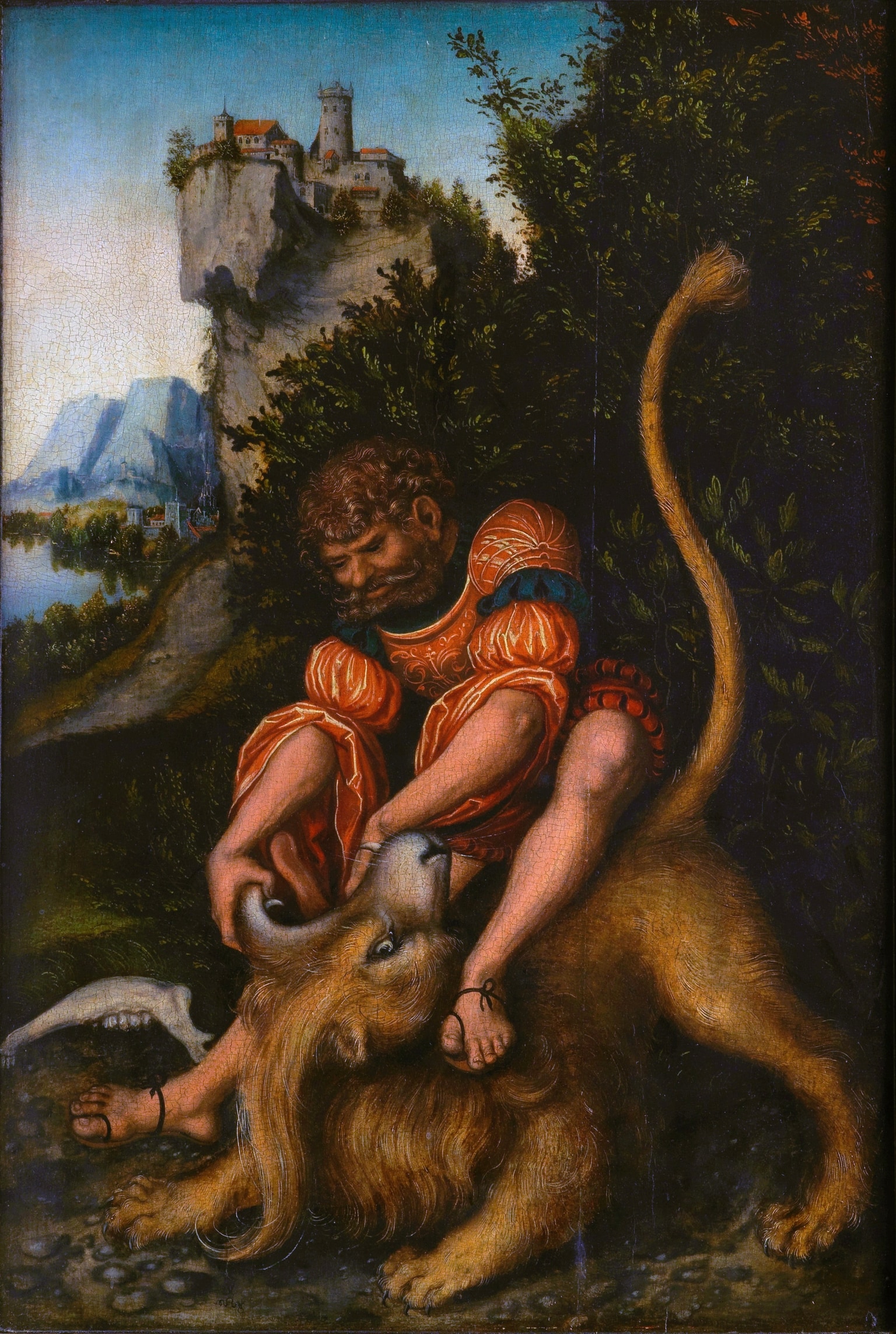
- ›Samson performed numerous feats of strength, including slaying a lion with his bare hands and defeating a Philistine army with a donkey's jawbone.
- ›He was betrayed by his lover Delilah, who discovered the secret of his strength and had his hair cut off, leading to his capture and blinding.
- ›In his final act, Samson prayed for strength, tore down the pillars of a Philistine temple, killing himself and thousands of Philistines.
- ›Samson's story has been interpreted in rabbinic, Christian, and Islamic traditions, with some seeing him as a type of Jesus Christ.
Shimshon
Lion, Donkey's Jawbone, Foxes, Temple Pillars
About Samson
Samson, known in Hebrew as Shimshon, stands as one of the most prominent figures in the Book of Judges, serving as the last of the ancient Israelite judges. His narrative, detailed in chapters 13 to 16, recounts his divinely granted superhuman strength and his lifelong struggle against the Philistines, who oppressed the Israelites during his time. Often compared to other Near Eastern folk heroes like Gilgamesh and the Greek Heracles, Samson embodies a potent archetype of power, vulnerability, and ultimate sacrifice.
Life and Historical Context
Born to Manoah and his previously barren wife in Zorah, Samson was consecrated as a Nazirite from birth by divine decree. This vow, overseen by the Angel of the Lord, mandated abstinence from wine and spirits, as well as the prohibition of cutting his hair. His immense strength was a direct manifestation of God's favor, enabling him to perform extraordinary feats. Samson's life was marked by conflict with the Philistines, often stemming from personal entanglements, such as his ill-fated marriage to a Philistine woman from Timnah. His exploits included single-handedly killing a lion, defeating Philistines with a donkey's jawbone, and single-handedly tearing down the gates of Gaza.
Betrayal and Demise
Samson's strength and his vow were ultimately compromised through his relationship with Delilah. Persuaded by Philistine officials, Delilah repeatedly cajoled Samson until he revealed the secret of his power: his uncut hair. After his hair was shorn while he slept, Samson lost his strength, was captured by the Philistines, blinded, and forced into servitude grinding grain in Gaza. His final act occurred when the Philistines brought him to their temple of Dagon for a celebratory sacrifice. While there, his hair had begun to grow back. Samson prayed for renewed strength, and in a final, devastating act, he pulled down the temple's supporting pillars, causing its collapse. This event killed him and thousands of Philistine onlookers, bringing an end to his life and a fierce blow against his enemies.
Interpretations and Legacy
Samson's story has resonated through centuries, attracting interpretations from rabbinic, Christian, and Islamic traditions. Christian commentators, notably Ambrose and Caesarius of Arles, have seen his life and death as prefiguring aspects of Jesus Christ's Passion, citing parallels in miraculous births, betrayal by silver payment, and sacrificial deaths. In rabbinic literature, Samson is identified with Bedan and seen as a divinely appointed deliverer, though some traditions caution against his licentiousness. Scholarly analysis has also explored Samson as a potential euhemerized solar deity or a Hebrew variant of international folk hero archetypes. The narrative's enduring power is evident in its influence on Western art, literature, and even modern geopolitical concepts, such as the "Samson Option" in nuclear strategy, reflecting his character's ultimate destructive capability.
Source: Wikipedia ↗
Frequently Asked Questions
Who was Samson?
Samson was the last of the judges of ancient Israel, a figure from the Book of Judges known for his immense strength granted by God. He was a Nazirite from birth, dedicated to God.
What was the source of Samson's strength?
According to the biblical account, Samson's superhuman strength was a divine gift from God, tied to his Nazirite vow. This vow included never cutting his hair, which symbolized his consecration.
How did Samson die?
Samson died in a dramatic act of vengeance. He was captured by the Philistines, blinded, and forced to grind grain. Later, in their temple of Dagon, he prayed for strength, pulled down the temple's pillars, killing himself and thousands of Philistines.
Who was Delilah?
Delilah was Samson's lover in the valley of Sorek. The Philistine officials bribed her to discover the secret of Samson's strength, which she eventually did, leading to his capture.
What are some notable interpretations of Samson's story?
Samson's story has been interpreted in various ways. Rabbinic literature sees him as a divinely appointed judge, while Christian commentators have viewed him as a type of Jesus Christ due to perceived parallels in their lives. Some scholars have also explored potential solar deity connections.
What is the 'Samson Option'?
The 'Samson Option' is a term inspired by Samson's final act, referring to a doctrine of nuclear deterrence where a nation threatened with an overwhelming attack might retaliate with a devastating, mutually assured destruction, even at the cost of its own annihilation.
Related Saints
Samuel
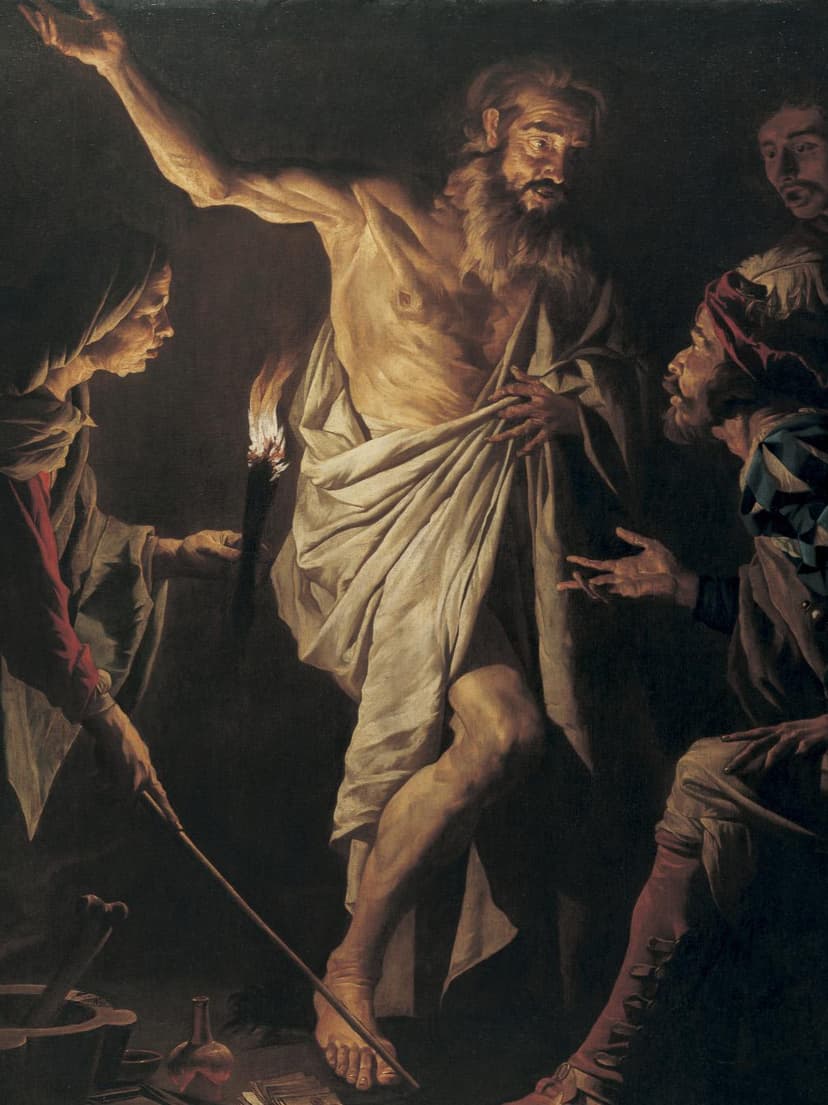
Samuel was a pivotal figure in ancient Israel, venerated as a prophet, judge, and seer across Judaism, Christianity, and Islam. He is chiefly remembered for his role in the transition from the biblical judges to the Israelite monarchy, anointing both Saul and David as kings. His life and prophecies marked a significant spiritual and political turning point for the Israelites.

Aaron
Aaron was an Israelite prophet and the first High Priest, elder brother to Moses. He served as Moses' spokesman to the Pharaoh during the Exodus and was divinely appointed as the progenitor of the Israelite priesthood. Aaron is remembered for his role in establishing the Levitical priesthood and for his interactions with Moses during the Israelites' journey in the wilderness.
Miriam
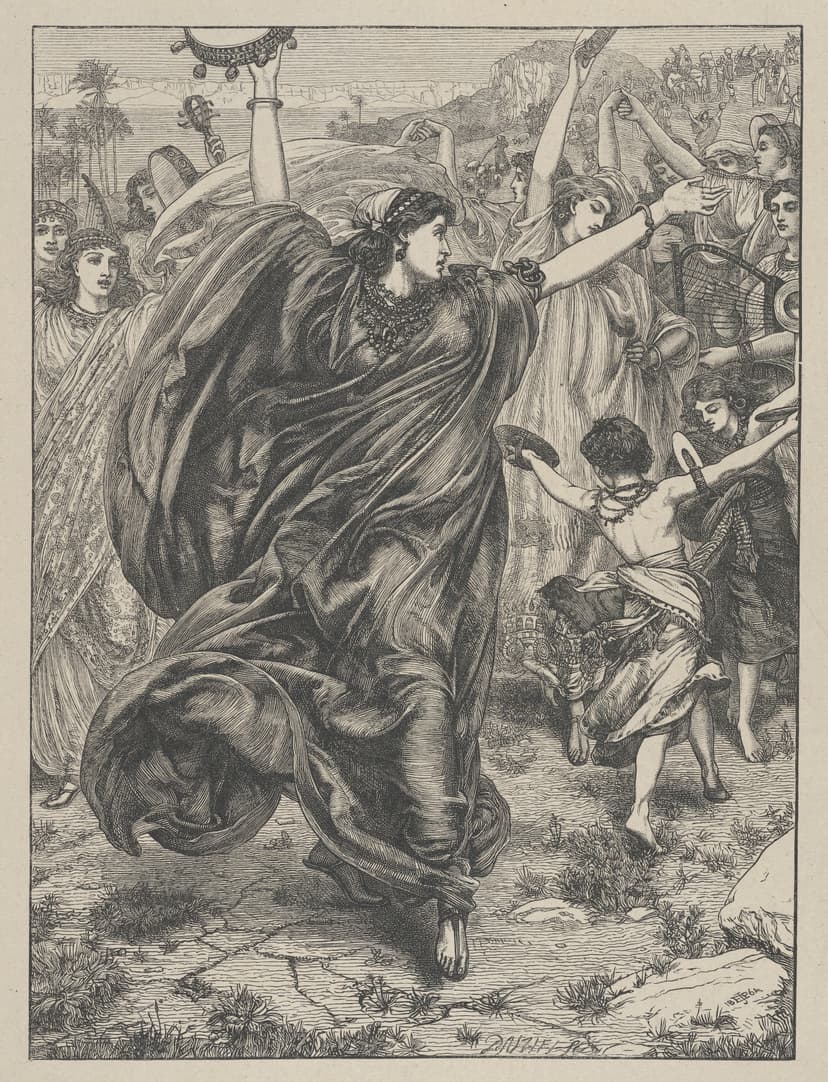
Miriam was an ancient Israelite prophetess, sister to Moses and Aaron, and a key figure in the Exodus from Egypt. She is remembered for her role in leading the Israelites, particularly the women, and for her prophetic gifts. Her story highlights themes of divine authority, divine punishment, and enduring tradition.