
Nicodemus I of Peć
Nicodemus I of Peć was a Serbian monk-scribe and the 10th Serbian Archbishop from 1316 to 1324. He is remembered for his role in mediating between Serbian royalty and for his authorship of "The Lives of Serbian Kings and Bishops." He is venerated as a saint in the Eastern Orthodox Church.
Key Facts
- ›He served as the 10th Serbian Archbishop from 1316 to 1324.
- ›He authored "Rodoslov: srpskih kraljeva I vladika" (the Lives of Serbian Kings and Bishops).
- ›He intervened in disputes between King Stefan Milutin and his heir, Stefan Uroš III.
- ›He crowned Uroš III as King and Dušan as Young King in 1322.
- ›He co-founded the Vratna monastery in the 14th century.
- ›He died in 1325.
Nikodim I of Peć
About Nicodemus I of Peć
Nicodemus I of Peć, also known as Nikodim I of Peć, was a significant figure in 14th-century Serbian history, serving as a monk-scribe, Archbishop, and author. He held the position of the 10th Serbian Archbishop from 1316 to 1324, and his death is recorded in 1325. He is venerated as a saint within the Eastern Orthodox Church, with his feast day observed on May 11th.
Life and Historical Context
Nicodemus was a monk-scribe at Hilandar before ascending to the patriarchal throne. His involvement in the political affairs of the Serbian kingdom was notable. In 1317, he was called upon by the heir apparent, Stefan Uroš III, who had been exiled, to intervene in his reconciliation with his father, King Stefan Milutin. Nicodemus's autobiographical notes from 1318-1319 detail his visit to Constantinople during this period. His mediation proved successful, as King Milutin allowed Uroš III to return in 1320. Following Milutin's death in 1321, civil war erupted over the succession. Nicodemus played a crucial role in solidifying the new order by crowning Stefan Uroš III as King and Dušan as Young King on January 6, 1322.
Contributions and Legacy
Beyond his peacemaking efforts, Nicodemus I of Peć is recognized for his authorship of "Rodoslov: srpskih kraljeva i vladika" (The Lives of Serbian Kings and Bishops), a valuable historical text. While serving as Abbot of Hilandar, he also facilitated the grant of land and an abandoned monastery to the monks of the Kelion of Saint Sava in Karyes, Mount Athos, through a decree issued by a local protos. Furthermore, he co-founded the 14th-century Serbian Orthodox Vratna monastery in collaboration with King Stefan Milutin. His contributions to the spiritual and political landscape of medieval Serbia, coupled with his literary work, solidify his place as an important historical and religious figure.
Source: Wikipedia ↗
Frequently Asked Questions
Who was Nicodemus I of Peć?
Nicodemus I of Peć was a Serbian monk-scribe and served as the 10th Serbian Archbishop from 1316 to 1324. He is recognized as a saint in the Eastern Orthodox Church.
What is Nicodemus I of Peć known for?
He is primarily known for his role in mediating between Serbian royalty, particularly King Stefan Milutin and his heir Stefan Uroš III, and for authoring the historical work "The Lives of Serbian Kings and Bishops."
When is the feast day of Nicodemus I of Peć?
The Eastern Orthodox Church celebrates the feast day of Nicodemus I of Peć on May 11th (May 24th by the Gregorian calendar).
Did Nicodemus I of Peć play a role in Serbian succession?
Yes, he intervened in disputes between King Stefan Milutin and his son Stefan Uroš III, persuading the king to allow his son's return and later crowning Uroš III as King and Dušan as Young King.
What other significant acts is Nicodemus I of Peć credited with?
He is credited with co-founding the 14th-century Serbian Orthodox Vratna monastery alongside King Stefan Milutin and is also noted for his work as a monk-scribe at Hilandar.
Related Saints
Gregory II of Ras
Grigorije II of Ras was a Serbian medieval monk and scribe who lived from approximately 1250 to 1321. He is venerated as a saint in the Serbian Orthodox Church and is remembered for his elegant, illuminated manuscripts and his work on the "Raška krmčija."
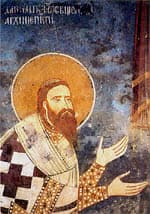
Daniel II of Serbia
Daniel II was a Serbian Archbishop from 1324 to 1337, serving under Kings Stephen Uroš III and Stefan Dušan. He was a prominent monk, chronicler, and active participant in court and Church politics during the zenith of the Nemanjić dynasty. He is primarily remembered for his extensive biographies of Serbian medieval rulers and archbishops, which have preserved crucial historical details about the Nemanjić dynasty.
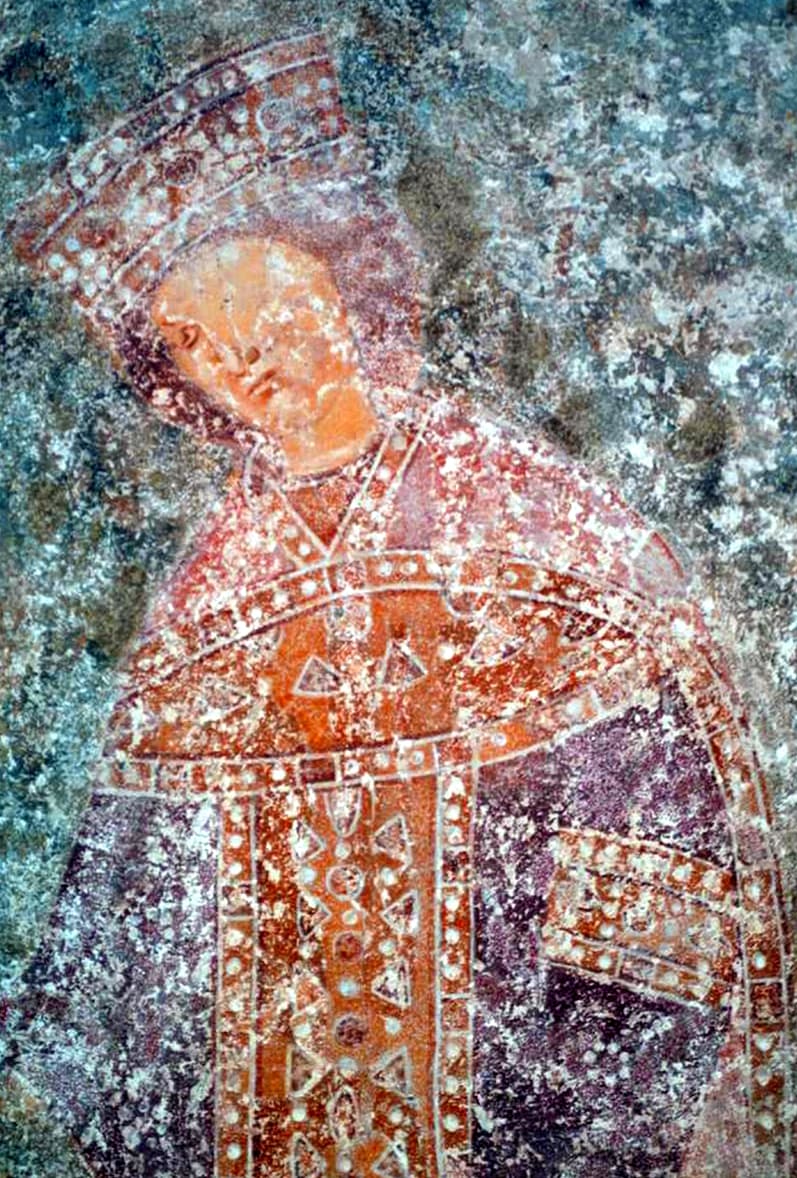
Helena of Serbia
Helena of Serbia was the queen consort of the Serbian Kingdom as the spouse of King Stefan Uroš I, and later served as a provincial governor. She is remembered for her religious tolerance, her role in the cultural development of medieval Serbia through building monasteries and encouraging literacy, and for founding the first girls' school in the region.