
Nahum
December 1·Iraq
Nahum was a minor prophet whose prophecy is recorded in the Tanakh, or Hebrew Bible. He is chiefly remembered for his vivid poetic prophecy concerning the end of the Assyrian Empire and its capital city, Nineveh. His book is placed chronologically between Micah and Habakkuk.
Key Facts
- ›Nahum's name means 'comfort' and is derived from the Hebrew verb for 'to comfort'.
- ›He may have come from Alqosh in northern Mesopotamia, though some scholars suggest Capernaum in Galilee.
- ›His prophecy is noted for its VIVID poetic style and its focus on the downfall of Nineveh.
- ›Scholarly opinion on the date of his prophecy varies, with some placing it after the Sack of Thebes in 663 BC and others earlier.
- ›The tomb of Nahum is traditionally located within the synagogue at Alqosh, Iraq.
- ›He is venerated as a saint in Eastern Christianity, with a feast day on December 1 in the Eastern Orthodox Church.
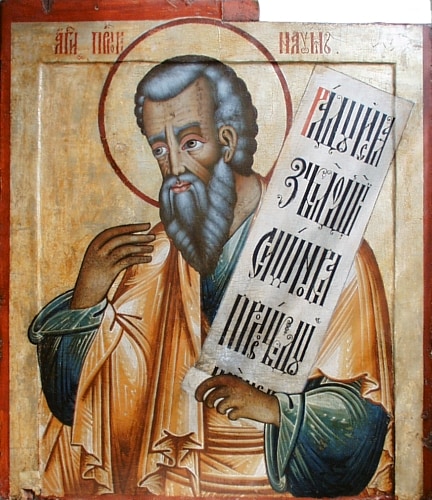
the Elkoshite
About Nahum
Nahum was a minor prophet in the Tanakh, also known as the Hebrew Bible or Old Testament. His prophecy, recorded in the biblical canon, is chronologically placed between the books of Micah and Habakkuk. He is primarily remembered for his impassioned and vividly poetic pronouncements regarding the imminent downfall of the Assyrian Empire and its magnificent capital city, Nineveh.
Life and Historical Context
Little is definitively known about Nahum's personal life. His name, 'Nahum,' translates to 'comfort' in Hebrew, derived from the same root verb meaning 'to comfort.' Scholarly speculation about his origin points to Alqosh, a town in northern Mesopotamia, as indicated by the epithet 'the Elkoshite.' However, some scholars have also explored connections between 'Elkoshite' and Capernaum in northern Galilee, a theory that could explain the New Testament city's name. Despite potential geographical ambiguities, Nahum is characterized as a nationalistic Hebrew who lived among his people.
The dating of Nahum's prophecy is a subject of scholarly debate. A prevailing view, supported by references to the city of Thebes in the past tense within the Masoretic Text (Nahum 3:8–10), places his prophecy after the Assyrian king Ashurbanipal's sack of Thebes in 663 BC. This perspective suggests Nahum wrote around 615 BCE, just before Assyria's collapse, or possibly as liturgy after its fall in 612 BCE. An older scholarly opinion, influenced by the Septuagint and Vulgate's present-tense references to Thebes, suggested Nahum lived about a century earlier, before the captivity of the ten lost tribes and the sack of Thebes. The first-century historian Flavius Josephus, along with Catholic scholar Thomas Worthington, placed Nahum's ministry during the reign of King Jotham, roughly 50 years after Jonah and 135 years before Nineveh's destruction. In this earlier timeframe, his prophecy would have been directed at Tiglath-Pileser III, who significantly expanded the Neo-Assyrian Empire.
Works and Theological Significance
Nahum's writings are often viewed as both prophecy and historical account. The book is celebrated for its literary merit, with theologian John Calvin describing it as a 'complete and finished poem' possessing a magnificent exordium, vivid descriptions of Nineveh's greatness and ruin, and admirable clarity.
There are indications that Nahum's text originally followed an acrostic structure, beginning with letters of the Hebrew alphabet. However, the present text shows signs of corruption and rearrangement during its transmission, making the original alphabetic scheme difficult to discern fully.
Nahum's work is understood to reflect a profound understanding of God's nature, drawing parallels with God's revelations to Moses. His prophecy is also recognized as a significant critique of militarism and tyranny, asserting that oppressive rulers are ultimately doomed. The text suggests that tyrants make enemies of those they attack, become corrupt and complacent, and are lulled into a false sense of security before their inevitable downfall.
Tomb and Veneration
The traditional burial site of the prophet Nahum is believed to be within the synagogue at Alqosh, Iraq. This site has undergone repairs and faced significant disrepair over the centuries, with efforts made by various organizations and the U.S. government to stabilize and restore it, particularly in light of threats from groups like ISIS. Alternative historical accounts suggest possible burial sites at Elkesi near Rameh in Galilee and Elcesei in the West Bank.
Nahum is venerated as a saint in Eastern Christianity. His feast day is observed on December 1 on the Eastern Orthodox liturgical calendar and on July 31 in the Armenian Apostolic Church.
Source: Wikipedia ↗
Frequently Asked Questions
What is the meaning of Nahum's name?
Nahum's name means 'comfort' in Hebrew. This meaning is derived from the same root as the Hebrew verb meaning 'to comfort'.
Where is Nahum believed to have come from?
Nahum is identified as 'the Elkoshite'. While some scholars suggest he may have come from Alqosh in northern Mesopotamia, others have proposed a connection to Capernaum in northern Galilee. St. Jerome also identified Elkosh as a small town in Galilee.
What is Nahum best known for?
Nahum is best known for his prophecy concerning the impending destruction of the Assyrian Empire and its capital city, Nineveh. His book is praised for its vivid poetic style and powerful imagery.
When did Nahum live and prophesy?
The exact dating of Nahum's prophecy is debated among scholars. Some place it after the Sack of Thebes in 663 BC, while others suggest he lived about a century earlier, during the reign of King Jotham, making him contemporary with Tiglath-Pileser III.
Where is the tomb of the prophet Nahum located?
The traditional tomb of the prophet Nahum is located within the synagogue at Alqosh, Iraq. However, other locations in Galilee and the West Bank have also been mentioned as possible burial sites.
Is Nahum venerated as a saint?
Yes, the prophet Nahum is venerated as a saint in Eastern Christianity. His feast day is observed on December 1 in the Eastern Orthodox Church and on July 31 in the Armenian Apostolic Church.
Related Saints
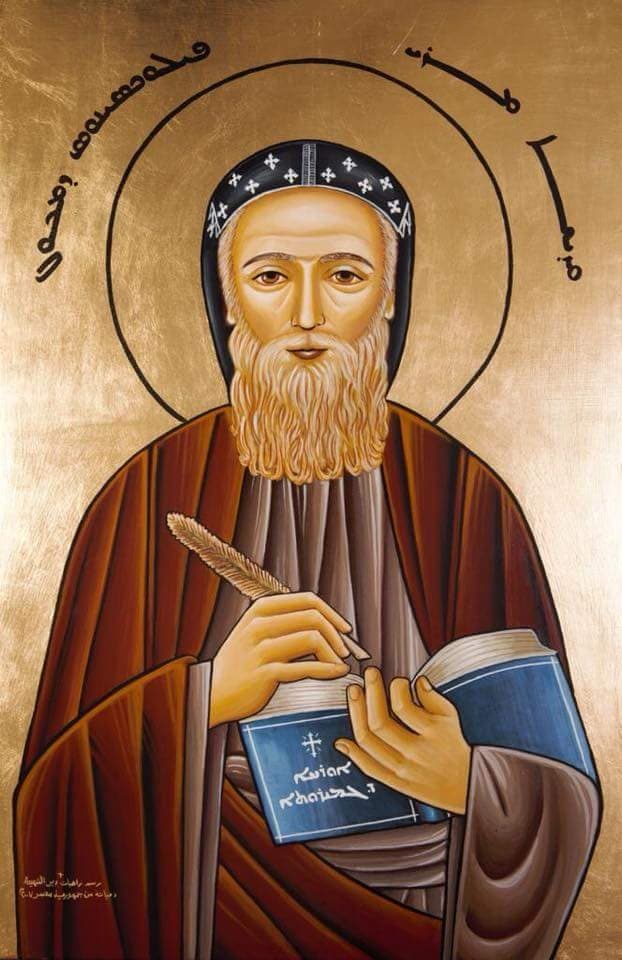
Philoxenus of Mabbug
Philoxenus of Mabbug was a prominent Syriac prose writer and a staunch defender of Miaphysitism during the Byzantine period. He is remembered for his significant scholarly work, particularly the revision of the Syriac Bible known as the Philoxenian version, and his theological writings that emphasized practical Christianity. His life was marked by significant involvement in church politics and ultimately ended in exile and death, leading to his veneration as a martyr.
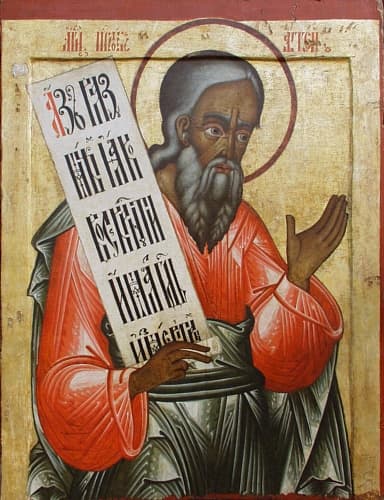
Haggai
Haggai was a Hebrew prophet active in the 6th century BCE, known for his role in inspiring the rebuilding of the Second Temple in Jerusalem. He is one of the twelve minor prophets in the Hebrew Bible and is credited with delivering four prophecies in 520 BCE that urged the Jewish people to resume construction of the Temple after it had been halted. Haggai's message emphasized divine favor and prosperity contingent on the completion of this sacred structure.

Zephaniah
Zephaniah was a prophet in the Hebrew Bible who prophesied in the days of King Josiah of Judah. He is known for his book among the Twelve Minor Prophets, which warns of the "day of the Lord" and calls for repentance from religious and moral corruption. Zephaniah is remembered for his role in advising Josiah's reforms and for his strong pronouncements against idolatry.