
Nahum
Male·8th century BC·Ancient Near East·Minor Prophets
Nahum was a minor prophet in ancient Israel whose prophecy is recorded in the Tanakh, also known as the Hebrew Bible and Old Testament. He is primarily known for his vivid poetic condemnation of the Assyrian Empire and its capital city, Nineveh, foretelling its destruction. His book is placed chronologically between Micah and Habakkuk, offering a powerful message against tyranny and militarism.
Key Facts
- ›His name, Nahum, means 'comfort', derived from the Hebrew verb for 'to comfort'.
- ›He is identified as 'the Elkoshite', possibly from a town called Alqosh in northern Mesopotamia or a location in Galilee.
- ›His prophecy focuses on the impending doom of the Assyrian Empire and the fall of Nineveh.
- ›Scholars debate the exact dating of his prophecy, with some placing it after 663 BCE and others earlier, during the reign of Jotham.
- ›His book is considered a complete and finished poem with a magnificent and majestic exordium.
- ›There are indications of an underlying acrostic structure in his text, though it is now corrupted.
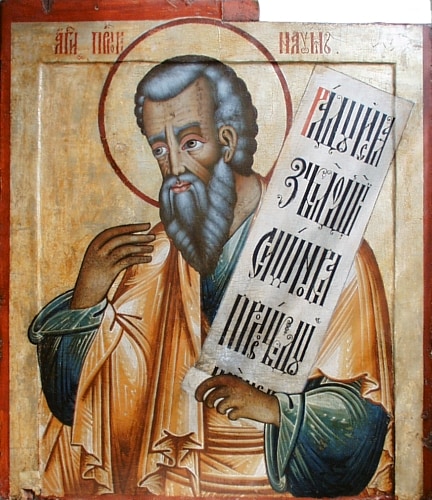
Book of Nahum
the Elkoshite
Jonah, Micah, Habakkuk, Ashurbanipal, Tiglath-Pileser Iii, Flavius Josephus, John Calvin, St. Jerome
Saint
Prophet
About Nahum
Nahum: The Prophet of Nineveh's Doom
Nahum was a minor prophet whose prophecy is recorded in the Tanakh, also known as the Hebrew Bible and the Old Testament. His book is placed chronologically between those of Micah and Habakkuk. He is renowned for his vivid and poetic condemnation of the Assyrian Empire and its capital city, Nineveh, foretelling their inevitable destruction. His pronouncements offer a powerful message against militarism and oppression.
Life and Context
Little is recorded about Nahum's personal history. His name, meaning 'comfort', is derived from the Hebrew verb for 'to comfort'. He is identified as 'the Elkoshite', a designation that has led to speculation about his origins. While some scholars suggest he may have come from Alqosh in northern Mesopotamia, others propose a connection to Capernaum in Galilee, a theory that could explain the New Testament city's name. Despite scholarly debate regarding the precise dating of his prophecy, he is considered a nationalistic Hebrew.
Scholarly opinions on the timing of Nahum's ministry vary, influencing interpretations of his prophecies. One perspective places his activity after the Assyrian king Ashurbanipal's Sack of Thebes in 663 BCE, noting that the city is referred to in the past tense in the Masoretic Text. An alternative view, supported by the Septuagint and Vulgate's present tense references to Thebes, suggests Nahum lived about a century earlier. The first-century Jewish historian Flavius Josephus, however, places Nahum's life during the reign of Jotham, a view that aligns with some Catholic scholarship suggesting he prophesied around 50 years after Jonah and 135 years before the destruction of Nineveh.
Prophetic Works and Style
Nahum's writings are presented as prophecy but also contain historical elements. One interpretation suggests his prophecy was written around 615 BCE, shortly before Assyria's collapse, while another posits it was composed as liturgy just after Nineveh's fall in 612 BCE. The theologian John Calvin praised Nahum's prophecy as a complete and finished poem, noting its sublime, vehement, and bold style, with a magnificent exordium and vivid descriptions of Nineveh's greatness and ruin.
Evidence suggests an acrostic structure may underlie Nahum's text, with verses beginning with successive letters of the Hebrew alphabet. However, this scheme appears corrupted and rearranged in the transmission of the text. Nahum draws upon earlier prophetic traditions, including the writings of Moses, to describe the nature of God. His work is understood as a classic rebuke of militarism, asserting that tyrants are doomed, creating enemies through their oppression and succumbing to false security.
Legacy and Veneration
The tomb of Nahum is traditionally located within the synagogue at Alqosh, though other sites also claim this distinction. The synagogue has faced significant disrepair, and the tomb itself has been threatened by conflict in Iraq. Efforts have been made by various organizations and governments to stabilize and restore the site. In Eastern Christianity, the prophet Nahum is venerated as a saint, with his feast day observed on December 1st on the Eastern Orthodox liturgical calendar. He is also commemorated in the calendar of saints of the Armenian Apostolic Church.
Source: Wikipedia ↗
Frequently Asked Questions
Who was the prophet Nahum?
Nahum was a minor prophet whose prophecy is documented in the Tanakh (Hebrew Bible/Old Testament). He is known for his poetic condemnation of the Assyrian Empire and its capital, Nineveh, foretelling their destruction.
What is Nahum known for?
Nahum is best known for his prophetic book which vividly describes the downfall of the Assyrian Empire and the city of Nineveh. His message is a strong rebuke of militarism and tyranny.
Where did Nahum live?
The exact location of Nahum's origin is uncertain. He is called 'the Elkoshite', which some scholars associate with a town in northern Mesopotamia, while others suggest a connection to Galilee, potentially explaining the name of Capernaum.
When did Nahum prophesy?
The precise dating of Nahum's prophecy is debated. Some scholars place it after the Sack of Thebes in 663 BCE, while others suggest an earlier period, possibly during the reign of King Jotham, placing him around the mid-8th century BCE.
What is the significance of Nahum's prophecy?
Nahum's prophecy serves as a powerful denunciation of oppressive empires and a message of comfort and vindication for those who suffer under tyranny. It is considered a classic rebuke of militarism.
What is known about Nahum's personal life?
Very little is known about Nahum's personal history. His name means 'comfort', and he is described as a nationalistic Hebrew who lived amongst the Elkoshites.
Related Prophets
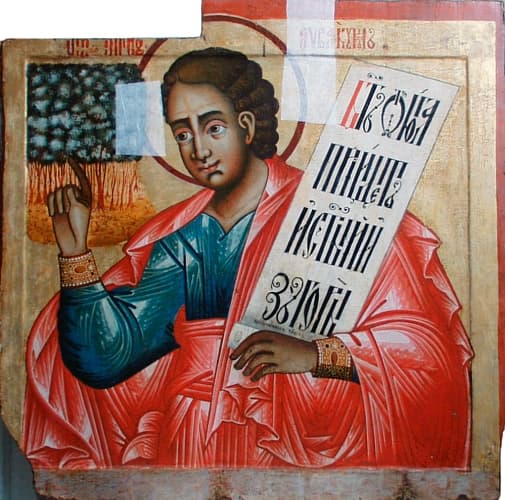
Habakkuk
Habakkuk was an eighth-century BC prophet in ancient Israel, known for the oracles and prayer recorded in the Book of Habakkuk, the eighth of the twelve minor prophets in the Hebrew Bible. He is revered in Judaism, Christianity, and Islam. His prophecy uniquely features a dialogue with God, where Habakkuk questions divine justice and God's use of the Babylonian empire to punish Judah.

Elisha
Elisha was an Israelite prophet and wonder-worker mentioned in the Hebrew Bible, New Testament, and Quran, revered in Judaism, Christianity, and Islam. He served as an advisor to several kings of Judah and was known for performing numerous miracles, often in succession to the prophet Elijah. Elisha's ministry is primarily documented in the Books of Kings, where he is depicted as a powerful figure who corrected kings and leaders and intervened in various significant events.
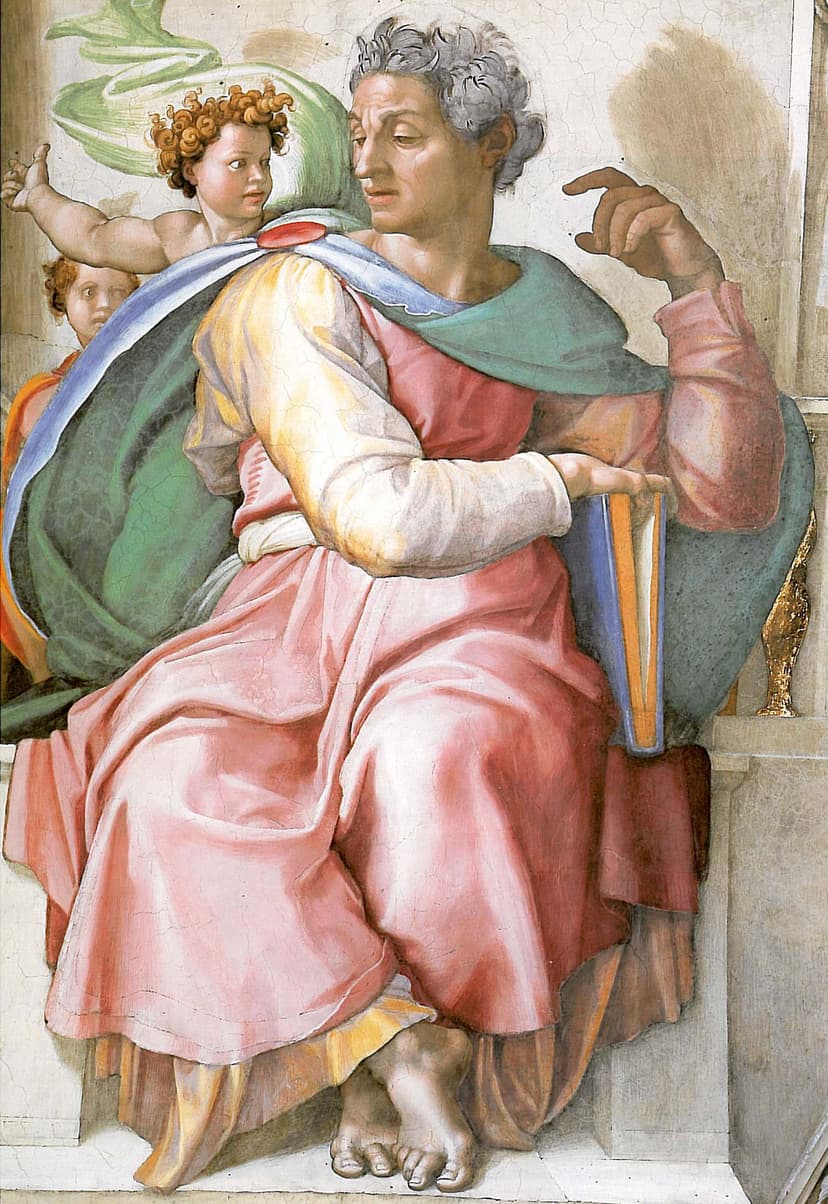
Isaiah
Isaiah was an 8th-century BC Israelite prophet after whom the Book of Isaiah is named. He is known for his prophecies concerning Judah, the Assyrian threat, and future redemption. His teachings and prophecies are deeply influential in Judaism, Christianity, and Islam, with Christians interpreting some of his writings as foretelling the coming of Jesus.