
Irenaeus of Lyon
June 28·2nd century·France
Irenaeus of Lyon was a Greek bishop in the second century, renowned for his theological writings that opposed Gnostic interpretations of Christian Scripture and defended orthodoxy. As bishop of Lyon, he is best known for his work "Against Heresies," a refutation of Gnosticism, where he established the importance of scriptures, apostolic tradition, and the teaching of apostolic successors. He is the earliest known witness to consider all four canonical Gospels essential and is venerated as a saint and Doctor of the Church.
Key Facts
- ›Irenaeus was a Greek bishop from Smyrna, born before 155 AD.
- ›He became the second bishop of Lyon, succeeding Saint Pothinus.
- ›His most famous work, "against Heresies," written around 180 AD, refutes Gnostic interpretations of Christianity.
- ›He is the earliest known Christian writer to affirm the four canonical Gospels (Matthew, Mark, Luke, and John) as essential scripture.
- ›Irenaeus emphasized the unity of God and salvation history, viewing Christ as the new Adam.
- ›He is venerated as a saint in multiple Christian traditions, including Catholic, Orthodox, and Anglican churches.
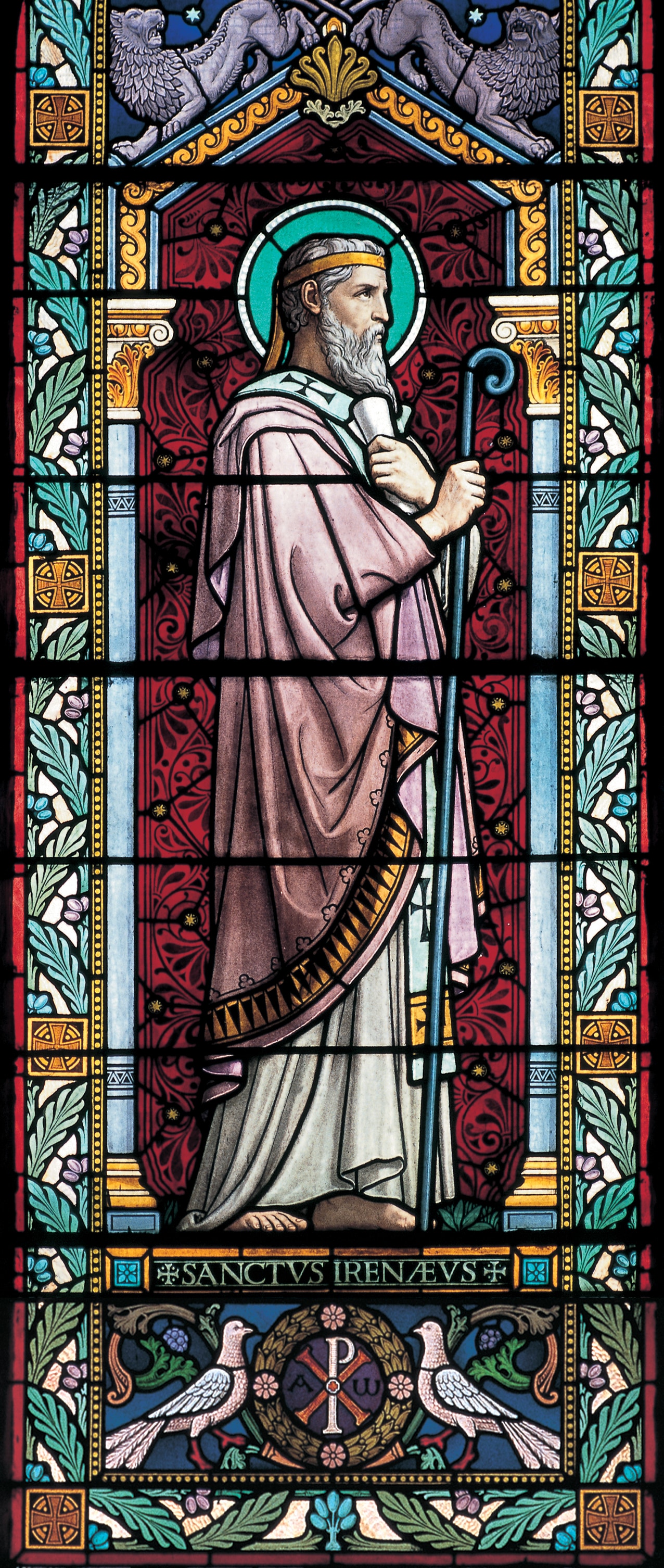
Eirenaios
About Irenaeus of Lyon
Irenaeus of Lyon was a prominent Greek bishop of the second century, whose theological writings played a crucial role in shaping Christian doctrine and defending orthodoxy against the challenges of Gnosticism. Born in Smyrna, he was a disciple of Polycarp, who himself was said to have heard the Apostle John. This lineage provided Irenaeus with a strong connection to early apostolic tradition.
Life and Ministry
Originating from Anatolia, Irenaeus was raised within a Christian family. During a period of persecution in Lyon under Emperor Marcus Aurelius, he served as a priest. In 177 AD, he was sent to Rome with a letter to Pope Eleutherius, demonstrating his standing within the Church. Following this mission and the ensuing persecution in Lyon, he returned to succeed Saint Pothinus as the second bishop of the city. His episcopal tenure was marked by pastoral duties and missionary activities, though details are sparse.
Major Contributions and Writings
Irenaeus is most celebrated for his extensive work, "Against Heresies" (Adversus haereses), written around 180 AD. This comprehensive refutation of Gnosticism aimed to counter the spiritual claims of various Gnostic sects, particularly those of Valentinus. In this work, Irenaeus articulated foundational tenets of orthodox Christianity: the authority of the scriptures, the continuity of apostolic tradition, and the teaching authority of bishops as successors to the apostles. He is also the earliest known Christian writer to explicitly affirm the four Gospels—Matthew, Mark, Luke, and John—as canonical and essential scripture, possibly as a response to alternative gospel accounts circulating at the time.
Another significant work is "The Demonstration of the Apostolic Preaching," which served as an instruction for new converts. While many of his other writings are lost, "Against Heresies" survives in a complete Latin translation and fragments of Syrian and Armenian versions. His theological framework emphasized the unity and goodness of God, contrasting with the Gnostic idea of a flawed creator deity. Irenaeus viewed salvation history as a unified divine plan, with Christ as the new Adam who recapitulates and redeems human life, sanctifying every stage of existence through his Incarnation.
Veneration and Legacy
Irenaeus is venerated as a saint across various Christian denominations, including the Catholic, Anglican, Lutheran, and Eastern Orthodox Churches. His feast day is celebrated on June 28th in the Latin Catholic and Lutheran traditions, and on August 23rd in the Eastern Orthodox Church. In a significant recognition of his theological importance, Pope Francis declared Irenaeus a Doctor of the Church on January 21, 2022, bestowing upon him the supplementary title "Doctor of Unity."
His legacy lies in his robust defense of Christian orthodoxy, his crucial role in the formation of the New Testament canon, and his profound theological insights into the nature of God and salvation. His writings provided an essential "scaffolding" for later Christian mystics and theologians, ensuring the preservation of core Christian teachings against heterodox interpretations.
Source: Wikipedia ↗
Frequently Asked Questions
Who was Irenaeus of Lyon?
Irenaeus of Lyon was a Greek bishop in the second century, known for his significant contributions to Christian theology. He is particularly remembered for his opposition to Gnostic interpretations of Christian scripture and his defense of orthodox Christian beliefs.
What is Irenaeus's most famous work?
Irenaeus's most famous work is "Against Heresies" (Adversus haereses), written around 180 AD. In this book, he systematically refutes the doctrines of various Gnostic sects, particularly that of Valentinus.
Why is Irenaeus considered important for the New Testament canon?
Irenaeus is the earliest known Christian writer to explicitly regard all four of the currently canonical Gospels (Matthew, Mark, Luke, and John) as essential scripture. This assertion was a crucial step in the formation of the New Testament canon.
What were the main arguments of Irenaeus against Gnosticism?
Irenaeus countered Gnostic claims of secret wisdom by presenting three pillars of orthodoxy: the scriptures, the tradition handed down from the apostles, and the teaching of the apostles' successors. He argued that true knowledge, or gnosis, was found in Christ and his Church, not in Gnostic secret teachings.
How is Irenaeus venerated today?
Irenaeus is venerated as a saint in the Catholic Church, Anglican Church, Lutheran Churches, Eastern Orthodox Church, Oriental Orthodox Churches, and the Assyrian Church of the East. In 2022, Pope Francis declared him a Doctor of the Church, also bestowing upon him the title Doctor unitatis ('Doctor of Unity').
Related Saints
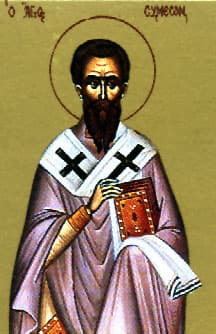
Simeon Barsabae
Simeon Barsabae was the Bishop of Seleucia-Ctesiphon and the de facto head of the Church of the East in the 4th century. He is chiefly remembered for his martyrdom during the persecutions of Shapur II against Christians in the Sasanian Empire. He was executed along with thousands of his followers for refusing to convert to Zoroastrianism.
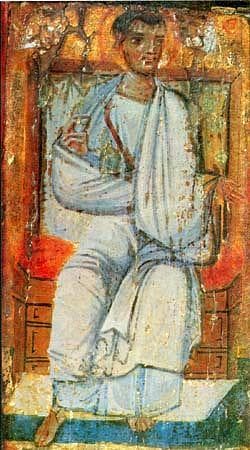
Thaddeus of Edessa
Thaddeus of Edessa, also known as Addai, was an early Christian disciple traditionally counted among the seventy sent by Jesus. He is venerated for his missionary work in Mesopotamia, Syria, and Persia, where he is credited with converting many, ordaining priests, and establishing churches. His legend is closely tied to the correspondence between King Abgar V of Osroene and Jesus, and he is associated with the ancient Syriac liturgy of Addai and Mari.
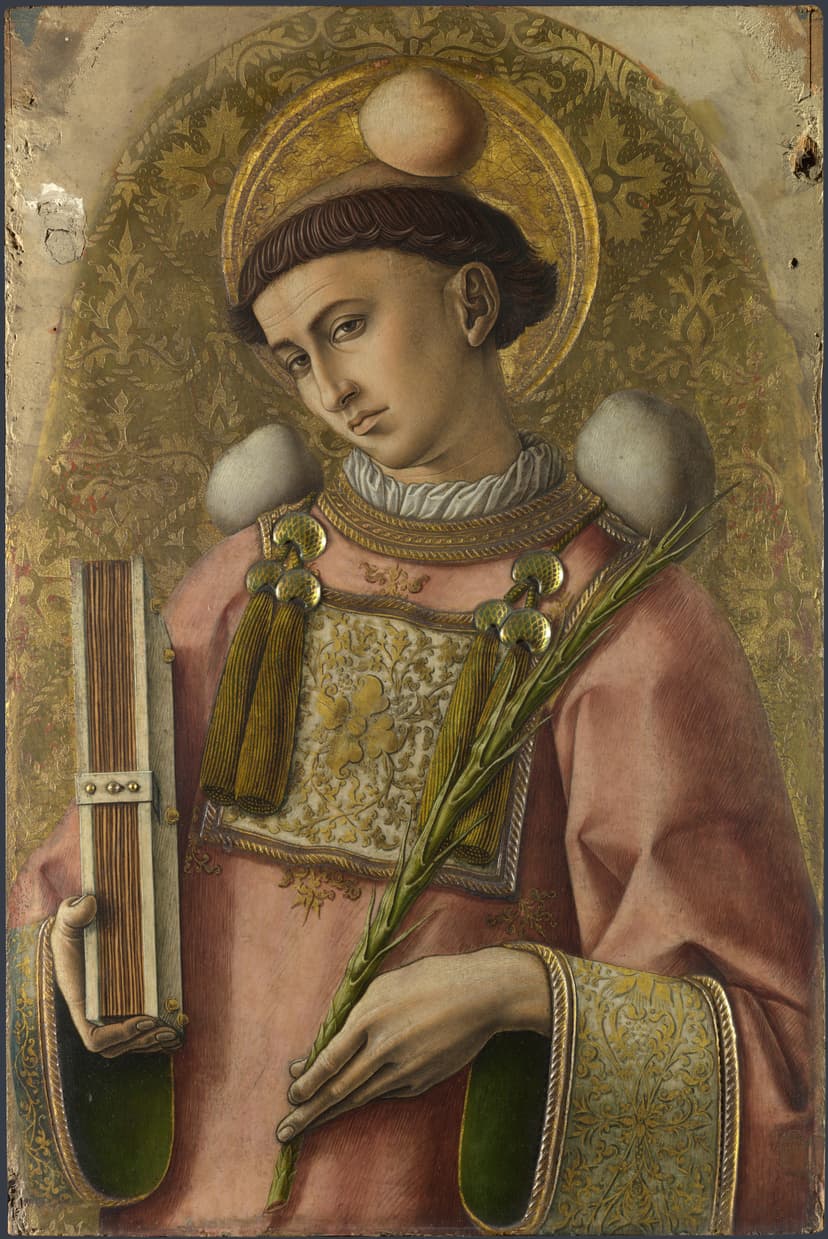
Stephen the Protomartyr
Stephen the Protomartyr is traditionally venerated as the first Christian martyr. According to the Acts of the Apostles, he was a deacon in early Jerusalem who was stoned to death after being accused of blasphemy. He is remembered for his faith, his defense of Christianity, and his prayer for his persecutors.