
Simeon Barsabae
Simeon Barsabae was the Bishop of Seleucia-Ctesiphon and the de facto head of the Church of the East in the 4th century. He is chiefly remembered for his martyrdom during the persecutions of Shapur II against Christians in the Sasanian Empire. He was executed along with thousands of his followers for refusing to convert to Zoroastrianism.
Key Facts
- ›Simeon Barsabae was the Bishop of Seleucia-Ctesiphon and head of the Church of the East.
- ›His name "bar Sabbae" means "son of the dyers" in Syriac.
- ›He was accused of being a friend of the Roman emperor and of converting the king's mother to Christianity.
- ›He was executed by beheading during the persecutions of Shapur II.
- ›Thousands of Christians, including bishops and priests, were martyred alongside him.
- ›His feast day is commemorated on various dates, including April 17 and the Friday after Easter.
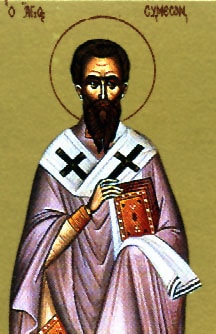
Shemʿon bar Ṣabbaʿe
About Simeon Barsabae
Simeon Barsabae, also known as Shemʿon bar Ṣabbaʿe in Syriac, was the Bishop of Seleucia-Ctesiphon and served as the de facto head of the Church of the East. He held this significant leadership position until his death in 345 CE.
Life and Historical Context
Born the son of a fuller, Simeon Barsabae's name itself, "bar Sabbae," translates to "son of the dyers" in his native Syriac tongue, reflecting naming customs of the era. He became the coadjutor bishop in 316 CE, succeeding Papa bar Gaggai. His tenure as bishop occurred during a turbulent period in the Sasanian Empire, marked by the severe persecutions of Christians instigated by King Shapur II.
Persecution and Martyrdom
Simeon Barsabae faced accusations of maintaining secret correspondence with the Roman emperor, which served as a pretext for Shapur II's orders against Christian clergy. A further reason cited for the persecution was the alleged conversion of the king's mother, Ifra Hormizid, to Christianity by Simeon. When Simeon refused to convert to Zoroastrianism, he was beheaded. His execution was not solitary; it was accompanied by the deaths of several thousand Christians, including numerous bishops, priests, and faithful followers. Historical accounts differ on the exact number of martyrs, with some sources estimating as high as 16,000 or even 200,000 Christians killed during this period of intense persecution.
Veneration
Simeon Barsabae is revered as a saint across various Christian communions. His feast day is observed on different dates, reflecting the diverse liturgical traditions that honor his memory. These include April 17 and April 21 in the Roman Rite of the Catholic Church, the Friday after Easter in the Syriac Orthodox Church, April 17 in the Eastern Orthodox and Greek Catholic Churches, and August 17 in the Assyrian Church of the East. His martyrdom stands as a pivotal event in the history of the Church of the East, symbolizing steadfast faith in the face of severe oppression.
Source: Wikipedia ↗
Frequently Asked Questions
What does Simeon Barsabae's name mean?
Simeon Barsabae's name means "son of the dyers" in Syriac. The "bar" prefix signifies "son of," and "Sabbae" refers to dyers, indicating his father's occupation.
Why was Simeon Barsabae persecuted and executed?
Simeon Barsabae was persecuted and executed under Shapur II of Persia for several reasons. He was accused of being a friend to the Roman emperor and of secretly corresponding with him. Additionally, it was believed that he had converted the king's mother, Ifra Hormizid, to Christianity.
Who was martyred with Simeon Barsabae?
Simeon Barsabae was executed along with thousands of Christians, including many clergy and faithful. Among those named were priests Abdella, Ananias, Chusdazat, and Pusai, along with Pusai's daughter Askitrea, and the eunuch Azad. Historical accounts vary on the total number of martyrs, with some suggesting as many as 16,000 or even 200,000.
When is Simeon Barsabae's feast day?
Simeon Barsabae is commemorated on different dates depending on the Christian tradition. In the Roman Rite of the Catholic Church, it is April 17 (according to the 2004 Roman Martyrology) or April 21 (according to the 1956 Roman Martyrology). The Eastern Orthodox Churches and Greek Catholic Churches observe it on April 17, while the Syriac Orthodox Church commemorates him on the Friday after Easter. The Assyrian Church of the East observes his feast on August 17.
Related Saints
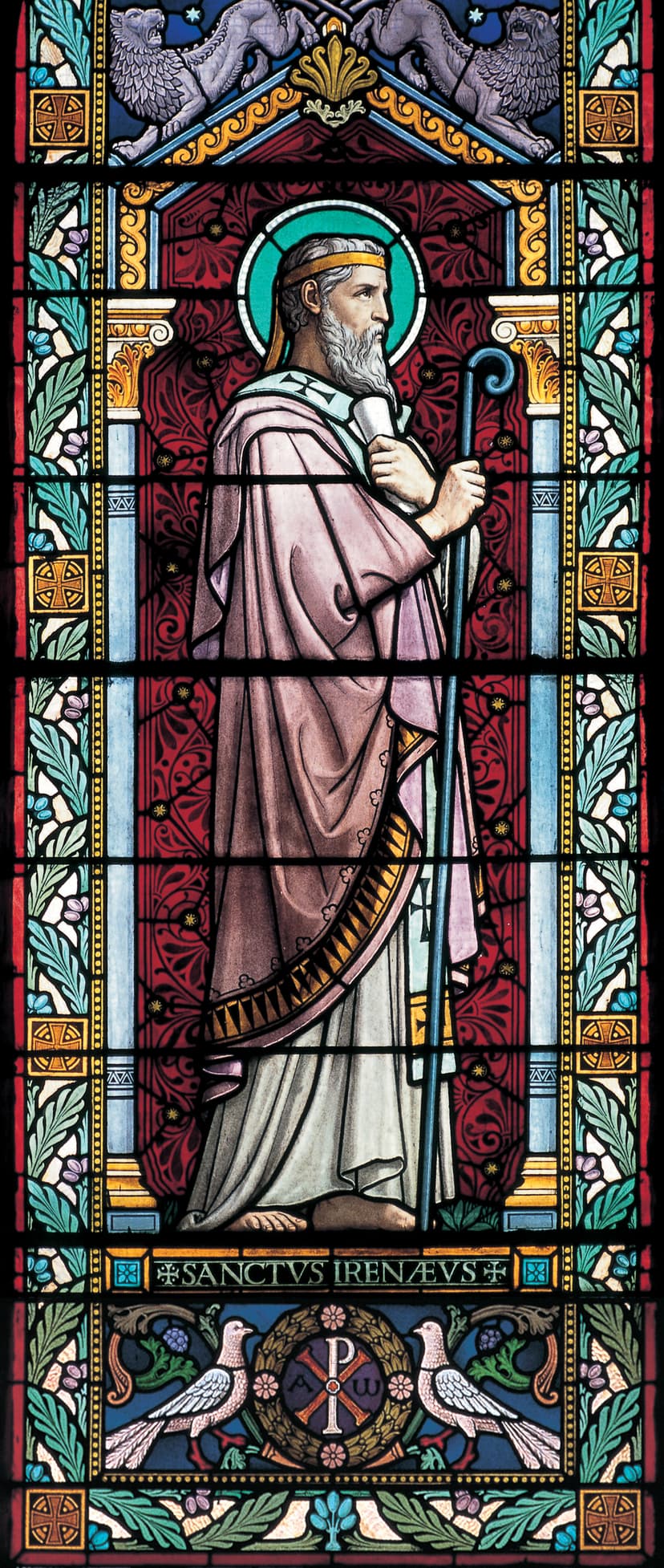
Irenaeus of Lyon
Irenaeus of Lyon was a Greek bishop in the second century, renowned for his theological writings that opposed Gnostic interpretations of Christian Scripture and defended orthodoxy. As bishop of Lyon, he is best known for his work "Against Heresies," a refutation of Gnosticism, where he established the importance of scriptures, apostolic tradition, and the teaching of apostolic successors. He is the earliest known witness to consider all four canonical Gospels essential and is venerated as a saint and Doctor of the Church.
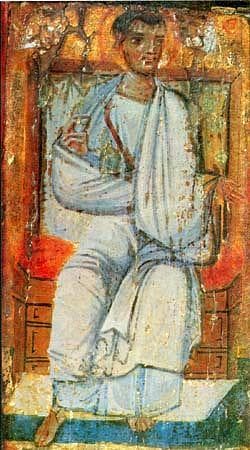
Thaddeus of Edessa
Thaddeus of Edessa, also known as Addai, was an early Christian disciple traditionally counted among the seventy sent by Jesus. He is venerated for his missionary work in Mesopotamia, Syria, and Persia, where he is credited with converting many, ordaining priests, and establishing churches. His legend is closely tied to the correspondence between King Abgar V of Osroene and Jesus, and he is associated with the ancient Syriac liturgy of Addai and Mari.
Shemon Bar Sabbae
Mar Shimun Bar Sabbae was the Bishop of Seleucia-Ctesiphon and the de facto head of the Church of the East. He is revered as a saint for his martyrdom during the persecutions of Shapur II against Christians in the Sasanian Empire.