
Thaddeus of Edessa
August 5·1st century·Mesopotamia
Thaddeus of Edessa, also known as Addai, was an early Christian disciple traditionally counted among the seventy sent by Jesus. He is venerated for his missionary work in Mesopotamia, Syria, and Persia, where he is credited with converting many, ordaining priests, and establishing churches. His legend is closely tied to the correspondence between King Abgar V of Osroene and Jesus, and he is associated with the ancient Syriac liturgy of Addai and Mari.
Key Facts
- ›He was a Jew born in Edessa and became a follower of Jesus after hearing John the Baptist.
- ›He was chosen as one of the seventy disciples sent to preach.
- ›He preached the gospel in Mesopotamia, Syria, and Persia, converting many and building up churches.
- ›He is associated with the healing of King Abgar V of Osroene and his conversion.
- ›The Liturgy of Addai and Mari, still in use by some Eastern Syriac churches, originated around 200 AD.
- ›His feast day is celebrated on August 5.
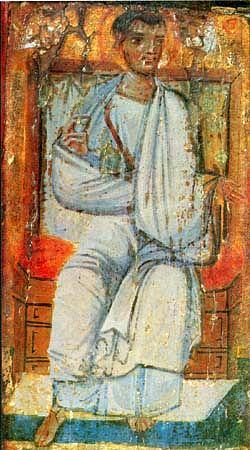
Addai of Edessa, Mar Addai, Mor Aday, Addeus
Catholic Church, Eastern Orthodox Church, Assyrian Church of the East, Chaldean Catholic Church
Persian People, Assyrian People
Correspondence With King Abgar
About Thaddeus of Edessa
Thaddeus of Edessa, also known by the Syriac name Addai (or variations such as Mar Addai, Mor Aday, and the Latinized Addeus), is a significant figure in early Eastern Christian tradition. He is recognized as one of the seventy disciples of Jesus, tasked with spreading the Christian message.
Life and Ministry
According to Eastern Christian traditions, Addai was a Jew born in Edessa, a city in Mesopotamia (modern-day Turkey). His spiritual journey began in Jerusalem, where he heard the preaching of John the Baptist, was baptized in the Jordan River, and subsequently became a follower of Jesus. He was chosen as one of the seventy disciples whom Jesus sent out in pairs to preach.
Following Pentecost and Jesus' ascension, Addai embarked on extensive missionary work throughout Mesopotamia, Syria, and Persia. He is credited with ordaining priests, converting numerous individuals to Christianity, and establishing and strengthening the Church in these regions. Tradition also suggests he visited Beirut to preach and may have founded a church there.
The Legend of King Abgar
A central element of Thaddeus' veneration is his connection to King Abgar V of Osroene. Eastern Orthodox tradition holds that Thaddeus was sent by Saint Thomas the Apostle to Edessa specifically to heal the ailing King Abgar. Upon his arrival, Thaddeus is said to have healed the king, leading to the conversion of Abgar and his court, including Saint Aggai and Saint Mari. This narrative, first recounted by the 4th-century church historian Eusebius of Caesarea, suggests a direct link between Jesus and the early establishment of Christianity in Edessa, with Eusebius citing purported correspondence between Jesus and Abgar.
Liturgical and Cultural Significance
Thaddeus of Edessa is profoundly associated with the ancient Syriac liturgy known as the Liturgy of Addai and Mari. This liturgy, which originated around 200 AD, is still in use by the Assyrian Church of the East and the Chaldean Catholic Church, as well as by Eastern Syriac Churches in India. His story is also preserved in the Syriac document, the Doctrine of Addai, which elaborates on his role as one of the apostles sent to spread the Christian faith.
Veneration
Thaddeus of Edessa's feast day is celebrated on August 5. In Roman Catholic tradition, he and Saint Mari are recognized as patrons of the Persian and Assyrian peoples, reflecting his missionary impact in those regions. His inclusion in early Christian texts, such as the First and Second Apocalypse of James, further attests to his historical and spiritual importance in the early Church.
Source: Wikipedia ↗
Frequently Asked Questions
Who was Thaddeus of Edessa?
Thaddeus of Edessa, also known as Addai, was an early Christian disciple, traditionally counted among the seventy sent by Jesus. He was a missionary who preached the gospel in Mesopotamia, Syria, and Persia.
What is Thaddeus of Edessa known for?
He is known for his missionary efforts, converting many to Christianity, ordaining priests, and establishing churches in the East. He is also famously associated with the legend of healing King Abgar V of Osroene.
What is the Liturgy of Addai and Mari?
The Liturgy of Addai and Mari is an ancient Syriac liturgy that originated around 200 AD and is attributed to Thaddeus of Edessa and Saint Mari. It is still used today by churches such as the Assyrian Church of the East and the Chaldean Catholic Church.
What is the connection between Thaddeus of Edessa and King Abgar V?
According to tradition, Thaddeus was sent to Edessa to heal King Abgar V, who was ill. After healing the king, Thaddeus stayed to evangelize, leading to the conversion of Abgar and his people.
When is the feast day of Thaddeus of Edessa?
The feast day of Thaddeus of Edessa is celebrated on August 5 in the Christian calendar.
Related Saints
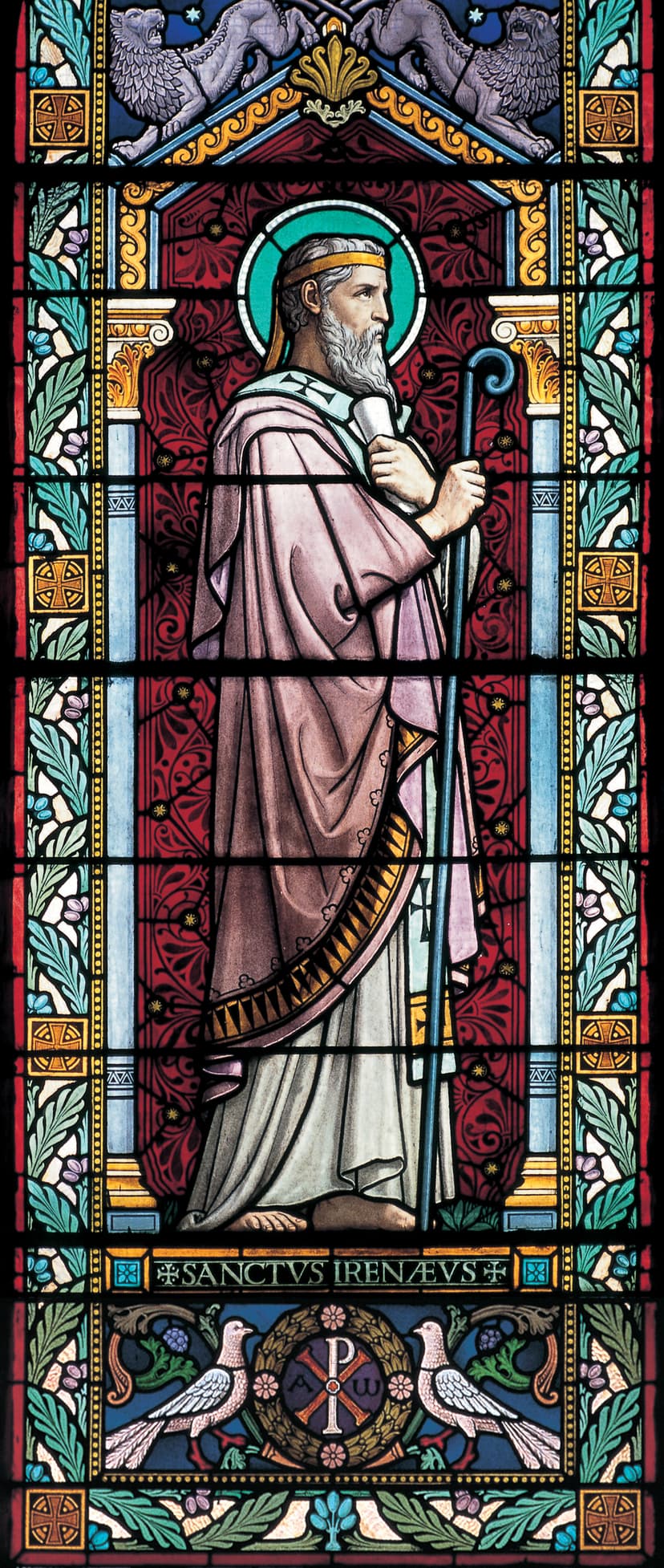
Irenaeus of Lyon
Irenaeus of Lyon was a Greek bishop in the second century, renowned for his theological writings that opposed Gnostic interpretations of Christian Scripture and defended orthodoxy. As bishop of Lyon, he is best known for his work "Against Heresies," a refutation of Gnosticism, where he established the importance of scriptures, apostolic tradition, and the teaching of apostolic successors. He is the earliest known witness to consider all four canonical Gospels essential and is venerated as a saint and Doctor of the Church.
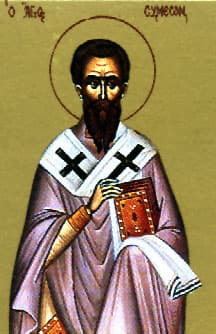
Simeon Barsabae
Simeon Barsabae was the Bishop of Seleucia-Ctesiphon and the de facto head of the Church of the East in the 4th century. He is chiefly remembered for his martyrdom during the persecutions of Shapur II against Christians in the Sasanian Empire. He was executed along with thousands of his followers for refusing to convert to Zoroastrianism.
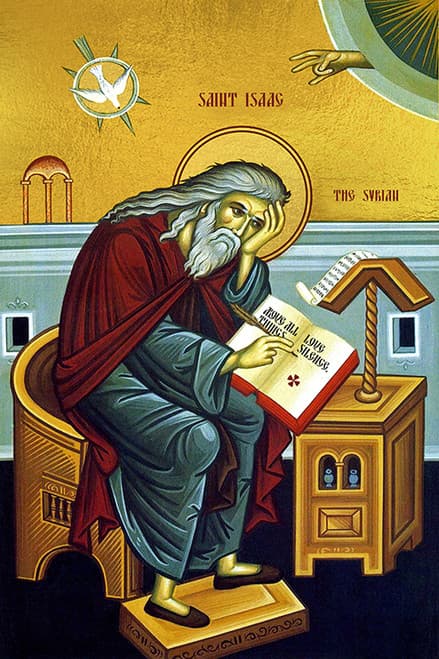
Isaac the Syrian
Isaac the Syrian was a 7th-century Syriac Christian bishop and theologian, best known for his influential writings on Christian asceticism. He is venerated as a saint in multiple Christian traditions and is remembered for his profound spiritual insights and emphasis on divine mercy. His discourses on prayer, inner stillness, and universal salvation continue to impact Christian monasticism.