
Isaac the Syrian
January 28·7th century·Mesopotamia
Isaac the Syrian was a 7th-century Syriac Christian bishop and theologian, best known for his influential writings on Christian asceticism. He is venerated as a saint in multiple Christian traditions and is remembered for his profound spiritual insights and emphasis on divine mercy. His discourses on prayer, inner stillness, and universal salvation continue to impact Christian monasticism.
Key Facts
- ›Isaac was born in the region of Beth Qatraye in Eastern Arabia around 613 AD.
- ›He served as the bishop of Nineveh in the Church of the East for a brief period before abdicating.
- ›His most famous works are his ascetical and mystical discourses, divided into 'First Part', 'Second Part', and 'Third Part'.
- ›Isaac's writings advocate for universal salvation, suggesting eventual reconciliation of all creation with God.
- ›He is venerated as a saint in the Church of the East, Roman Catholic, Eastern Orthodox, and Syriac Orthodox churches.
- ›His feast day is observed on January 28 in many Eastern Christian calendars, and on May 14 in the Syriac Orthodox Church.
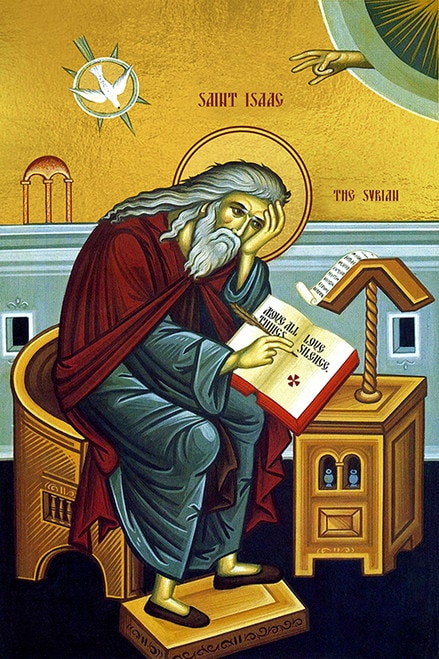
Isḥaq of Nineveh, Saint Isaac the Syrian, Isaac of Nineveh, Abba Isaac, Isaac Syrus, Isaac of Qatar
About Isaac the Syrian
Isaac the Syrian, born around 613 AD and passing away circa 700 AD, was a 7th-century Syriac Christian bishop of the Church of the East and a significant theologian. He is primarily remembered for his profound written works on Christian asceticism and spirituality, which have had a lasting impact on monastic traditions across various Christian denominations. He is recognized as a saint in the Church of the East, the Roman Catholic Church, the Eastern Orthodox Church, and the Syriac Orthodox Church.
Life and Ministry
Born in the region of Beth Qatraye in Eastern Arabia, Isaac was ordained bishop of Nineveh by Catholicos Giwargis I of the Church of the East in 676 AD. However, his tenure as bishop was brief, as he abdicated for reasons that are not clearly recorded in historical accounts. Following his abdication, Isaac retreated first to Mount Matuot and later to the monastery of Rabban Shabur near Shushtar in present-day Iran, where he spent his final years. At the time of his death, it is noted that he was nearly blind, a condition attributed to his intense dedication to study.
Theological Writings
Isaac's literary output is extensive, with claims of seven volumes, though his known writings are typically categorized into a 'First Part', 'Second Part', and 'Third Part'. Passages of a supposed 'Fifth Part' have also been identified, but their authenticity is debated among scholars. The 'First Part' is the most widely disseminated and was translated into Greek in antiquity, subsequently influencing various other languages. The 'Second Part', rediscovered in the 1980s, contains 41 chapters, including a lengthy section known as the 'Headings on Spiritual Knowledge'. The 'Third Part' was discovered more recently and has also been translated into several languages.
Isaac's theological thought was influenced by figures such as Evagrius Ponticus, Pseudo-Dionysius, and Ephrem the Syrian. His writings are characterized by a strong emphasis on prayer, divine mercy, inner stillness, and a nuanced understanding of Christian asceticism. A notable aspect of his theology is his advocacy for universal salvation, suggesting that all creation will eventually be reconciled with God. Passages from his works illustrate this belief, emphasizing God's inexhaustible compassion and the temporary nature of sin and suffering.
Veneration and Legacy
Isaac the Syrian is widely venerated as a saint across multiple Christian traditions. His feast day is commonly observed on January 28, often in conjunction with that of St. Ephrem the Syrian, reflecting a long history of shared liturgical commemoration. In the Syriac Orthodox Church, his feast day is celebrated on May 14. In recognition of his enduring spiritual legacy, Pope Francis announced in November 2024 the inclusion of Isaac of Nineveh in the Roman Martyrology.
Isaac's discourses on prayer, divine mercy, and the cultivation of inner stillness have left an indelible mark on Christian monasticism. His writings remain popular and influential in monastic communities, such as those on Mount Athos, and have contributed to revivals of monastic life, including within the Coptic Orthodox Church in the late 20th century. His theological contributions, particularly his views on universal reconciliation, continue to be a subject of study and reflection.
Source: Wikipedia ↗
Frequently Asked Questions
Who was Isaac the Syrian?
Isaac the Syrian was a 7th-century Syriac Christian bishop and theologian, best known for his influential writings on Christian asceticism. He is venerated as a saint in several Christian traditions for his spiritual insights.
What are Isaac the Syrian's most important works?
Isaac's most famous works are his ascetical and mystical discourses, which are divided into a 'First Part', 'Second Part', and 'Third Part'. These writings focus on prayer, divine mercy, and inner stillness.
What is Isaac the Syrian's view on universal salvation?
Isaac strongly advocated for universal salvation in his writings, particularly in the 'Second Part'. He expressed the belief that all creation would eventually be united with God and that divine compassion would overcome all sin.
When is Isaac the Syrian's feast day?
Isaac the Syrian's feast day is observed on January 28 in many Eastern Christian calendars, often alongside St. Ephrem the Syrian. In the Syriac Orthodox tradition, his feast day is celebrated on May 14.
Where was Isaac the Syrian from?
Isaac was born in the region of Beth Qatraye in Eastern Arabia, a mixed Syriac- and Arabic-speaking area encompassing parts of Mesopotamia and the north-eastern Arabian Peninsula.
Related Saints
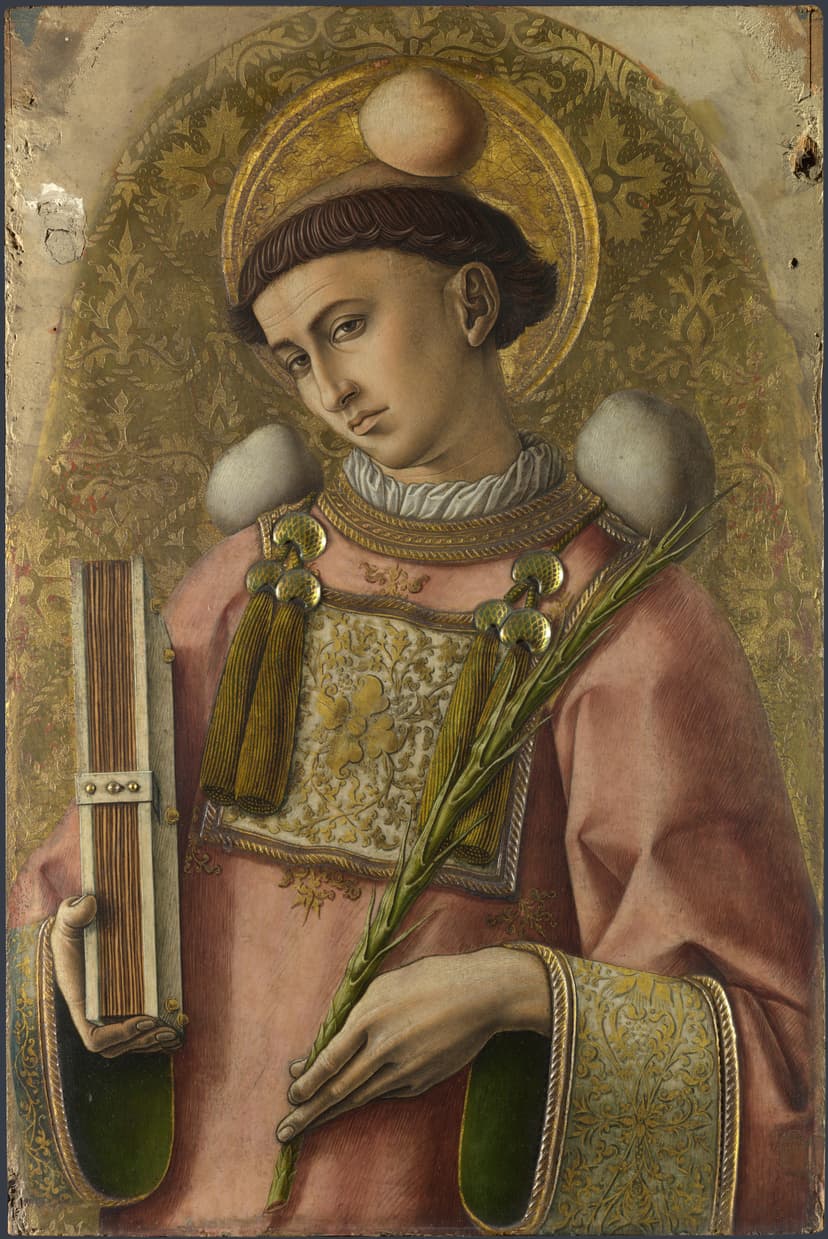
Stephen the Protomartyr
Stephen the Protomartyr is traditionally venerated as the first Christian martyr. According to the Acts of the Apostles, he was a deacon in early Jerusalem who was stoned to death after being accused of blasphemy. He is remembered for his faith, his defense of Christianity, and his prayer for his persecutors.
Jacob of Nisibis
Jacob of Nisibis was a 3rd and 4th-century hermit and bishop of Nisibis, lauded as the "Moses of Mesopotamia." He is chiefly remembered for his ascetic life, his presence at the Council of Nicaea, and his spiritual fatherhood of Ephrem the Syrian.
Maruthas of Martyropolis
Maruthas of Martyropolis was a Syriac monk and bishop of Maypherkat in Mesopotamia, venerated as a saint in Catholic, Greek Orthodox, and Oriental Orthodox Churches. He is remembered for his role as an envoy between the Roman and Persian Empires, his significant contributions to the Church of Persia, and his writings on martyrs and church councils.