
Daniel the Hesychast
December 18·15th century·Moldavia
Daniel the Hesychast was a renowned Moldavian Orthodox spiritual guide and advisor to Stephen the Great. He is remembered for his prophecies, his encouragement of Stephen the Great in defending Christendom, and for founding a hermit movement. Canonized in 1992, he is commemorated for his wisdom and spiritual guidance.
Key Facts
- ›He was born Dumitru in a village near RăDăuțI at the beginning of the 15th century.
- ›He was tonsured as a monk with the name David at Bogdana Monastery in RăDăuțI at age 16.
- ›He later adopted the monastic name Daniil and lived as a hermit, carving a chapel out of a rock.
- ›Daniel prophesied to Stephen the Great that he would become ruler of Moldavia.
- ›He advised Stephen the Great to continue fighting the Turks, foreseeing his triumph.
- ›He was elected hegumen of Voroneț Monastery and died there in 1496.

Daniil Sihastrul, David
About Daniel the Hesychast
Daniel the Hesychast, known in Romanian as Daniil Sihastrul, was a significant spiritual figure in 15th-century Moldavia. He was a renowned hermit, spiritual advisor, and hegumen of Voroneț Monastery. His life and ministry were closely intertwined with that of Stephen the Great, a pivotal ruler of Moldavia.
Life and Ministry
Born Dumitru near Rădăuți at the beginning of the 15th century, he entered monastic life at Bogdana Monastery, taking the name David. Later, seeking greater solitude, he adopted the monastic name Daniil and retreated to a remote, forested area. There, he famously carved a hermitage, including a chapel, into a rock formation. This hermitage became a place of spiritual retreat and prophecy.
Stephen the Great first sought Daniel's counsel in 1451, after his father's assassination. Daniel prophesied that Stephen would ascend to the throne of Moldavia, a prediction that came to pass in 1457. At Daniel's urging, Stephen the Great commissioned the construction of Putna Monastery. Following its consecration, Daniel withdrew to Voroneț. He was again visited by Stephen after the Battle of Valea Albă in 1476, where Daniel encouraged him to continue his resistance against the Ottoman Turks. In commemoration of this victory, Stephen commissioned Voroneț Monastery, and after its consecration, Daniel moved from his hermitage to the monastery, eventually serving as its hegumen until his death in 1496. He was buried in the monastery church.
Legacy
Daniel the Hesychast is credited with inspiring a hermit movement in northern Moldova and encouraging Stephen the Great to defend Christendom and build holy sites. He has been revered as a saint since his lifetime, with accounts attributing to him the healing of the sick, the exorcism of demons, and the alleviation of suffering. He was formally canonized by the Romanian Orthodox Church in 1992 and is commemorated on December 18.
Source: Wikipedia ↗
Frequently Asked Questions
Who was Daniel the Hesychast?
Daniel the Hesychast, also known as Daniil Sihastrul, was a prominent 15th-century Moldavian Orthodox spiritual guide and hermit. He served as a confidant and advisor to Stephen the Great, the ruler of Moldavia.
What is Daniel the Hesychast remembered for?
He is remembered for his prophetic insights, his spiritual guidance to Stephen the Great, and his role in inspiring the defense of Christendom. He also initiated a hermit movement and is credited with founding a hermitage carved into a rock.
When did Daniel the Hesychast live?
Daniel the Hesychast lived at the beginning of the 15th century and died in 1496. He was a contemporary of Stephen the Great, whose reign spanned from 1457 to 1504.
Where is Daniel the Hesychast venerated?
Daniel the Hesychast is venerated in the Romanian Orthodox Church, having been canonized in 1992. His feast day is celebrated on December 18.
What significant events involved Daniel the Hesychast?
He met Stephen the Great after the assassination of his father, prophesying his future rule. He also advised Stephen before and after the Battle of Valea Albă, encouraging him to fight against the Turks, and later lived at Voroneț Monastery, which Stephen commissioned.
Related Saints

Stephen the Great
Stephen the Great, also known as Ștefan cel Mare, was the Voivode of Moldavia from 1457 to 1504. He is remembered for his exceptionally long reign, his skilled military leadership in defending Moldavia against powerful neighbors like the Ottoman Empire, and his role as a protector of Christianity. His efforts in nation-building and his role as a national hero in Romania and Moldova are central to his legacy.
Nicodemus of Tismana
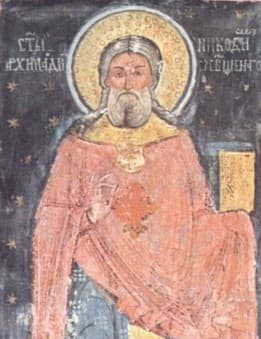
Nicodemus of Tismana was a 14th-century monk, scribe, and translator of Greek-Serbian origin who founded monasteries in Serbia and Romania. He is remembered for conveying hesychastic monastic traditions and for his participation in an ecclesiastical mission to Constantinople. Nicodemus is venerated in the Eastern Orthodox Church and is commemorated for his virtuous life and contributions to monasticism.
Arsenie of Prislop
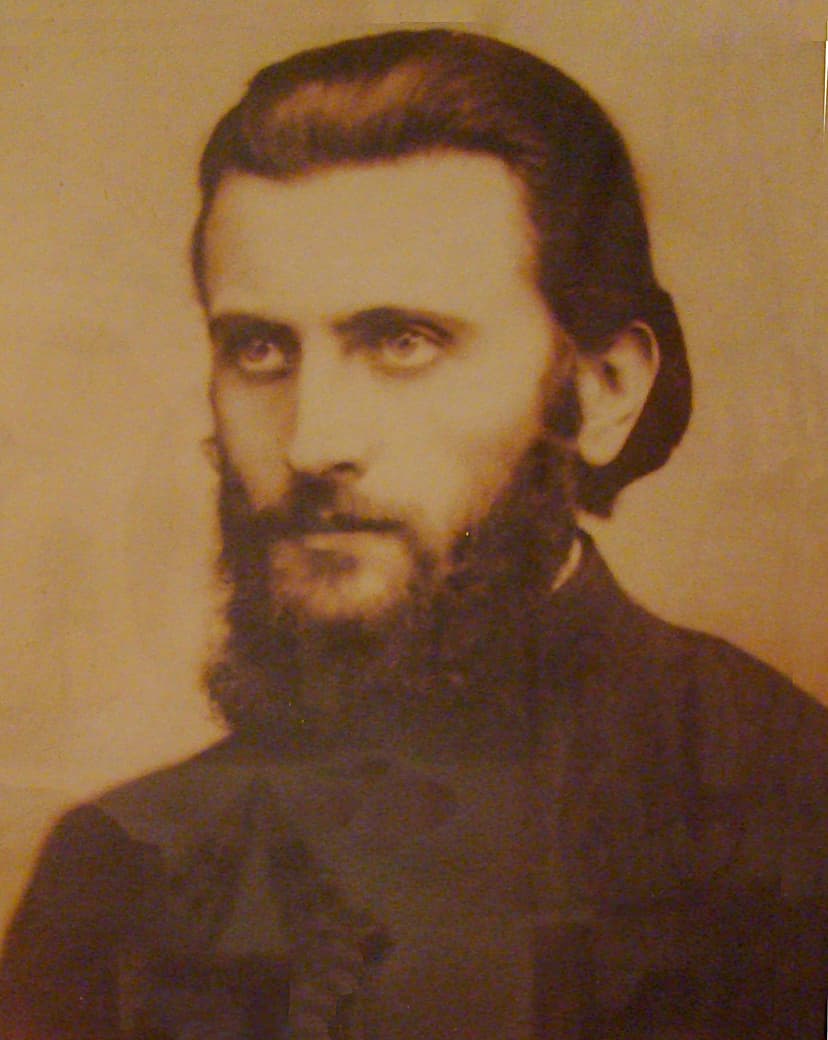
Arsenie of Prislop was a Romanian priest, theologian, mystic, and artist who faced persecution by the Romanian Communist Party. He is venerated as a saint in the Romanian Orthodox Church and is remembered for his spiritual teachings and artistic contributions, particularly his religious paintings.