
Andrew the Iconographer
January 29·15th century·Russia
Andrei Rublev was a Russian icon painter and fresco artist revered as a saint in the Eastern Orthodox Church. He is considered one of the greatest medieval Russian painters, best known for his icon of the Trinity and his influential style that blended Byzantine tradition with Russian spirituality.
Key Facts
- ›He is considered one of the greatest medieval Russian painters of Orthodox Christian icons and frescoes.
- ›His most authenticated work is the icon of the Trinity, created around 1410.
- ›Rublev worked on frescoes and icons for the Cathedral of the Annunciation in the Moscow Kremlin.
- ›He also painted the Dormition Cathedral in Vladimir and the Trinity Cathedral in the Trinity Lavra of St. Sergius.
- ›Rublev died at the Andronikov Monastery between 1427 and 1430.
- ›The Russian Orthodox Church canonized him as a saint in 1988.
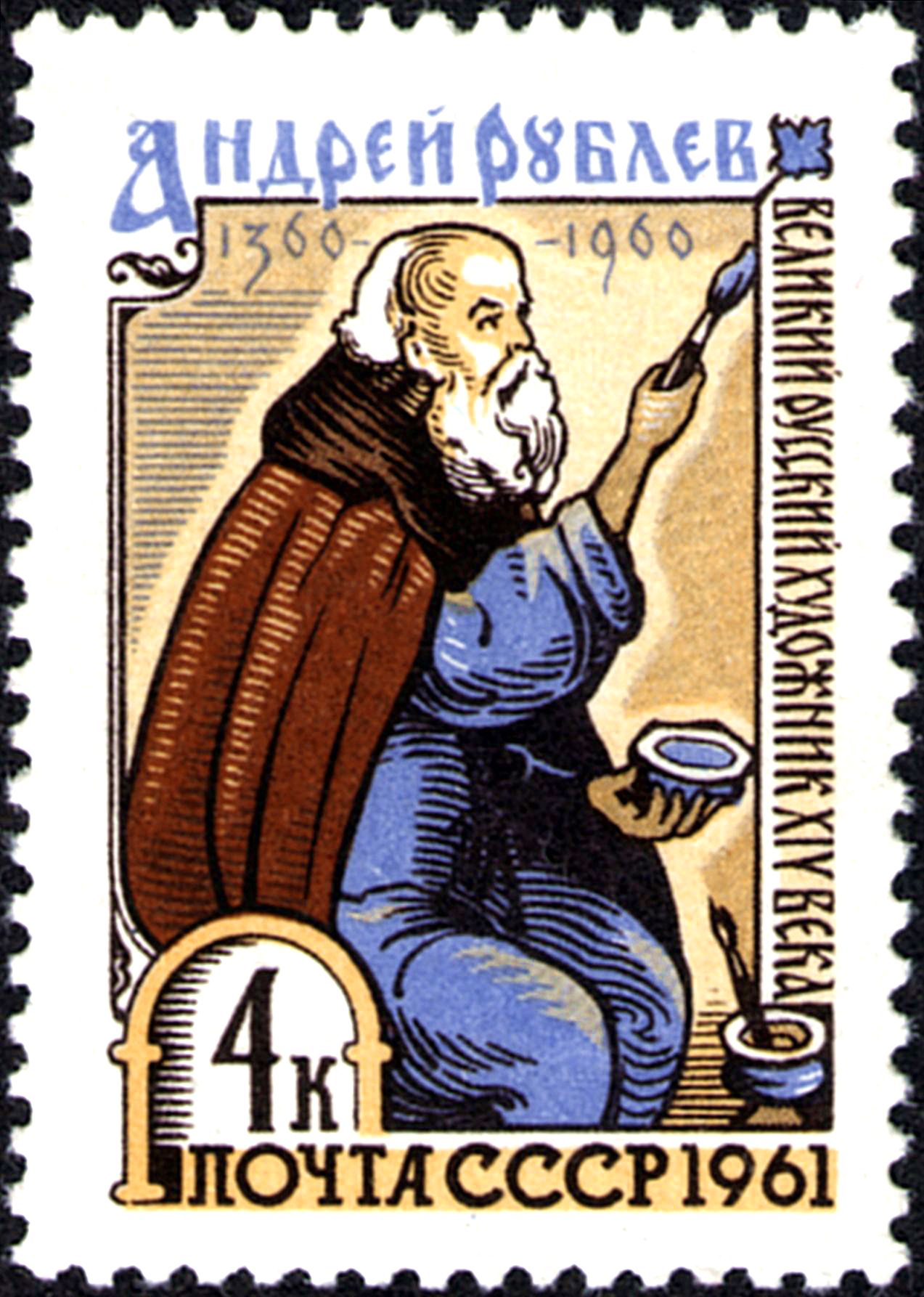
Andrey Rublyov
Russian Spirituality, Religious Art
Icon of the Trinity
About Andrew the Iconographer
Andrei Rublev
Andrei Rublev (c. 1360 – c. 1430) was a Russian icon painter and fresco artist, revered as a saint in the Eastern Orthodox Church. He is widely regarded as one of the most significant medieval Russian painters, whose work profoundly influenced the development of Orthodox iconography.
Life and Historical Context
Little is definitively known about Rublev's early life, including his birthplace. He likely spent time at the Trinity Lavra of St. Sergius, possibly under the spiritual guidance of Nikon of Radonezh. The earliest documented mention of Rublev dates to 1405, when he worked alongside Theophanes the Greek and Prokhor of Gorodets, decorating the Cathedral of the Annunciation in the Moscow Kremlin. Theophanes, a prominent Byzantine master, is believed to have trained Rublev, introducing him to advanced artistic techniques.
Major Contributions and Artistic Style
Rublev's career is marked by significant commissions. Chronicles indicate that he collaborated with Daniel Chorny on the Dormition Cathedral in Vladimir in 1408 and later on the Trinity Cathedral in the Trinity Lavra of St. Sergius between 1425 and 1427. After Chorny's death, Rublev moved to Moscow's Andronikov Monastery, where he created his final frescoes for the Saviour Cathedral. He is also credited with painting miniatures for the Khitrovo Gospels.
The icon of the Trinity (c. 1410) is the only work definitively attributed solely to Rublev. Based on the biblical narrative of the "Hospitality of Abraham," Rublev transformed the subject to focus on the theological concept of the Trinity through subtle compositional and symbolic alterations. His art is characterized by a synthesis of Byzantine asceticism and classic harmony, with figures depicted as consistently peaceful and calm. This style eventually became the benchmark for Eastern Church painting and Orthodox iconography.
Death and Legacy
Andrei Rublev died at the Andronikov Monastery sometime between 1427 and 1430. His artistic legacy is substantial, influencing subsequent generations of artists, notably Dionisy. In 1551, the Stoglavi Sobor officially adopted Rublev's icon style as a standard for church painting. The Andrei Rublev Museum, established in 1959 at the Andronikov Monastery, is dedicated to his work and related art.
The Russian Orthodox Church canonized Rublev as a saint in 1988, with his feast day observed on January 29th and/or July 4th. Historian Serge Aleksandrovich Zenkovsky noted Rublev's importance, alongside figures like Epiphanius the Wise and Sergius of Radonezh, in signifying a "Russian spiritual and cultural revival" of the late 14th and early 15th centuries. He described Rublev's icons as offering a "harmonious and colorful expression of the spirit of complete serenity and humility," becoming the "highest expression of Russian spirituality" for the Russian people.
Source: Wikipedia ↗
Frequently Asked Questions
Who was Andrei Rublev?
Andrei Rublev was a Russian icon painter and fresco artist who lived from approximately 1360 to 1430. He is considered one of the greatest medieval Russian painters of Orthodox Christian icons and frescoes.
What is Andrei Rublev most famous for?
Rublev is most famous for his icon of the Trinity, created around 1410, which is the only work authenticated as entirely his. His art is also recognized for its serene and harmonious style, which became an ideal for Orthodox iconography.
When is Andrei Rublev's feast day?
Andrei Rublev is revered as a saint in the Eastern Orthodox Church, with his feast day celebrated on January 29th. Other commemorations are also noted on June 12/13 and July 4th.
Where did Andrei Rublev live and work?
He likely lived in the Trinity Lavra of St. Sergius and worked in various locations including the Moscow Kremlin, the Dormition Cathedral in Vladimir, and the Trinity Lavra of St. Sergius. His final work was at the Andronikov Monastery, where he also died.
When was Andrei Rublev canonized?
The Russian Orthodox Church canonized Andrei Rublev as a saint in 1988, recognizing his significant contributions to religious art and spirituality.
Related Saints
Catherine of Bologna
Catherine of Bologna was an Italian Poor Clare nun, mystic, artist, and writer, venerated for her piety and spiritual teachings. She is remembered as the patron saint of artists and against temptations, and her incorrupt body is displayed in Bologna. Her formal canonization occurred in 1712.
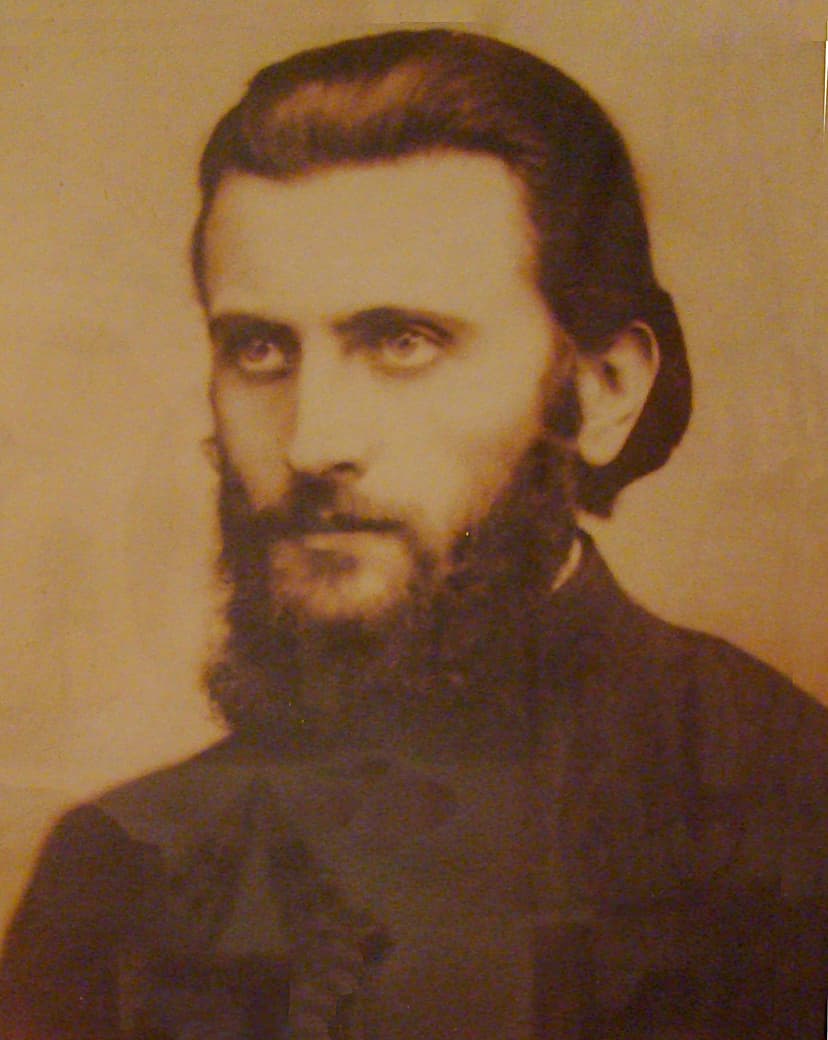
Arsenie of Prislop
Arsenie of Prislop was a Romanian priest, theologian, mystic, and artist who faced persecution by the Romanian Communist Party. He is venerated as a saint in the Romanian Orthodox Church and is remembered for his spiritual teachings and artistic contributions, particularly his religious paintings.
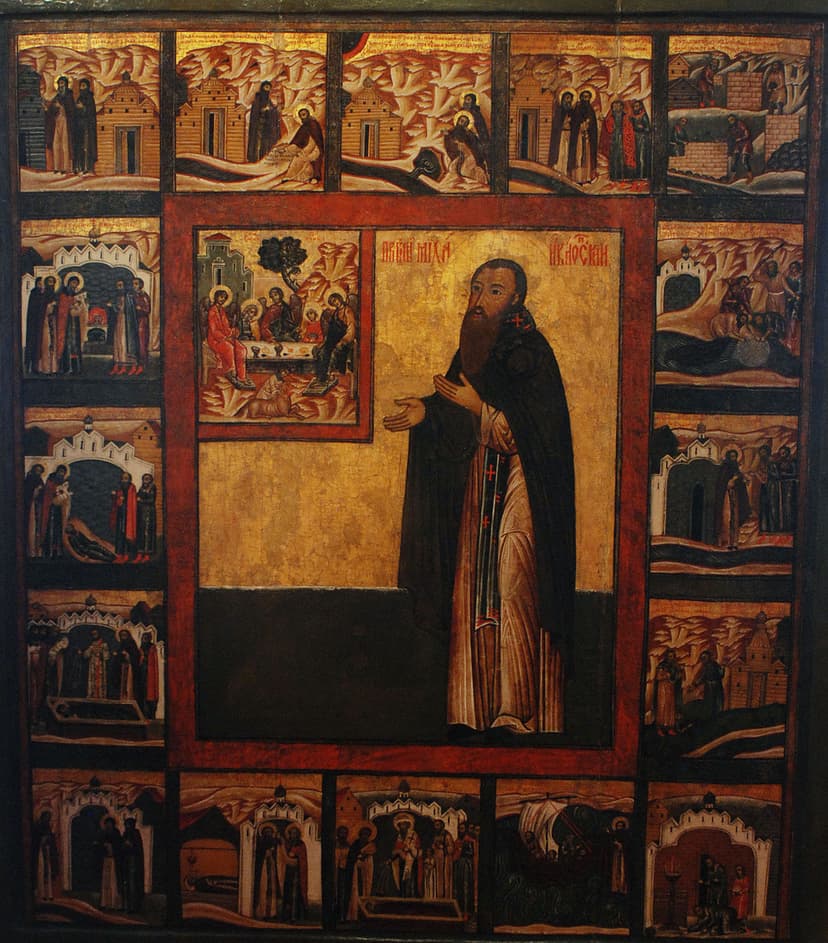
Michael of Klopsk
Michael of Klopsk was a Russian Orthodox monk and fool for Christ associated with the Klopsky Monastery near Novgorod. He is remembered for his prophetic gifts, alleged miracles such as converting robbers and discovering a fountain, and his canonization by the Russian Orthodox Church.