
Mauna Loa
Mauna Loa, meaning 'Long Mountain' in Hawaiian, is one of the five volcanoes forming the Island of Hawaii and is recognized as Earth's largest active volcano by mass and volume. Ancient Hawaiians held deep spiritual connections to this massive shield volcano, admiring its sheer scale, though many of these traditions are less practiced today. Its geological history is marked by continuous eruptions for at least 700,000 years, driven by the Hawaii hotspot, and it poses significant hazards due to its potential to destroy populated areas.
Key Facts
- ›Earth's largest active volcano by mass and volume.
- ›A shield volcano with gentle slopes and fluid, non-explosive lava.
- ›Has been erupting for at least 700,000 years, emerging above sea level about 400,000 years ago.
- ›Its magma originates from the Hawaii hotspot, a geological feature responsible for the entire Hawaiian island chain.
- ›Recent eruptions in 1926 and 1950 destroyed villages; Hilo is partly built on 19th-century lava flows.
- ›Monitored intensively by the Hawaiian Volcano Observatory and is part of the Decade Volcanoes program due to its potential hazards.
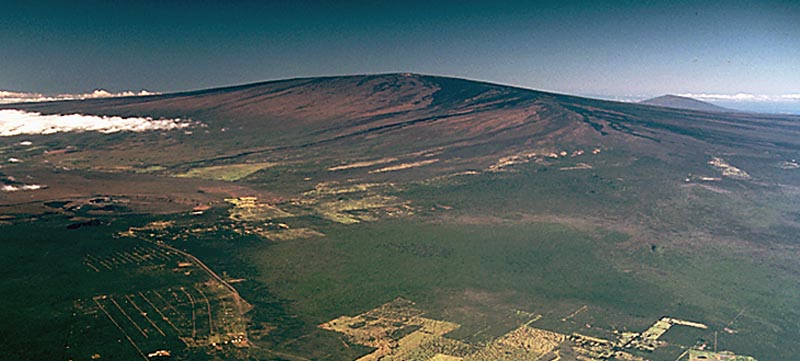
Long Mountain
Ancient Hawaiian Beliefs
- Admiration By Ancient Hawaiians Due To Its Immense Size.
- Connected To Religious and Traditional Beliefs of the Ancient Hawaiians.
- Subject of Stories and Folklore Involving Gods and Goddesses Like Pele.
Pele, Thomas A. Jaggar
- Monitoring By Hawaiian Volcano Observatory
- Hawaii Volcanoes National Park Covers Summit and Portions of Flanks
About Mauna Loa
Mauna Loa: The Long Mountain
Mauna Loa, which translates to 'Long Mountain' in Hawaiian, is a colossal shield volcano and one of the five that form the Island of Hawaii in the U.S. state of Hawaii. It holds the distinction of being Earth's largest active volcano by both mass and volume. Its geological history is profoundly ancient, with evidence suggesting it has been erupting for at least 700,000 years and emerged above sea level approximately 400,000 years ago.
Geological Formation and Characteristics
Formed by the Pacific tectonic plate moving over the stationary Hawaii hotspot, Mauna Loa is a prime example of shield volcano formation. Its lava is typically silica-poor and highly fluid, resulting in relatively gentle slopes and non-explosive eruptions. The volcano's immense volume is estimated at 75,000 cubic kilometers, and its total height from the seafloor to its summit is greater than that of Mount Everest from sea level. The magma chamber beneath Mauna Loa is located at a shallow depth, contributing to its eruptive activity.
Cultural and Spiritual Significance
Ancient Hawaiians held Mauna Loa in deep reverence, integrating it into their religious and traditional beliefs. As the largest of the island's volcanoes, it commanded significant admiration. While many of these ancestral connections and folklore, including stories of deities like Pele, persist, their practice has diminished among Native Hawaiians.
Eruptive History and Hazards
Mauna Loa has a documented history of frequent eruptions, with 34 occurrences recorded since 1843. While recent eruptions have not resulted in fatalities, historical events in 1926 and 1950 led to the destruction of villages, and the modern city of Hilo is partly situated on lava flows from the late 19th century. Due to these potential hazards, Mauna Loa is part of the Decade Volcanoes program, focusing on the study of the world's most dangerous volcanoes. It has been continuously monitored by the Hawaiian Volcano Observatory since 1912, with research conducted at facilities near its summit.
Research and Accessibility
The volcano continues to be a subject of intense scientific study. Efforts to understand its eruptive patterns and potential threats are ongoing. Access for researchers and scientists has been facilitated over time, with paths established in the early 20th century that remain in use. Hawaii Volcanoes National Park encompasses the summit and portions of Mauna Loa's flanks, contributing to its preservation and study.
Source: Wikipedia ↗
Frequently Asked Questions
What is the meaning of Mauna Loa?
Mauna Loa translates to 'Long Mountain' in the Hawaiian language. This name aptly describes its vast expanse and gentle slopes.
How large is Mauna Loa compared to other mountains?
Mauna Loa is Earth's largest active volcano by mass and volume. While its summit is slightly lower than its neighbor Mauna Kea, its total height from its base on the ocean floor is greater than Mount Everest's elevation above sea level.
What is the geological origin of Mauna Loa?
Mauna Loa was formed as the Pacific tectonic plate moved over the stationary Hawaii hotspot in the Earth's mantle. This hotspot is responsible for the creation of the entire Hawaiian island chain over millions of years.
What type of volcano is Mauna Loa?
Mauna Loa is a classic shield volcano. It is characterized by its broad, gently sloping dome shape, formed by the accumulation of fluid, silica-poor lava.
When was Mauna Loa's most recent eruption?
Mauna Loa's most recent eruption began on November 27, 2022, and concluded on December 13, 2022. This was the first eruption from the volcano since 1984.
What are the potential hazards associated with Mauna Loa?
Due to its size and history of eruptions, Mauna Loa is considered a significant hazard. Past eruptions have destroyed villages, and the city of Hilo is located on lava flows from the late 19th century, highlighting the risk to populated areas.
Related Sacred Mountains

Mount Rainier
Mount Rainier, also known by indigenous names such as Tahoma, is a towering stratovolcano in the Cascade Range of the Pacific Northwest. It is the highest peak in Washington State and the most topographically prominent mountain in the contiguous United States. Revered by numerous Indigenous peoples for millennia, its imposing presence has shaped local cultures and traditions, while its active volcanic nature poses significant risks to surrounding communities.

Mount Shasta
Mount Shasta is a potentially active stratovolcano located in Siskiyou County, California, at the southern end of the Cascade Range. It is the second-highest peak in the Cascades and the most voluminous stratovolcano in the Cascade Volcanic Arc, known for its significant geological history and cultural importance. The mountain is a focal point for various spiritual traditions and legends, attracting both climbers and those seeking spiritual experiences.
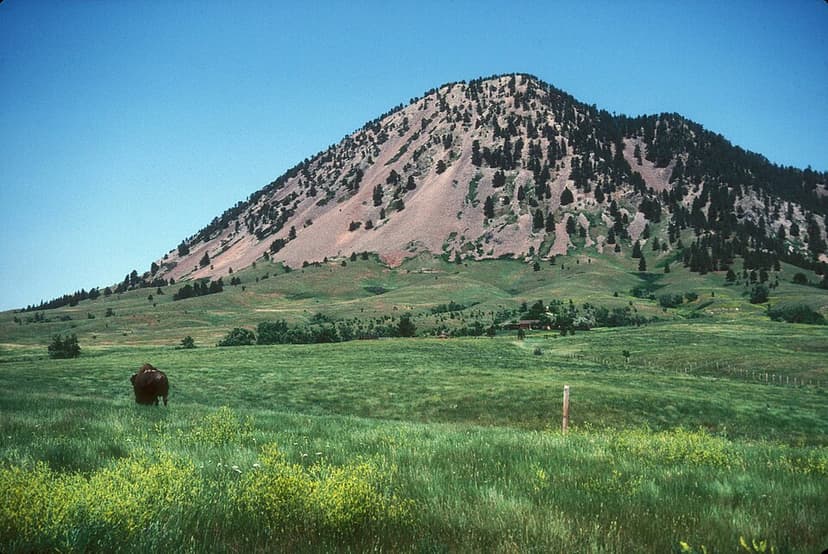
Bear Butte
Bear Butte, known to the Lakota as Matȟó Pahá and to the Cheyenne as Noahȧ-vose, is a significant geological laccolith and sacred site for Plains Indian tribes. It holds profound religious importance, particularly for the Cheyenne, who believe the Great Spirit imparted essential knowledge to the prophet Sweet Medicine here. The mountain is a place of prayer, meditation, and pilgrimage, where visitors leave offerings and participate in ceremonies.