
Bear Butte
Bear Butte, known to the Lakota as Matȟó Pahá and to the Cheyenne as Noahȧ-vose, is a significant geological laccolith and sacred site for Plains Indian tribes. It holds profound religious importance, particularly for the Cheyenne, who believe the Great Spirit imparted essential knowledge to the prophet Sweet Medicine here. The mountain is a place of prayer, meditation, and pilgrimage, where visitors leave offerings and participate in ceremonies.
Key Facts
- ›Bear Butte is a laccolith, an intrusive igneous rock formation that uplifted surrounding sedimentary layers.
- ›Human artifacts found near Bear Butte date back 10,000 years, indicating a long history of human presence.
- ›It is sacred to numerous indigenous peoples, including the Lakota (Sioux) and Cheyenne.
- ›Notable historical figures like Red Cloud, Crazy Horse, and Sitting Bull made pilgrimages to the site.
- ›Bear Butte was established as a State Park in 1961 and registered as a National Historic Landmark in 1981.
- ›Access to Bear Butte has been the subject of legal challenges concerning Native American religious freedom.
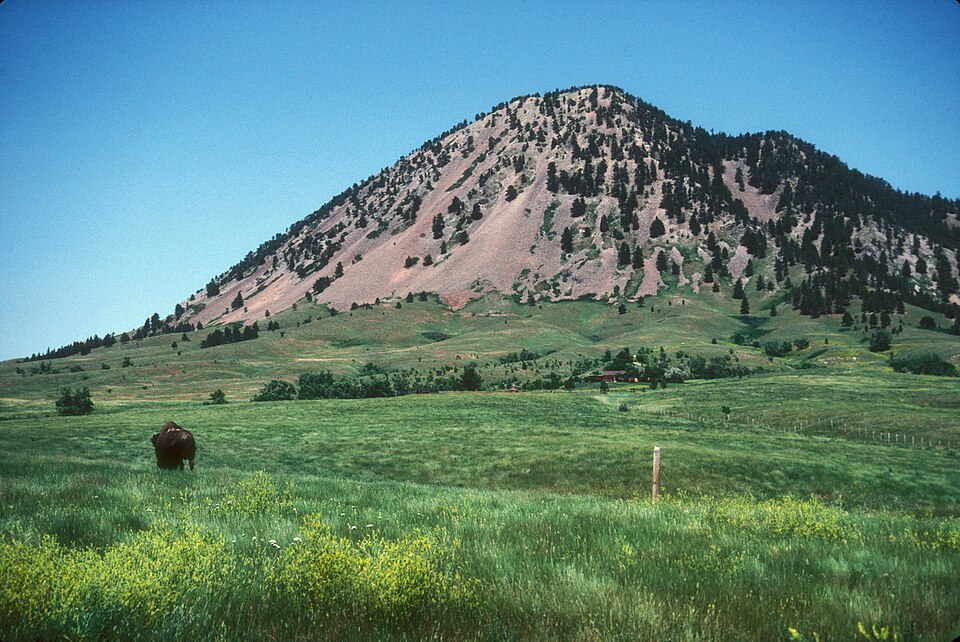
Matȟó Pahá, Noahȧ-Vose, NáHkȯHe-Vose, Bear Mountain, Giving Hill, Bear Hill
- Site Where the Cheyenne Prophet Sweet Medicine Received Knowledge From Ma'Heo'O .
- Place of Prayer, Meditation, and Peace For Indigenous Peoples.
- Historic Gathering Place For Native American Councils.
- Iconic Landmark For Prospectors and Settlers Entering the Black Hills.
Leaving Prayer Cloths Tied To Trees., Leaving Tobacco Bundles Tied To Trees., Leaving Offerings At the Summit., Participating In Religious Ceremonies.
Sweet Medicine, Red Cloud, Crazy Horse, Sitting Bull, Frank Fools Crow
- Visitors Are Advised To Respect Worshipers and Leave Religious Offerings Undisturbed.
- Park Fees Are Waived For Those Undertaking Religious Activities.
About Bear Butte
Bear Butte, known by the Lakota as Matȟó Pahá (Bear Mountain) and by the Cheyenne as Noahȧ-vose (Giving Hill) or Náhkȯhe-vose (Bear Hill), is a significant geological laccolith and a deeply sacred site for the indigenous peoples of the Great Plains. Located near Sturgis, South Dakota, it holds profound spiritual importance, particularly for the Cheyenne, who believe it is the place where Ma'heo'o, the Great Spirit, imparted essential knowledge to the prophet Sweet Medicine, shaping their religious, political, social, and economic customs.
Geological Formation and History
Geologically, Bear Butte is classified as a laccolith, an intrusive igneous rock formation that uplifted the surrounding sedimentary layers. This geological process occurred during the Eocene Epoch in the Black Hills area. While it's possible some volcanic activity occurred during its formation, any surface features would have long since eroded. The peak rises approximately 382.1 meters (1,253.5 feet) above the surrounding plain and stands at 4,426 feet (1,349 meters) above sea level.
Indigenous Significance and Pilgrimage
Bear Butte has been a site of continuous human interest for at least 10,000 years, as evidenced by artifacts found in the vicinity. It has been a spiritual focal point for the Cheyenne and Lakota people throughout their recorded history. Many indigenous peoples make pilgrimages to the mountain, leaving prayer cloths and tobacco bundles tied to the trees along its flanks, with other offerings often placed at the summit. The mountain is revered as a place for prayer, meditation, and peace, and hosts various religious ceremonies throughout the year.
Modern History and Protection
In modern times, Bear Butte became a State Park in 1961 and was designated a National Historic Landmark in 1981. Its status as a sacred site has led to legal challenges, notably the case of Fools Crow v. Gullett, concerning access and the ability to keep the site untouched for religious purposes. Despite legal setbacks, Native American tribes have continued to acquire land around the butte, emphasizing its enduring cultural significance. The park policy encourages visitors to respect worshipers and their offerings, with fees waived for those engaged in religious activities.
Activities and Features
Bear Butte State Park offers opportunities for horseback riding, fishing, and boating in its western section. A herd of bison roams the base of the mountain on the eastern side of South Dakota Highway 79. An education center and a summit trail are available for visitors. The summit also serves as the northern terminus of the South Dakota Centennial Trail.
Source: Wikipedia ↗
Frequently Asked Questions
What is Bear Butte's geological significance?
Bear Butte is not a typical butte but a laccolith, formed by magma intruding into the Earth's crust during the Eocene Epoch. This intrusive body uplifted the overlying sedimentary layers, which have since largely eroded away, leaving the distinct geological formation.
Who considers Bear Butte sacred?
Bear Butte is sacred to many indigenous peoples of the Plains, including the Lakota (Sioux) and the Cheyenne. It is a significant spiritual site for these tribes, holding deep religious and cultural importance.
What are the traditional names for Bear Butte?
The Lakota call it Matȟó Pahá, meaning Bear Mountain. The Cheyenne refer to it as Noahȧ-vose, or Giving Hill, and also Náhkȯhe-vose, meaning Bear Hill.
What is the historical significance of Bear Butte for Native American tribes?
For the Cheyenne, Bear Butte is the place where the prophet Sweet Medicine received knowledge from the Great Spirit that shaped their religious, political, social, and economic customs. It has been a site of spiritual interest and ceremonies for these tribes since their earliest recorded history.
What activities are common at Bear Butte State Park?
Visitors can engage in activities such as horseback riding, fishing, and boating in the park's campsite area. On the summit side of Highway 79, a herd of bison can be observed. The park also features an education center and a summit trail.
What are the religious practices associated with Bear Butte?
Pilgrims often visit Bear Butte to leave prayer cloths and tobacco bundles tied to trees, and other offerings are left at the summit. The mountain is a place for prayer, meditation, and peace, and hosts various religious ceremonies throughout the year.
Related Sacred Mountains

Devils Tower
Devils Tower, also known as Matȟó Thípila or Bear Lodge, is a prominent laccolithic butte located in northeastern Wyoming. Renowned for its dramatic geological formation and deep cultural significance to Native American tribes, it was designated as the United States' first national monument in 1906. The tower holds profound spiritual importance for various Plains tribes, who share ancient legends explaining its origins.

Mount Rainier
Mount Rainier, also known by indigenous names such as Tahoma, is a towering stratovolcano in the Cascade Range of the Pacific Northwest. It is the highest peak in Washington State and the most topographically prominent mountain in the contiguous United States. Revered by numerous Indigenous peoples for millennia, its imposing presence has shaped local cultures and traditions, while its active volcanic nature poses significant risks to surrounding communities.

Mount Shasta
Mount Shasta is a potentially active stratovolcano located in Siskiyou County, California, at the southern end of the Cascade Range. It is the second-highest peak in the Cascades and the most voluminous stratovolcano in the Cascade Volcanic Arc, known for its significant geological history and cultural importance. The mountain is a focal point for various spiritual traditions and legends, attracting both climbers and those seeking spiritual experiences.